How to Dress When You’re Top-Heavy
If you’ve ever tried on a top that fit your arms but pulled across your chest… or felt like every dress was made for someone two cup sizes smaller, you’re not alone. Dressing a top-heavy body can be confusing, especially when most style advice is written like everyone has the same proportions.
This guide is here to fix that.
Whether your bust is fuller, your shoulders are broader, or your top half just tends to steal the spotlight, there are ways to get dressed that actually work with your shape—not against it. You don’t need to “hide” anything. You don’t need 37 new pieces. You just need to understand what creates balance and how to build an outfit that feels good and looks good.
We’ll cover how to tell if you’re top-heavy, what outfit combos work best, and what common mistakes to skip. Oh—and no, this isn’t one of those “just wear a wrap dress and call it a day” posts.
Not sure if you’re actually top-heavy?
Take our What’s My Body Shape? quiz to find out.
How to Tell If You’re Top-Heavy
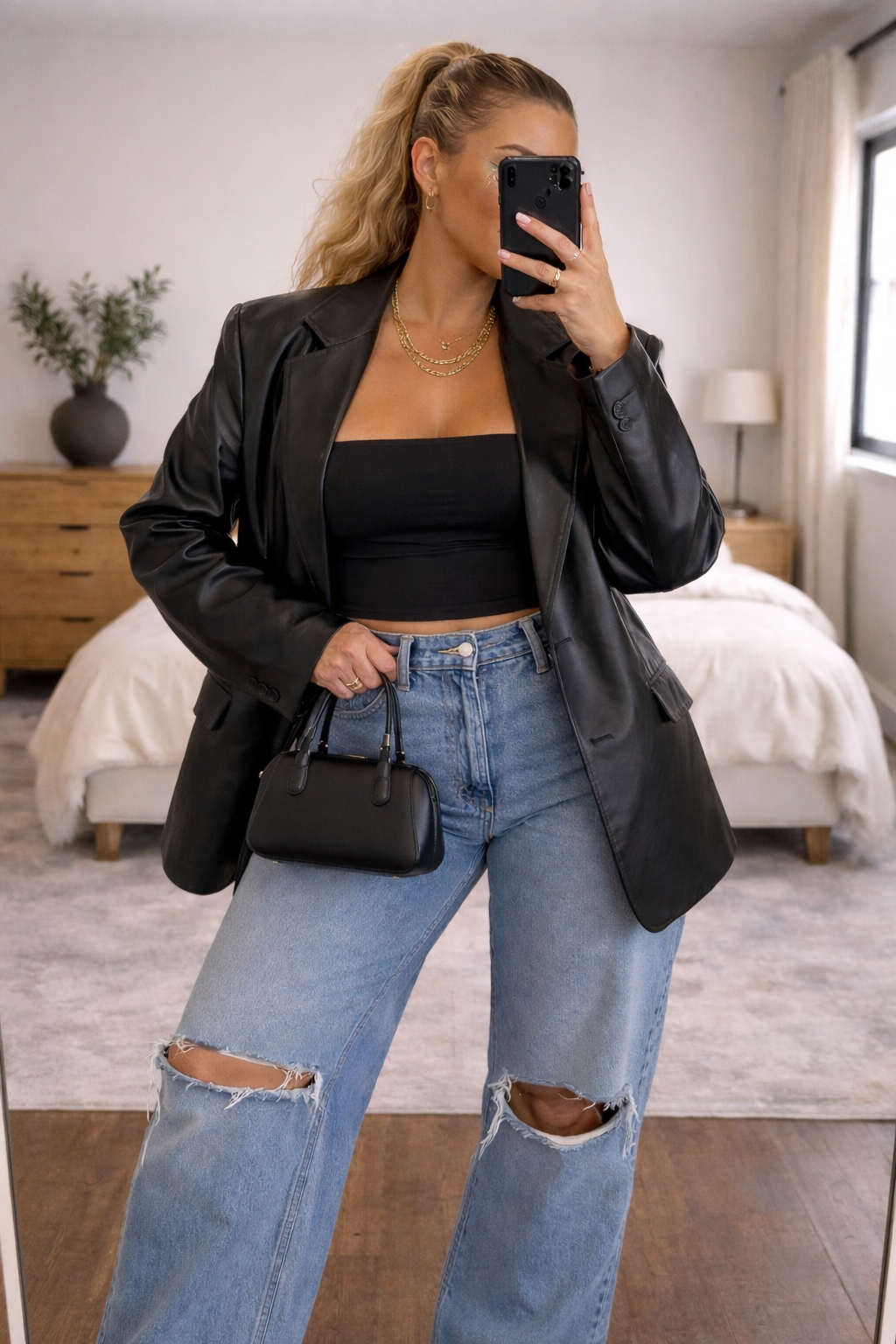
Here’s the thing: you don’t need a formal body shape label to know when something just… doesn’t fit right. If your top half always feels harder to dress than your bottom half, you might fall into the “top-heavy” category.
Signs you might be top-heavy:
Your bust or shoulders stand out more than your hips.
Think tops that feel tight across the chest or shoulders, even if they fit everywhere else.You usually wear a bigger size in tops than bottoms.
Like when you’re a medium down below but need a large (or bigger) up top just to breathe.Your shirts ride up, or your dresses sit awkwardly.
The length feels off, or it clings in the wrong places? Yep—your proportions may be pulling the fabric in weird ways.You feel like your legs are “swallowed” by your outfit.
Sometimes it looks like your top half is doing all the talking while your bottom half disappears.Shopping for fitted tops or dresses feels like a game of compromise.
Either it fits your bust but looks boxy everywhere else—or it fits your waist but gaps at the buttons.
Reminder: Top-heavy doesn’t always mean “big bust” or “broad shoulders.” It just means your upper body carries more visual weight than your lower half—whether that’s due to your bust, your ribcage, your shoulders, or just how your body holds volume.
If you also have broader shoulders and a straighter lower half, check out the Inverted Triangle Outfit Guide for more tailored styling help.
You Can Be Top-Heavy and Still Be a Pear or Hourglass
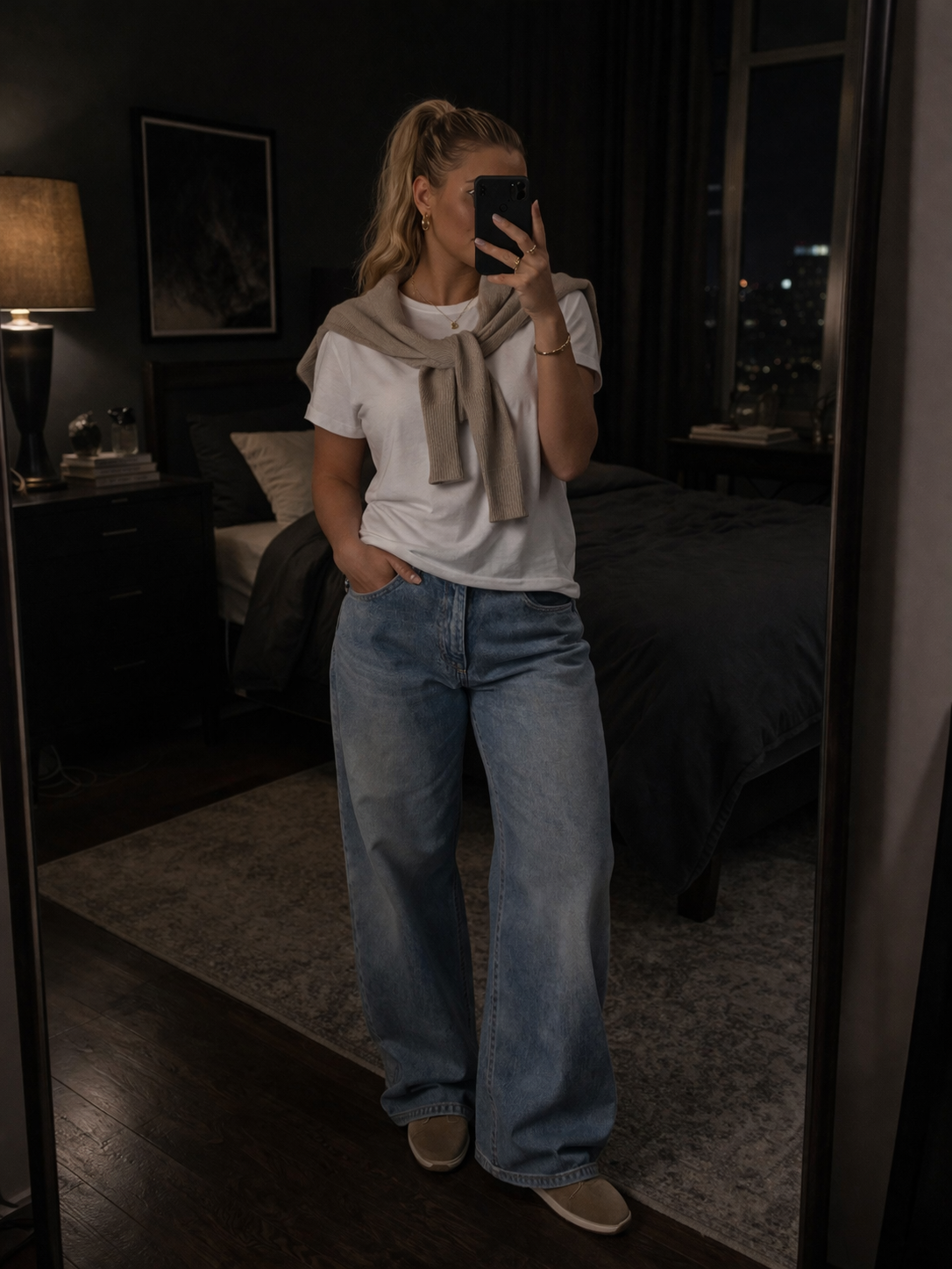
Being “top-heavy” doesn’t mean your whole body shape falls into a box. It just means your upper half your chest, shoulders, or ribcage feels more dominant when you get dressed. That’s it.
You can absolutely have a fuller bust and have hips that are just as full (or fuller). You can have a small waist and still struggle with finding tops that fit your chest without pulling. That doesn’t disqualify you from being a pear or hourglass it just means your bust is doing a little more talking than usual.
A lot of women think that once they hit a certain cup size, they must be top-heavy or an inverted triangle. But body shape is more about proportion than one measurement. If your hips are still wider than your shoulders or bust, you can have a pear-shaped frame with a full chest. If your waist is defined and both your bust and hips are full, that’s classic hourglass—even if your bust is the first thing people notice when you walk into a room.

So don’t feel boxed in. If you feel top-heavy and you know your hips or thighs still curve out that’s valid. If dresses always feel off because they fit your bottom half but squish your chest that’s a real style issue. And if you’re caught in between body types and nothing seems to work, it’s probably because you’re trying to dress for one “shape” when your body has traits from more than one.
That’s why this guide isn’t just about inverted triangles or technical labels. It’s about learning how to dress the body you have today bust, hips, waist, and all.
What Actually Works (And Why It Matters)
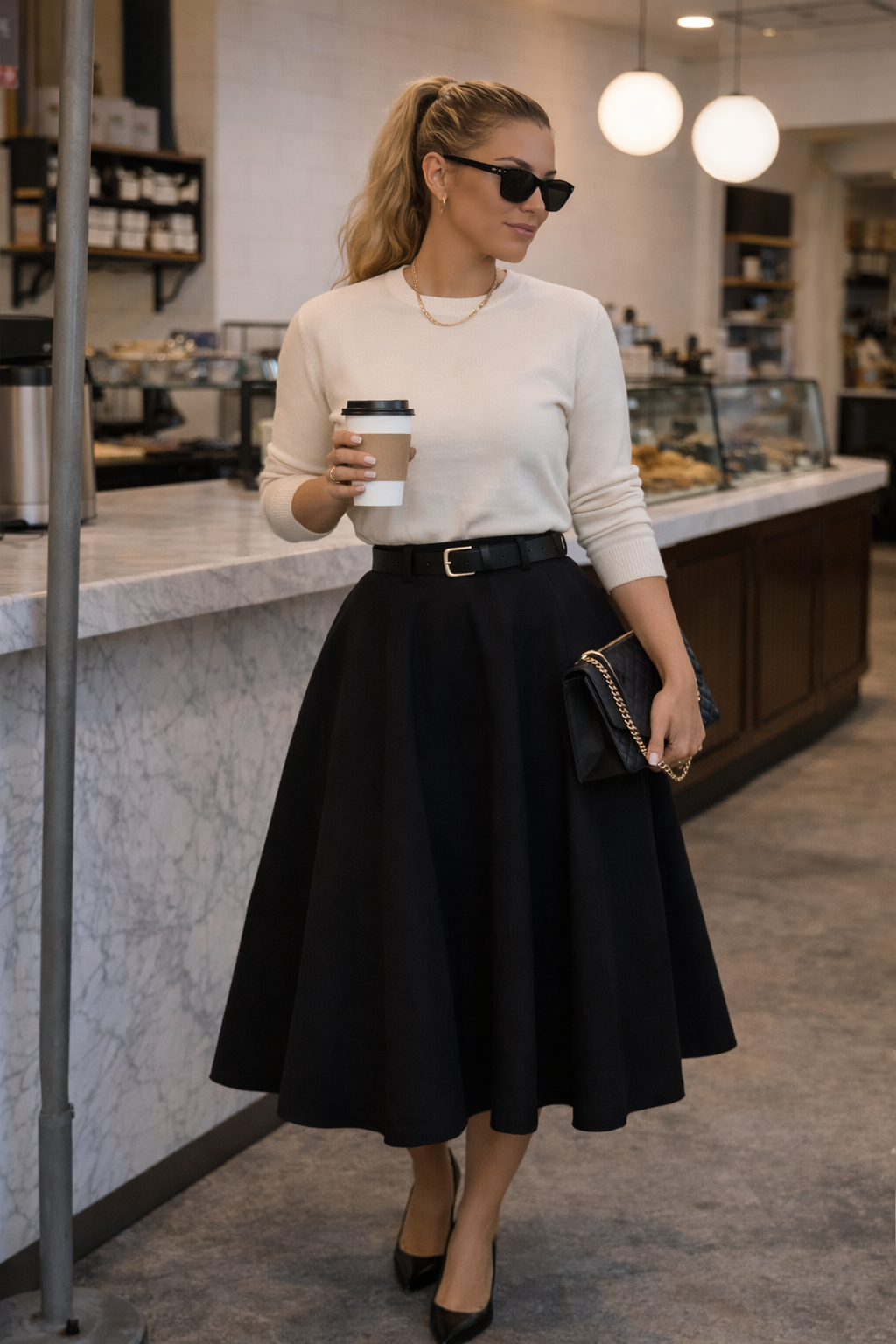
The truth is, most top-heavy women don’t need a whole new wardrobe they just need a better formula. The goal isn’t to hide your bust or shrink your upper half. The goal is balance making sure your outfit isn’t doing all its work up top while the bottom half fades away.
Here’s what actually helps your clothes feel more put together (without making you feel restricted, bulky, or overly layered):
Start with structure on the bottom.
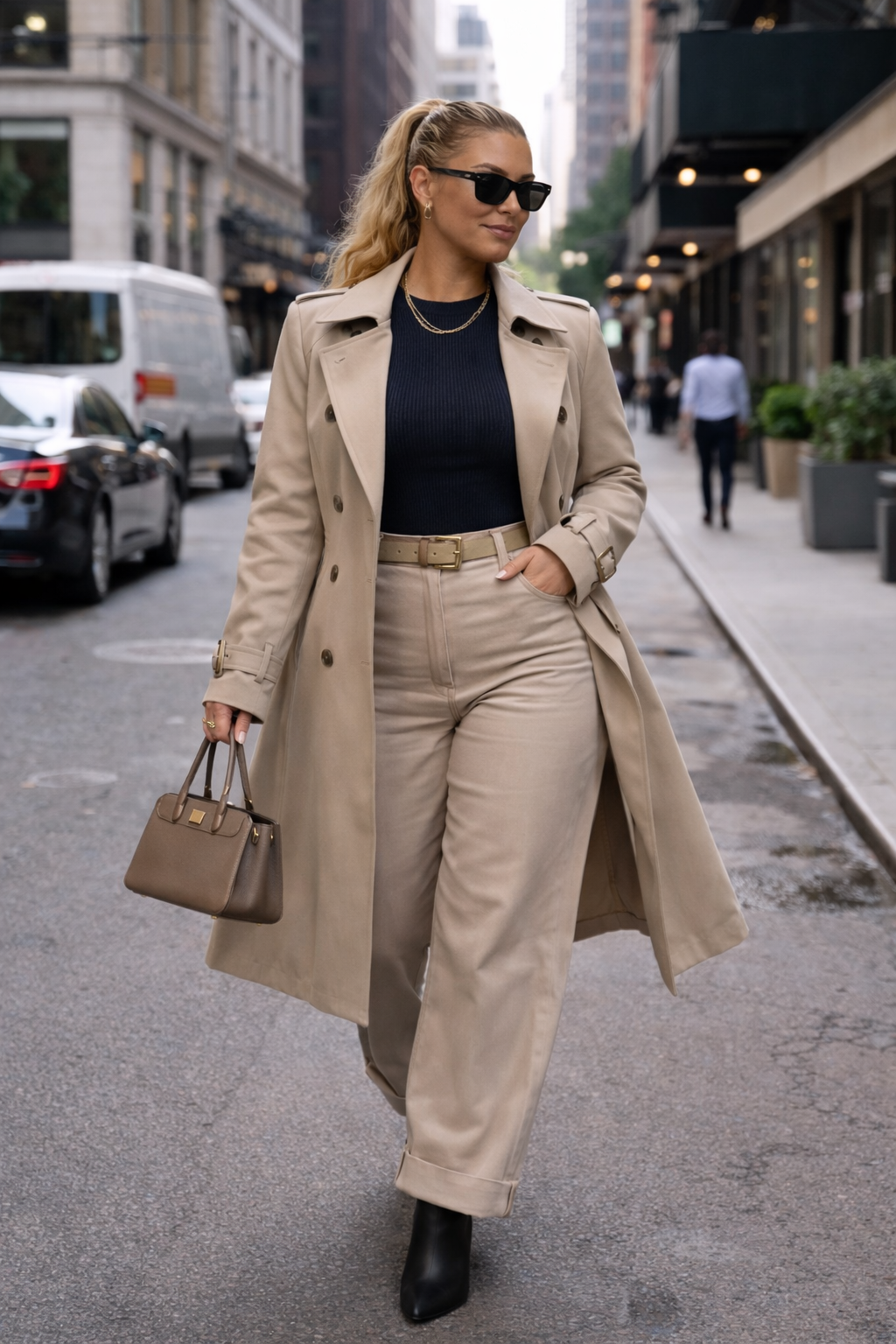
When your upper half is already doing a lot, you want your lower half to pull some weight—visually, not literally. That means pants or skirts with shape, structure, or movement.
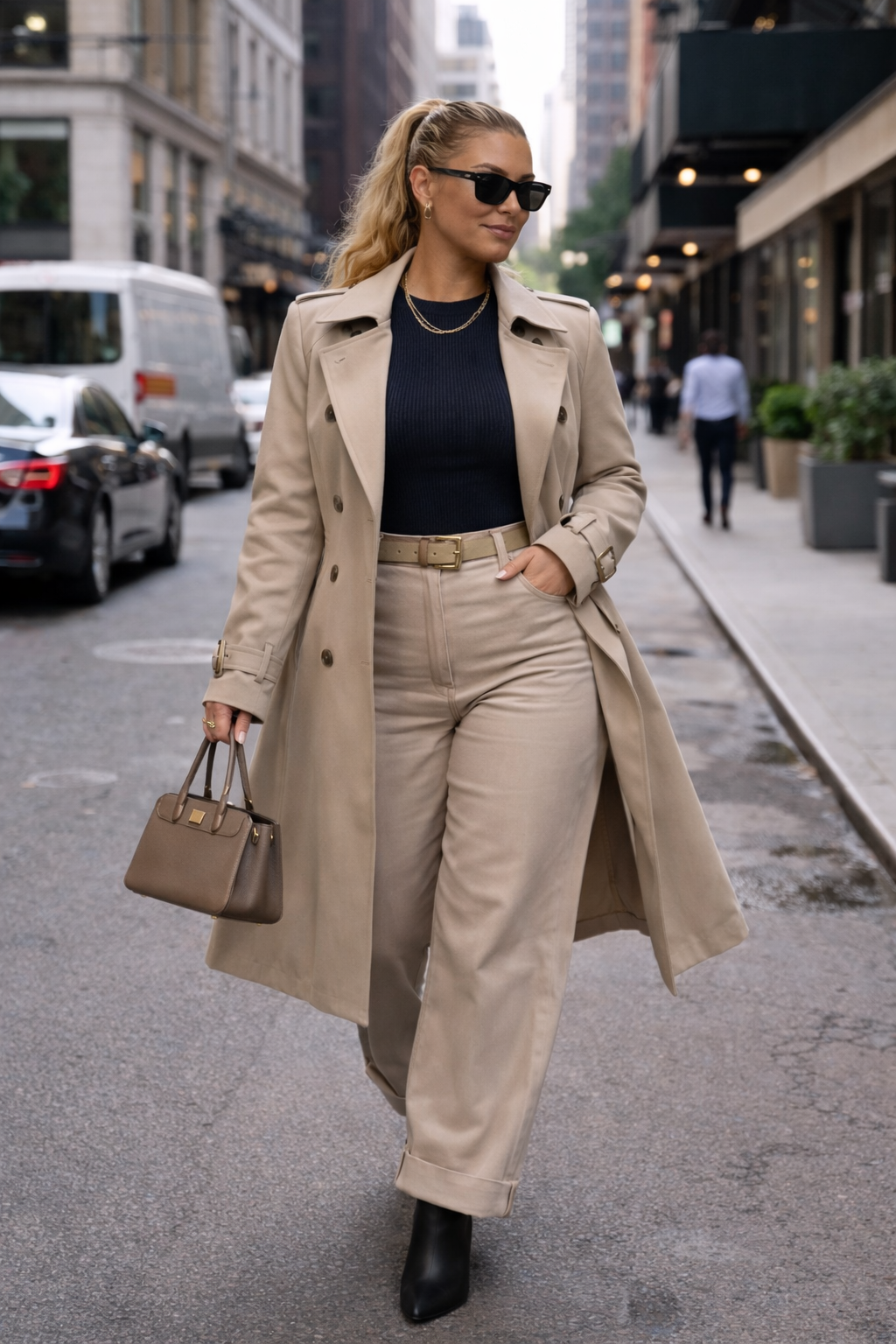
Wide-leg pants give your outfit more presence and keep your top from feeling too dominant.
A-line skirts create flow without clinging.
Cargo pants, pleated trousers, and paper bag waists all help give your bottom half a little more “voice” in the outfit.
This is why skinny jeans and tight leggings often feel “off”—they make your bust or shoulders feel even bigger by comparison.
Let your neckline do some of the work.
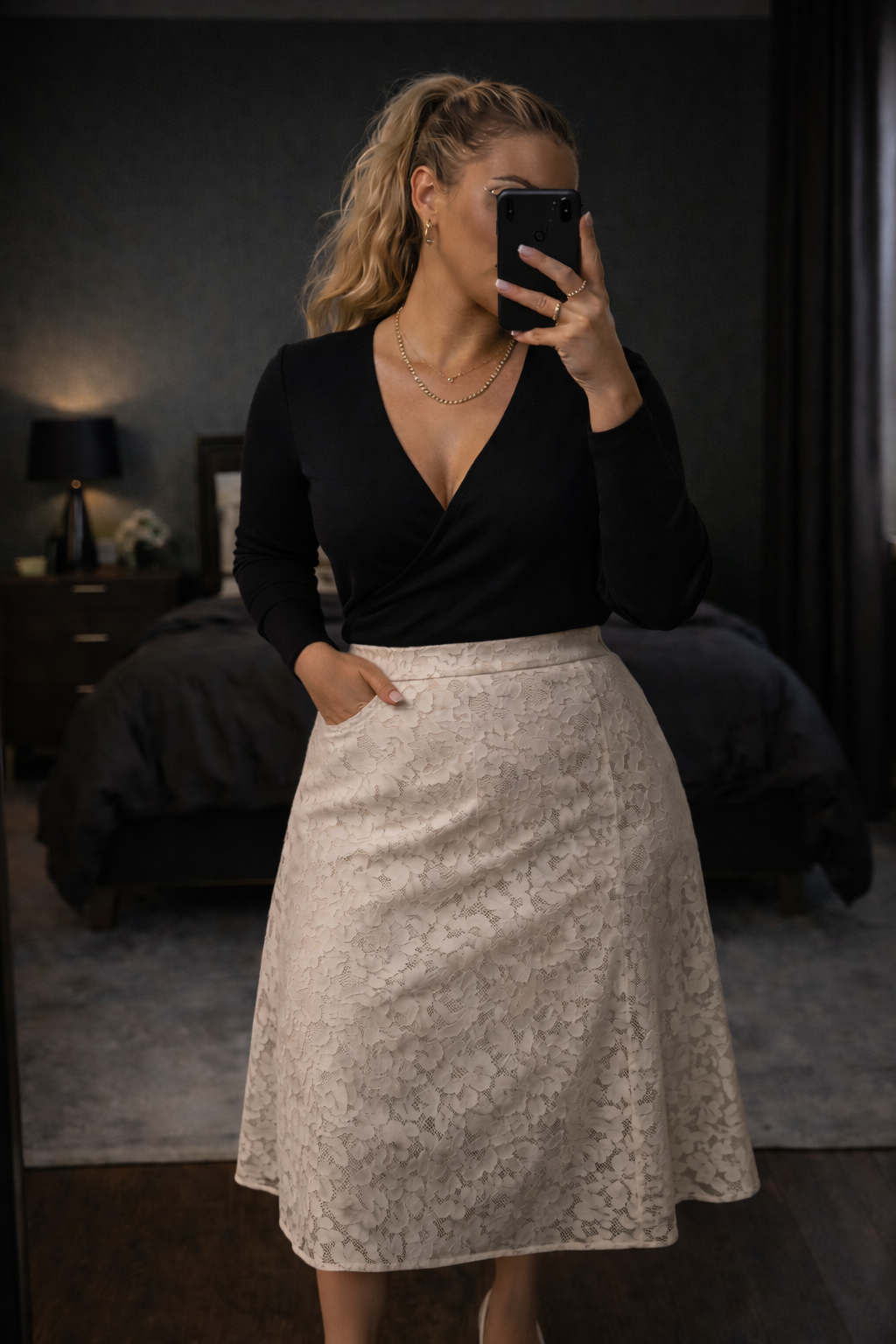
Your neckline can make or break the balance of your outfit. Anything that opens up the chest visually without adding volume tends to work best. Think V-necks, scoop necks, square necks, or wrap styles. These shapes draw the eye vertically and soften the width of the upper body.
High necklines (crew necks, mock necks) and anything with ruffles, puff sleeves, or heavy detailing near the bust? Usually not your friend. They add bulk where you don’t need it.
Your top doesn’t need to be tight just shaped.

A common mistake is thinking you have to wear super fitted tops to control the volume. But the key isn’t tightness it’s shape. You want clothes that have some definition at the waist, some ease at the bust, and enough structure to hold their shape without clinging.
Wrap tops, button-downs with darts, peplums, and knit tops with built-in waist definition all do this well.
Stretchy knits that hug your bust but fall flat below? Not so much.
Layer smarter, not heavier.
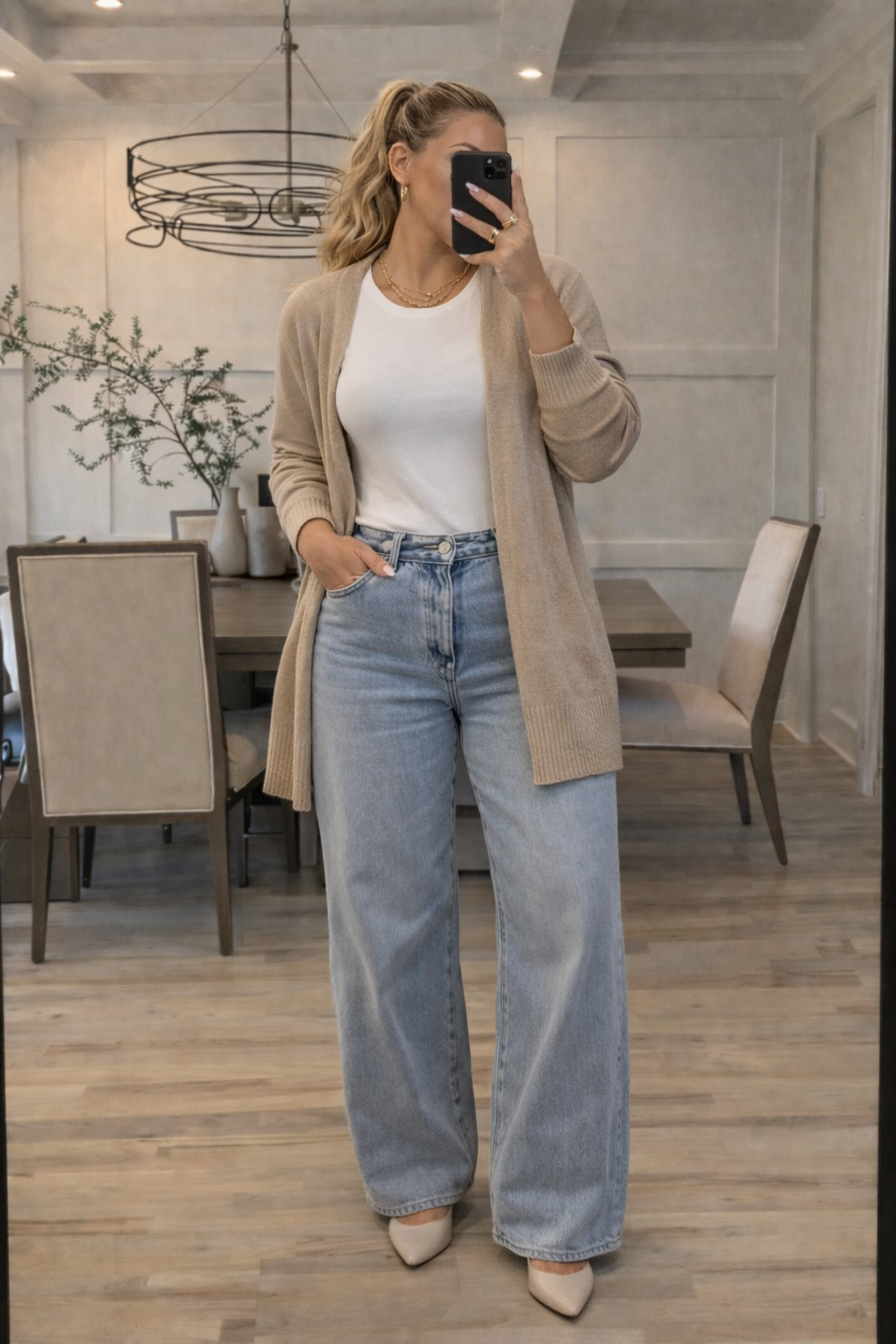
If layering feels like it always adds too much bulk, it’s probably the wrong fabric or the wrong length.
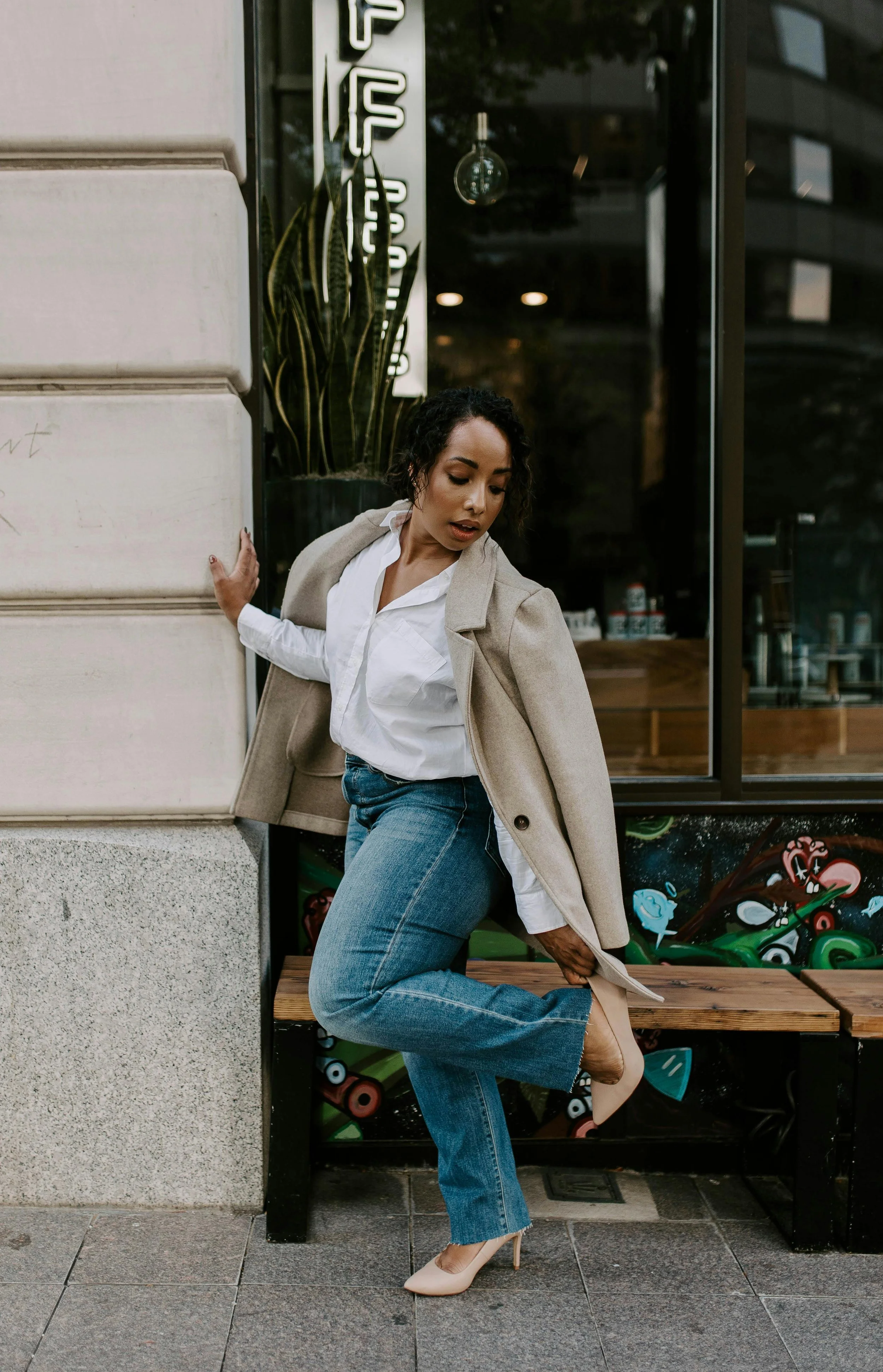
Try lightweight layers that open in the front cropped jackets, vests, or longline cardigans that draw the eye down without adding width. And when in doubt, look for pieces that hit below your bust, not across it.
You want layers that help shape your outfit not ones that widen or stiffen your frame.
Create shape with your waist, not your shoulders.
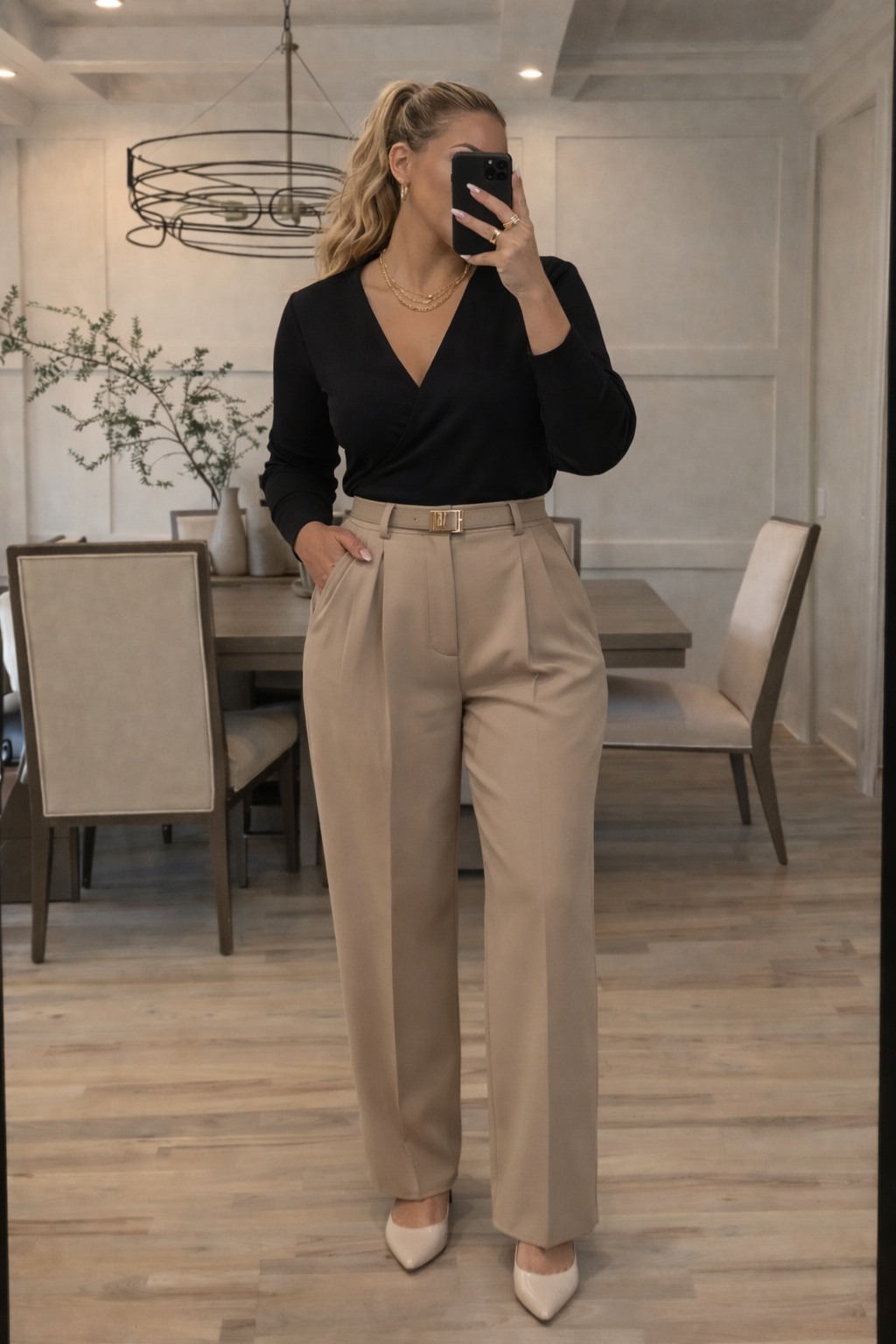
Your waist is your anchor. No matter how full your bust or how wide your shoulders feel, creating shape at the waist helps everything else fall into place.
That doesn’t mean cinching it to death it could be a French tuck, a belt, or a naturally curved hemline. The key is creating visual definition in the middle so your outfit doesn’t feel top-heavy or shapeless.

Creator Images used for editorial purposes only. All rights belong to their respective creators. We always link and give credit.