

Photo Credit:@autumlovedaily
Spoiler: You’re probably already using it — even if you swear you’re “not an AI person.”
If we’re being honest, most of us don’t wake up thinking, “Let me ask a robot what to wear today.”
We’re thinking:
I have 10 minutes. What looks good with this sweater?
Is it too cold for this?
Why do all my jeans feel wrong today?
How do I look put together when I’m tired?
And here’s the funny part: women think they’re not using AI…
but we all use it every single day — without realizing it.
The algorithm that shows you a winter outfit on Pinterest?
AI.
The “similar items” under a pair of jeans on Amazon?
AI.
The FYP that magically knows you want wide-leg trousers?
AI.
Your favorite “outfit recipe” videos?
Also AI.
And now that women are realizing how much digital help they actually want with clothes, AI is slowly becoming the new “second opinion” we didn’t know we needed.
Below is the real breakdown how women are using AI for style in 2026 (no tech talk, no buzzwords, just life).
Get 10 prompts you can download. It’s a simple way to use ChatGPT like a stylist and make your closet feel less chaotic.
Read This Next:
How I Used ChatGPT to Rebuild My Skincare Routine (and Finally Get My Glow Back)
Pinterest Has Become a Visual Stylist (And Now You Can Literally Select Your Skin Tone, Hair Type & Body Shape)
Pinterest in 2026 isn’t just suggesting vibes based on what you save.
It now lets you tell it exactly what you look like and it styles you based on that.
This is where Pinterest quietly jumped ahead of Instagram, TikTok, and even Google:
It built a personal styling engine right into the search bar.
Here’s what women don’t realize:
You can now select your skin tone — and Pinterest rewrites your beauty feed instantly.
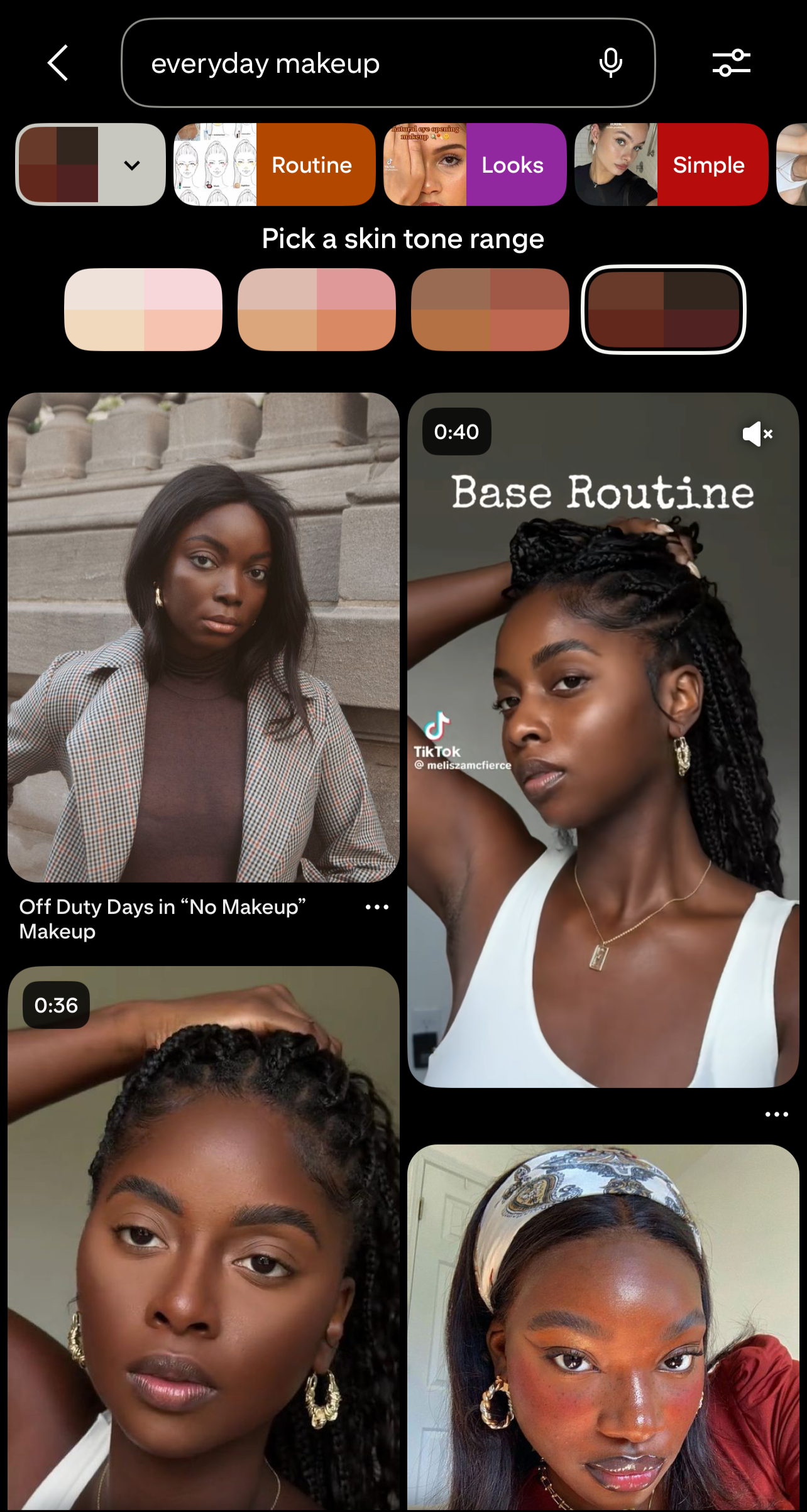
When you choose a skin tone range (there are multiple, not just “light/medium/dark”), Pinterest automatically prioritizes images that reflect:
your undertone
your melanin profile
realistic makeup results on your complexion
Looking for “brown lipstick,” “no-makeup makeup,” or “holiday glam”?
Pinterest won’t show you random swatches.
It shows you looks that actually match your skin tone.
And that makes a massive difference.
You can also pick your exact hair type.
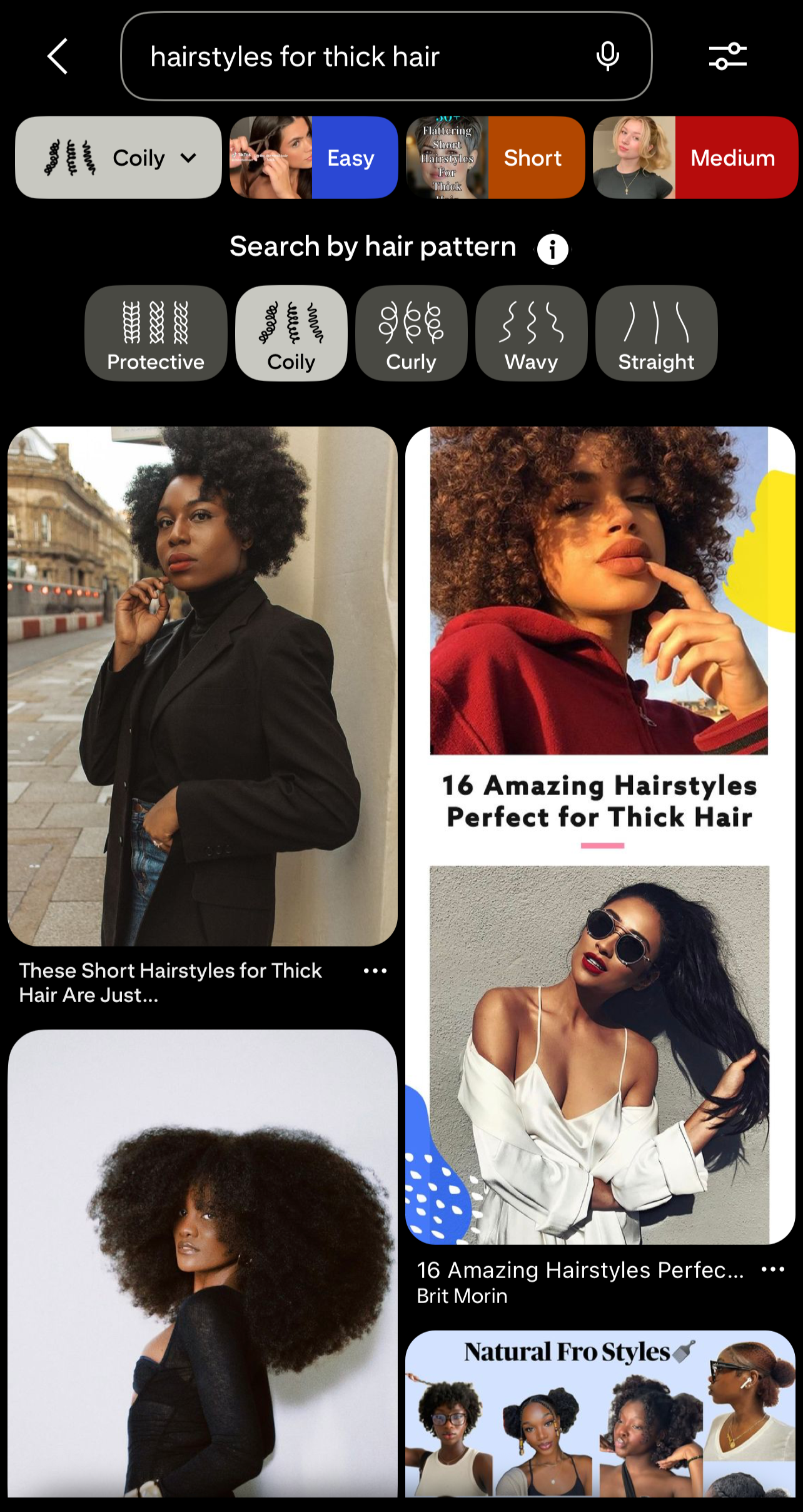
Straight, wavy, curly, coily.
Relaxed or natural.
Braids, locs, silk press, protective styles Pinterest now supports all of it.
Once selected, your hair feed becomes way more helpful:
hairstyles that actually work for your texture
product suggestions for women with your routine
realistic results instead of aspirational ones
For Black women specifically, Pinterest now has one of the most inclusive hair libraries on the internet.
And the biggest update of all: body shape selection.
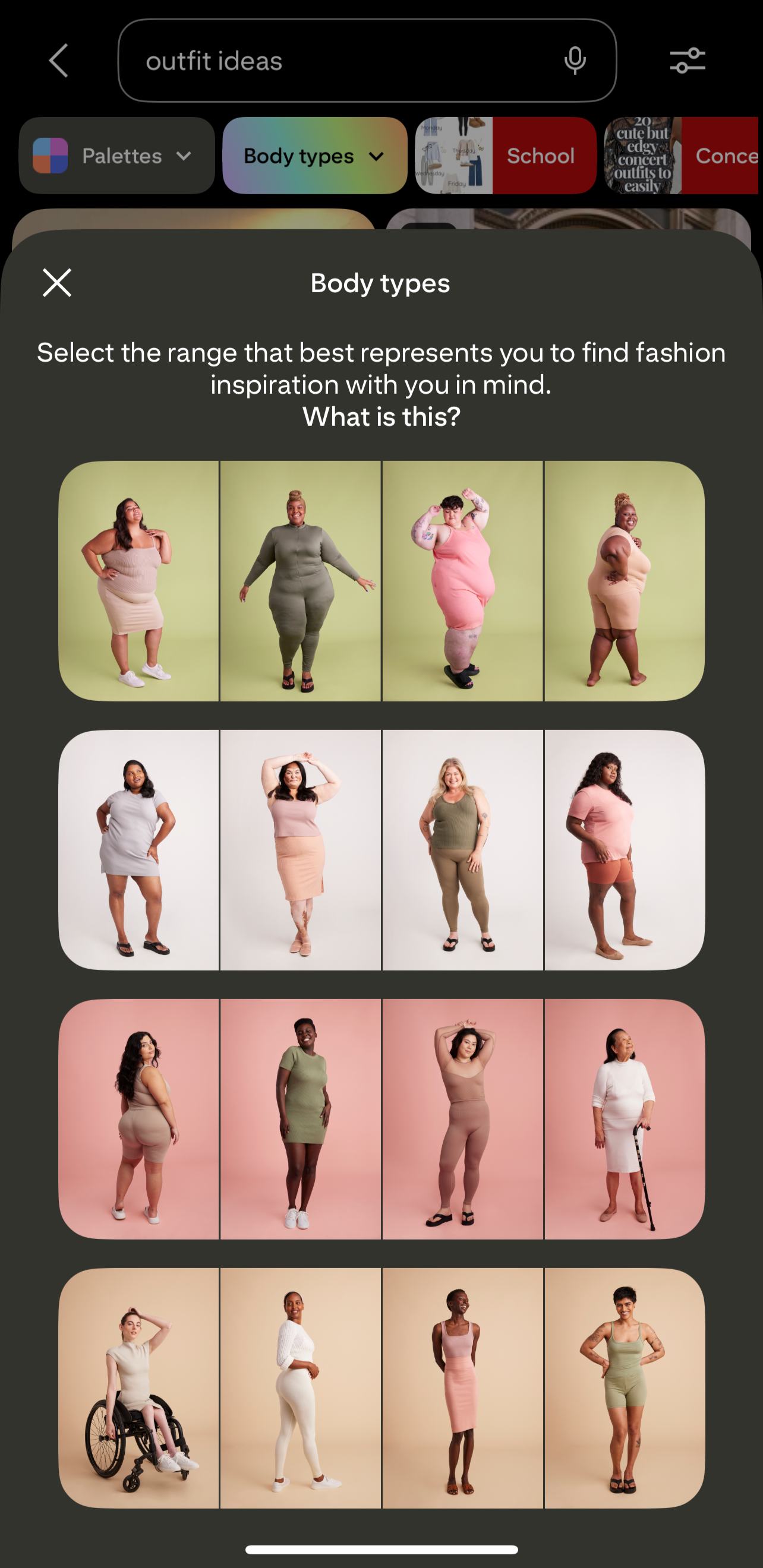
Pinterest lets you select a body type filter (not “apple vs pear,” but realistic silhouettes).
As soon as you choose yours, your entire fashion feed changes:
necklines that make sense for your proportions
jeans on bodies shaped like yours
dresses on women with similar torso-to-leg ratios
coat styles that don’t overwhelm your frame
Pinterest becomes a virtual fitting room before you ever step into one.
Plus, the algorithm still learns your vibe.

Your saves quietly train Pinterest in real time:
Neutral outfits?
Minimalist wardrobes?
Oversized tailoring?
Statement coats?
Metallics?
Soft girl energy?
Pinterest doesn’t just show you similar content it builds a full aesthetic profile around your preferences.
Most women think Pinterest is just for inspo… but at this point it’s functioning like a personal stylist.
You’re not just scrolling.
You’re teaching the system what you look like and what you love — and it’s serving you the exact outfits, colors, and beauty ideas that make sense for you.
Amazon My New Personal Wardrobe Engine
Most women think Amazon is just one giant virtual mall…
But behind the scenes, Amazon is basically running a private styling session every time you open the app.
If Pinterest is your visual stylist, Amazon is the friend who knows your sizes, your habits, your last-minute panic purchases, and your budget — and quietly tailors your entire feed around them.
This is what Amazon is really doing for you:
Amazon already tracks your fit preferences — and adjusts recommendations automatically.

When you shop for clothes, Amazon isn’t just guessing.
It analyzes:
the sizes you actually keep
what you return
what reviewers your size say about fit
how other women your size rated the same item
That’s why your “Recommended For You” section looks different from your best friend’s, even if you shop in the same category.

If you mostly buy mediums but keep larges, Amazon corrects the size suggestion.
If 200 women with your measurements say “runs small,” Amazon tells you before you hit checkout.
It’s giving AI-powered personal shopper energy.
“Frequently Bought Together” is basically Amazon building your outfits.

Amazon uses collective style behavior to predict what pieces go together.
You click a sweater?
You’ll suddenly see:
the jeans most women styled it with
the jewelry they added
the boots that completed the look
Women think this is coincidence.
No it’s Amazon serving you crowdsourced outfit formulas in real time.
It’s moodboards disguised as shopping suggestions.
Your Amazon homepage is personalized — like… extremely personalized.
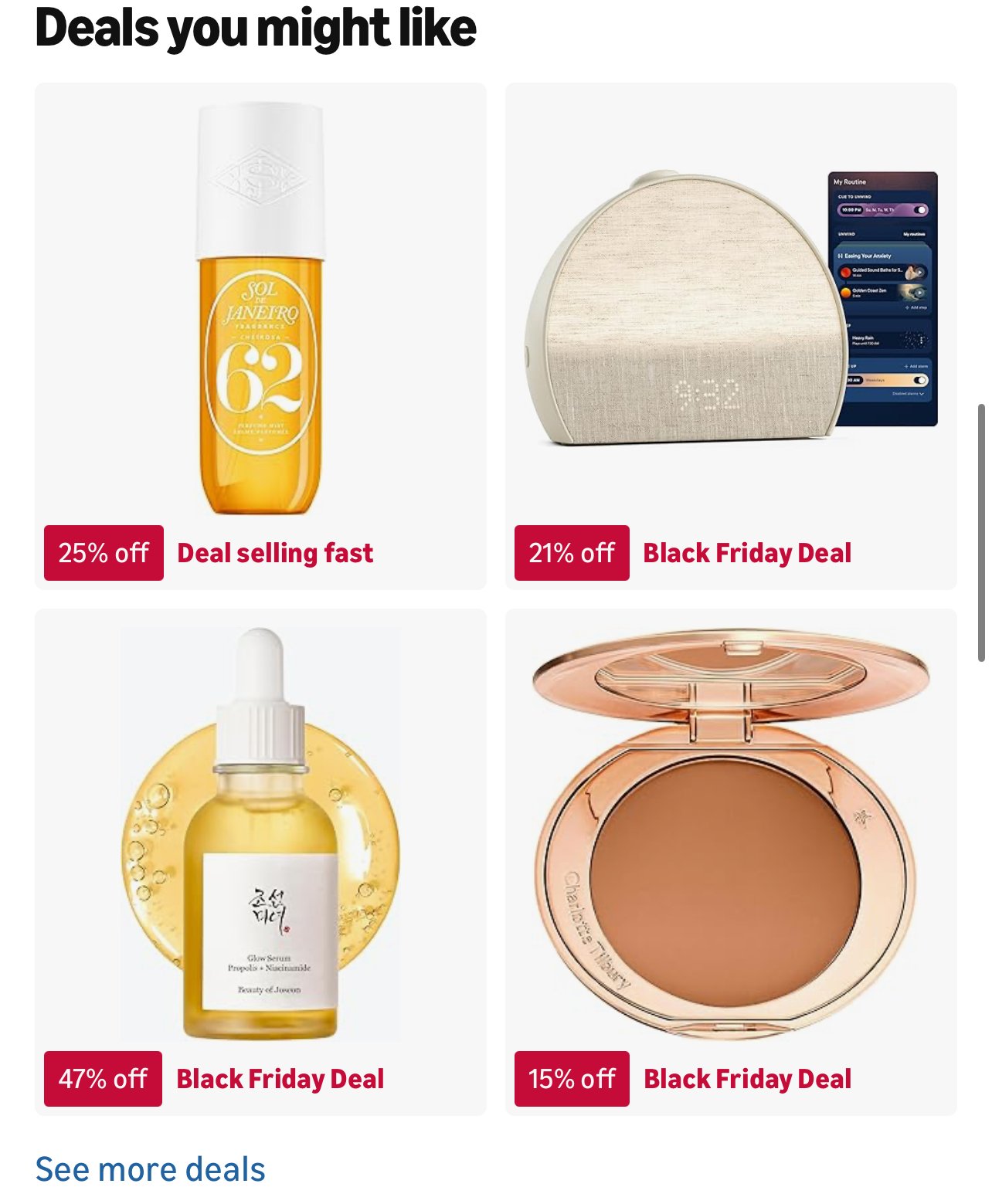
Most people don’t know this:
No two Amazon homepages look the same.
Amazon considers:
your preferred color palette
the fabrics you buy most
what you “heart” but never purchase
what you browse late at night
the categories you shop during certain seasons
how often you reorder basics
It builds an entire wardrobe profile around you.
If you love neutrals, you’ll see beige sweaters and minimal sneakers.
If you love color, your homepage is loud.
If you browse luxury once every two months?
Suddenly Amazon slips in a few elevated pieces to test your mood.
This is not random.
This is machine learning.
Rufus changed everything.

Rufus is Amazon’s new AI assistant, and it understands context like a human stylist.
You can ask Rufus:
“Do these boots work for wide calves?”
“Is this coat warm enough for Chicago winters?”
“What cardigan looks best with barrel jeans?”
“Find sweaters that won’t pill after one wash.”
It analyzes customer images, reviews, Q&A sections, and product specs — then gives you an answer in seconds.
No scrolling.
No guessing.
No reading 300 reviews.
It’s basically your fashion-and-function translator.
Google Lens Is the Style Detective Every Woman Is Quietly Using
Here’s the funny part about Google Lens:
Most women think they’re just “finding the link” to a cute jacket… meanwhile, they’re using one of the most powerful AI fashion tools available to the public.
Google Lens has quietly become the private investigator of your wardrobe decisions, and if you’ve ever screenshot a random woman on TikTok and said, “Where did she get that coat?” — you’ve already used it.
Here’s what it’s actually doing:
It identifies clothes with scary accuracy — even dupes.

Take a photo.
Upload a screenshot.
Point your camera at someone’s outfit.
Google Lens can now find:
the exact match
visually identical dupes
the same silhouette
budget versions
luxury versions
And here’s the magic: the AI isn’t matching logos — it’s matching lines, textures, hardware, stitching, color saturation, drape, and cut.
If the original blazer is $485, Lens will serve up five $89 lookalikes in seconds.
Women think they’re “searching.”
But really? They’re outsourcing the hunt.
It reverse-engineers entire outfits from one photo.
Upload a street style pic or an influencer flatlay, and Google Lens breaks it down piece by piece.
It identifies:
the boot shaft height
the denim wash
the bag shape
the coat length
the knit texture
the neckline type
…and then shows (often better) matches across the internet.
It’s giving “digital stylist breaking down the look” — no caption needed.
It understands your price range without you telling it.
Google Lens is tied to your Google shopping habits.
That means:
If you mostly buy mid-tier brands, Lens won’t show you Balenciaga first.
If you occasionally click high-end, it’ll sprinkle in aspirational pieces.
If you only buy Amazon, Lens automatically pivots to 50 Amazon matches.
Your results are personalized… even though it never asks your price point.
It’s the ultimate thrifting assistant.
Women in thrift stores or vintage shops use Google Lens to:
check if a piece is rare
see how much it’s worth online
compare to modern equivalents
get styling ideas from photos
It’s like having a resale expert in your pocket.
It’s the fastest way to find lost clothing links.
When someone on TikTok says, “Link in bio,” but their bio is a wasteland?
Google Lens solves the mystery. When an influencer tags the wrong brand?
Lens will find the right one.When the tag is hidden, blurred, or unhelpful?
Lens still finds it. This is detective-level AI — in a button.
Lens is how women compare before buying.
Before women hit “add to cart,” they now:
screenshot the item
run it through Google Lens
check cheaper versions
check better-reviewed versions
compare fits from multiple stores
This is AI-assisted decision making.
Women aren’t guessing anymore — they’re auditing.
It unlocks styling ideas instantly.
Upload a single item — like barrel jeans — and Lens will show:
outfits
street style
influencers wearing similar items
moodboards
editorial photos
Pinterest content
better angles
color options
It teaches you how to wear what you already own.
Women think they’re browsing.
Really, they’re letting AI train their eye.
ChatGPT Is the First AI Stylist Women Actually Talk To
ChatGPT is the only AI tool women interact with the way they’d interact with a real stylist. Pinterest shows ideas. Amazon predicts purchases. Google Lens identifies clothes.
But ChatGPT?
Women ask it questions.
They talk to it like a friend who just happens to know every coat, jean, sweater, neckline, and body-shape trick on earth.
Here’s how women are using it — even if they don’t call it “AI styling.”
They ask it outfit questions the same way they’d text a sister.

Women aren’t saying:
“Generate an outfit based on geometric silhouettes and seasonal color theory.”
No.
They’re saying:
“What should I wear tomorrow? It’s cold.”
“I hate all my jeans. What should I buy?”
“Give me 10 outfits for 30-degree weather.”
“What can I wear with these brown boots?
These are everyday questions — the kind we all ask when the closet door is open and the brain is on low battery.
AI just answers instantly.
They use it to make sense of their body shape (without judgment).

Women will never stand in a dressing room and say:
“I believe my torso-to-leg ratio is throwing off my silhouette.”
But they will tell ChatGPT:
“My shoulders are broad — help me look balanced.”
“My stomach is my insecurity, what tops should I wear?”
“Why do wide-leg jeans never work on me?”
Women feel safer asking AI these questions than asking a salesperson or a friend.
And ChatGPT gives logic instead of eye rolls or weird comments.
They use it as a capsule wardrobe planner.
This is the part nobody talks about.
Women will upload what they already own — or describe it — and say:
“Build me a winter capsule wardrobe using what I already have.”
“Help me pack for Miami.”
“Create 20 outfits from these four pants.”
This is closet clarity in minutes, not hours.
They use it to check if something’s “worth it.”
Women ask AI the same question they ask creators:
“Is this coat worth the money?”
“Is this bag good quality?”
“Is this the right pair of jeans for me?”
AI pulls in:
fabric details
fit notes
reviews
alternatives
It’s like getting a second opinion before tapping “buy.”
They use it when they’re overwhelmed by too many choices.
Real conversation:
“I need to look cute for date night, but I’m exhausted. Help.”
AI cuts through the noise and gives three specific looks that feel manageable.
Women love specificity.
AI gives specificity.
They use it when they need someone to tell them the truth.
AI doesn’t say:
“just be confident”
“everything looks good on you”
“you’ll figure it out”
AI says:
“That neckline is fighting your proportions.”
“Those jeans run small.”
“Try this shape instead — it fits how you want to feel.”
It’s honest without being harsh.
They use it because it doesn’t judge or get tired.
Ask ChatGPT 20 questions in a row?
It won’t sigh.
It won’t get annoyed.
It won’t rush you.
Women use AI the way they’ve always wanted to use a stylist — freely, openly, repeatedly
What AI Cannot Replace (And Never Will)
For all the shortcuts AI gives us — the outfit ideas, the clarity, the convenience — there’s an entire side of style that will never come from a screen.
Women don’t dress just to get dressed.
We dress from memory, culture, mood, intuition, and lived experience.
AI can support that.
But it cannot be that.
Here’s what remains human no matter how advanced the tools get.
Your Taste
AI can give you 20 outfits.
Only you know which one feels like “you.”
Taste isn’t logical.
It’s emotional.
It’s your grandma’s oversized gold hoops.
The coat you saved up for in college.
That one silhouette that makes you feel powerful for reasons you can’t explain.
AI can’t touch that.
Your Culture
Whether you name it or not, your culture shapes how you see beauty — and how you want to show up.
No algorithm can recreate:
the way Black women think about undertones
why certain fits matter more to certain communities
the textures, references, and history that inform how we style ourselves today
AI can assist.
It cannot replace the lived reality behind the mirror.
Your Body Awareness
AI can read proportions.
But it cannot feel them.
It doesn’t know:
where you want ease
where you want structure
how you like shirts to hit on your hip
what areas feel sensitive or powerful
how you move when you walk
Your body is language.
Only you can translate it.
Your Preferences (The Ones You Can’t Explain)
You know the moment when you try something on and immediately know:
“Nope.”
Even if:
the color is great
the cut is right
the fit technically works
Something in your gut says no — and that instinct is ancient.
AI does not have instinct.
It has data.
And those are not the same.
Your Confidence
AI can tell you what could work.
Only you decide what you’ll actually walk into the room wearing.
Confidence is built through:
wearing something 10 times
taking photos and learning what you love
owning your features
experimenting
getting it a little wrong
getting it right the next day
No algorithm gives you that lived confidence.
You earn it outfit by outfit.
Your Identity
Style is identity.
Identity is lived.
AI can help you dress the body you have.
But only you can dress:
the woman you are
the woman you’re becoming
the woman you refuse to shrink back into
That’s the part no technology can replicate.
Your Story
You don’t wear clothes in a vacuum.
You wear them in:
your season of life
your motherhood journey
your career era
your glow-up era
your healing era
your “I’m finally choosing myself” era