
How to Determine Your Face Shape (And Why It Actually Matters)
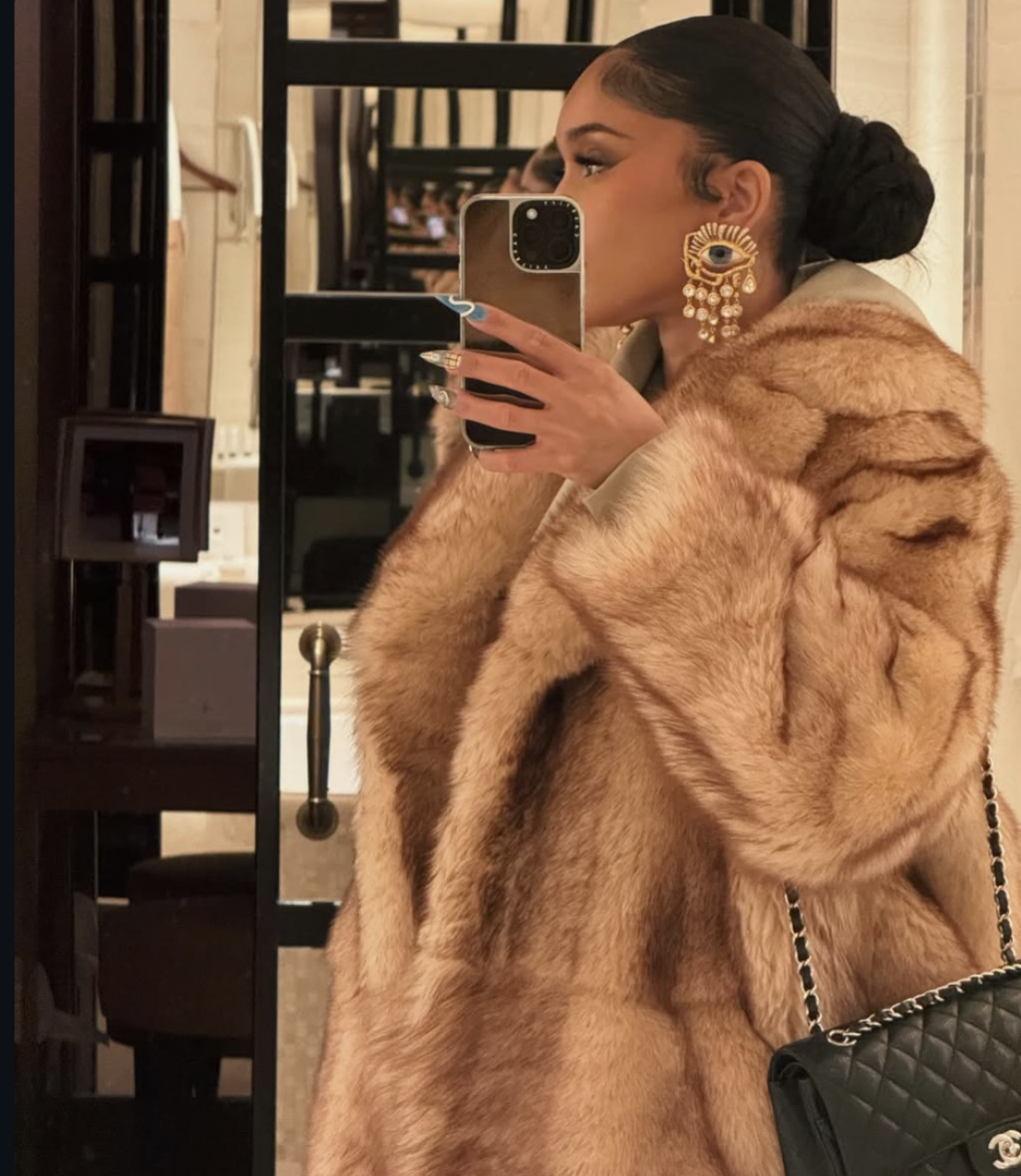
Photo Credit:@autumlovedaily
Knowing your face shape is the foundation of so many style decisions and most people get it wrong. Hairstyle choices, glasses frames, earring shapes, contouring techniques, collar styles all of them work best when they're chosen with your actual face shape in mind, not a general preference or a vague sense of what looks good. The problem is that most people guess based on a glance in the mirror, which rarely gives an accurate picture.
The mirror distorts. You see your face from the same angle every day, at the same distance, with the same lighting and you've trained yourself to see it a certain way. What the mirror doesn't give you is proportion. You can't tell from a casual glance whether your forehead is actually wider than your jaw, or whether your face is measurably longer than it is wide. You need measurements, or at least a methodical look at the proportions.
This is the definitive guide to determining your face shape: the six main shapes, how to identify each one, and what it actually means for your hair, makeup, accessories, and clothing. Whether you've been incorrectly guessing oval for years or you've genuinely never thought about it, by the end of this guide you'll know exactly what you're working with and more importantly, you'll understand why certain things work and others don't.
Not sure what face shape you have? Answer 5 quick questions and find out then get personalized hairstyle recommendations, glasses frames, and necklines made for your exact features. Take the quiz here
How to Determine Your Face Shape
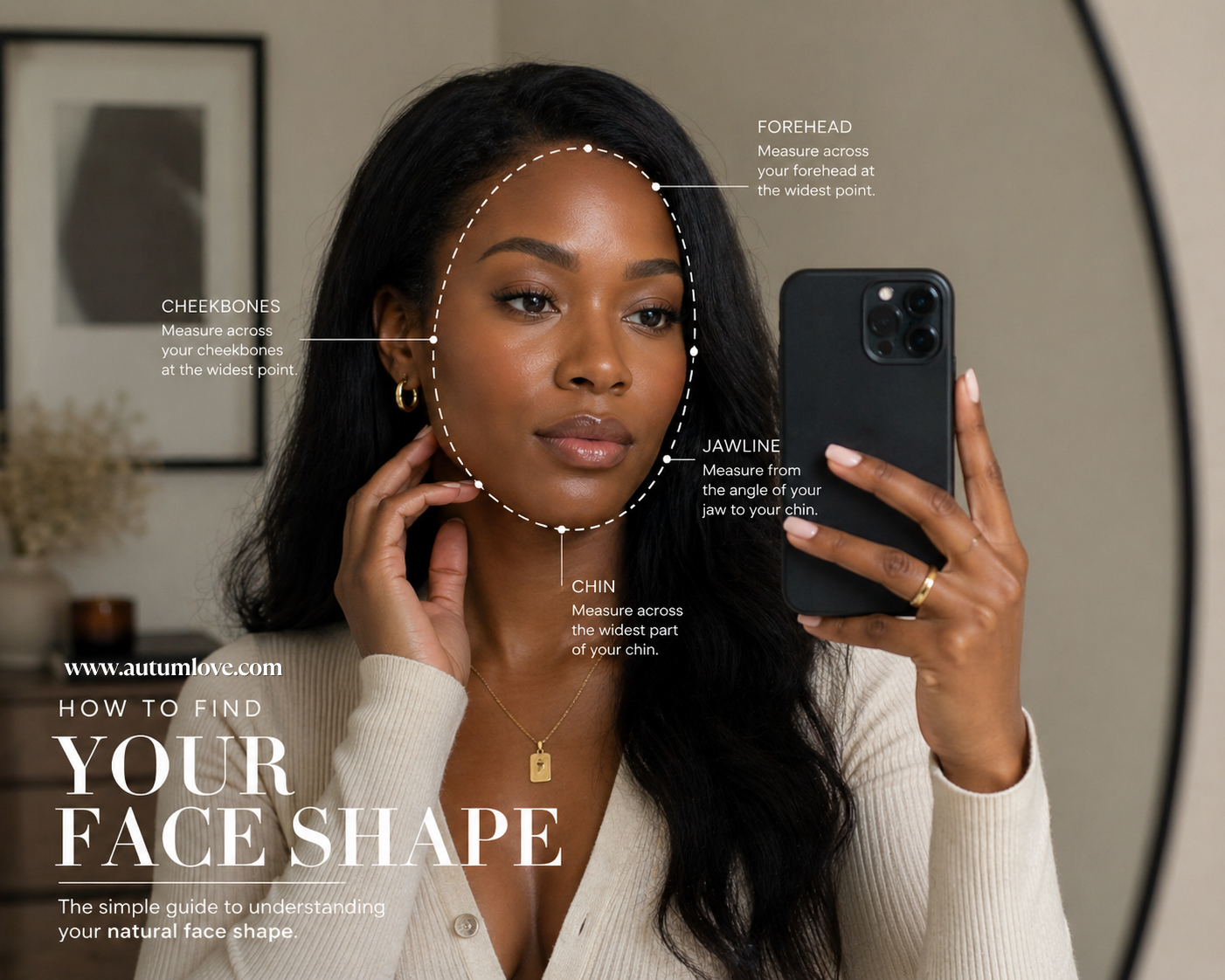
The most accurate way to determine your face shape is to take four measurements: forehead width, cheekbone width, jawline width, and face length. For the forehead width, measure across the widest point of your forehead usually about halfway between your hairline and your eyebrows. This measurement tells you how broad your upper face is relative to the rest.
Cheekbone width is the measurement you take across the widest point of your face usually right across your cheekbones, just below the outer corners of your eyes. This is typically the widest horizontal measurement of the face, and it determines whether you have a face that reads as wide or narrow at its broadest point.
Jawline width is measured across the jaw, typically from the point just below one ear, across the jawline to the same point on the other side. You can also measure the tip of the jaw at the widest point below the chin. This measurement tells you how strong or narrow your lower face is and whether it roughly matches the width of your forehead or cheekbones.
Face length is measured from the center of your hairline straight down to the tip of your chin. This tells you the overall length-to-width ratio of your face. Once you have all four numbers, the patterns in those measurements which is widest, which is narrowest, and how length compares to width determine your face shape. The ratios matter more than the actual numbers.
The Oval Face Shape
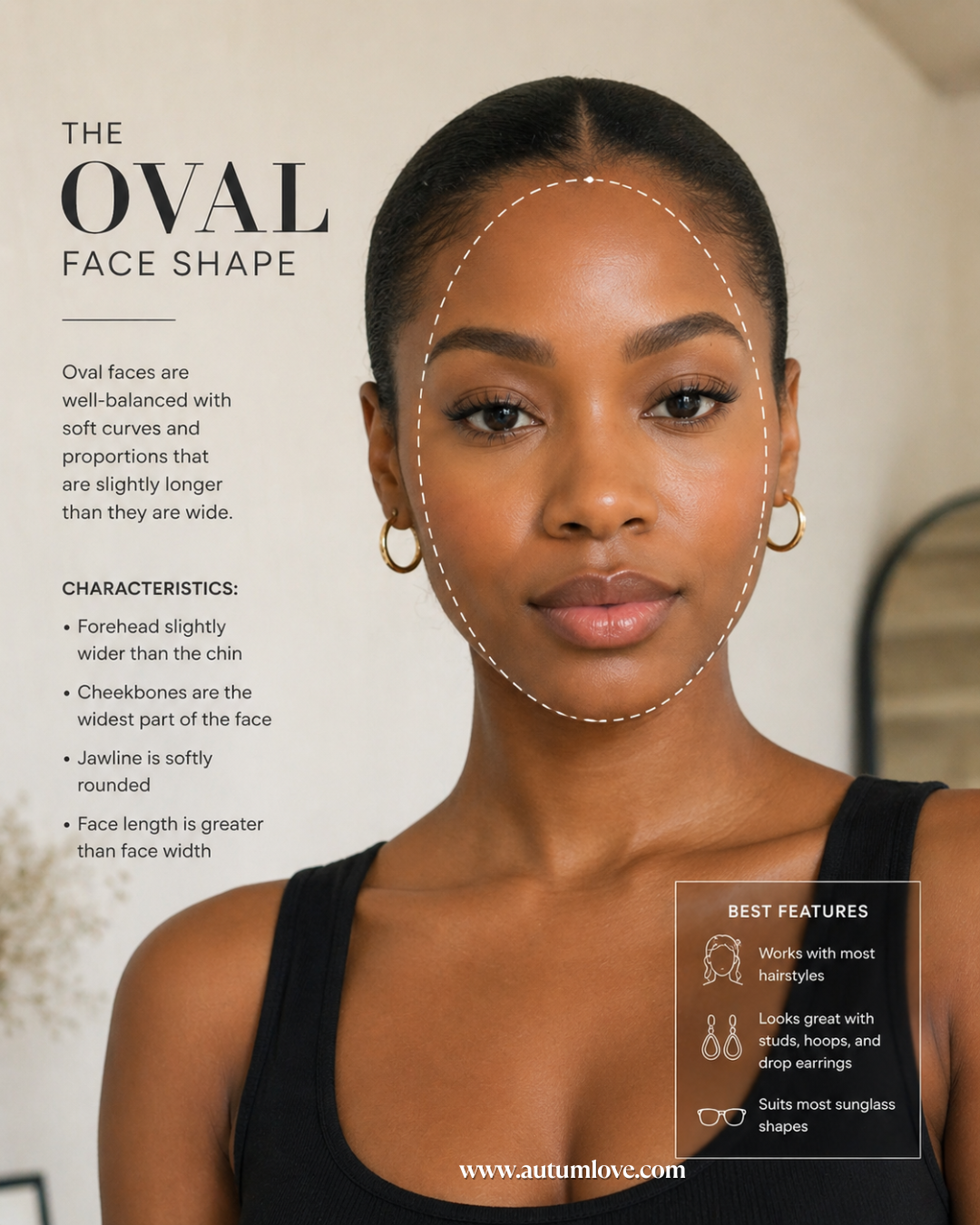
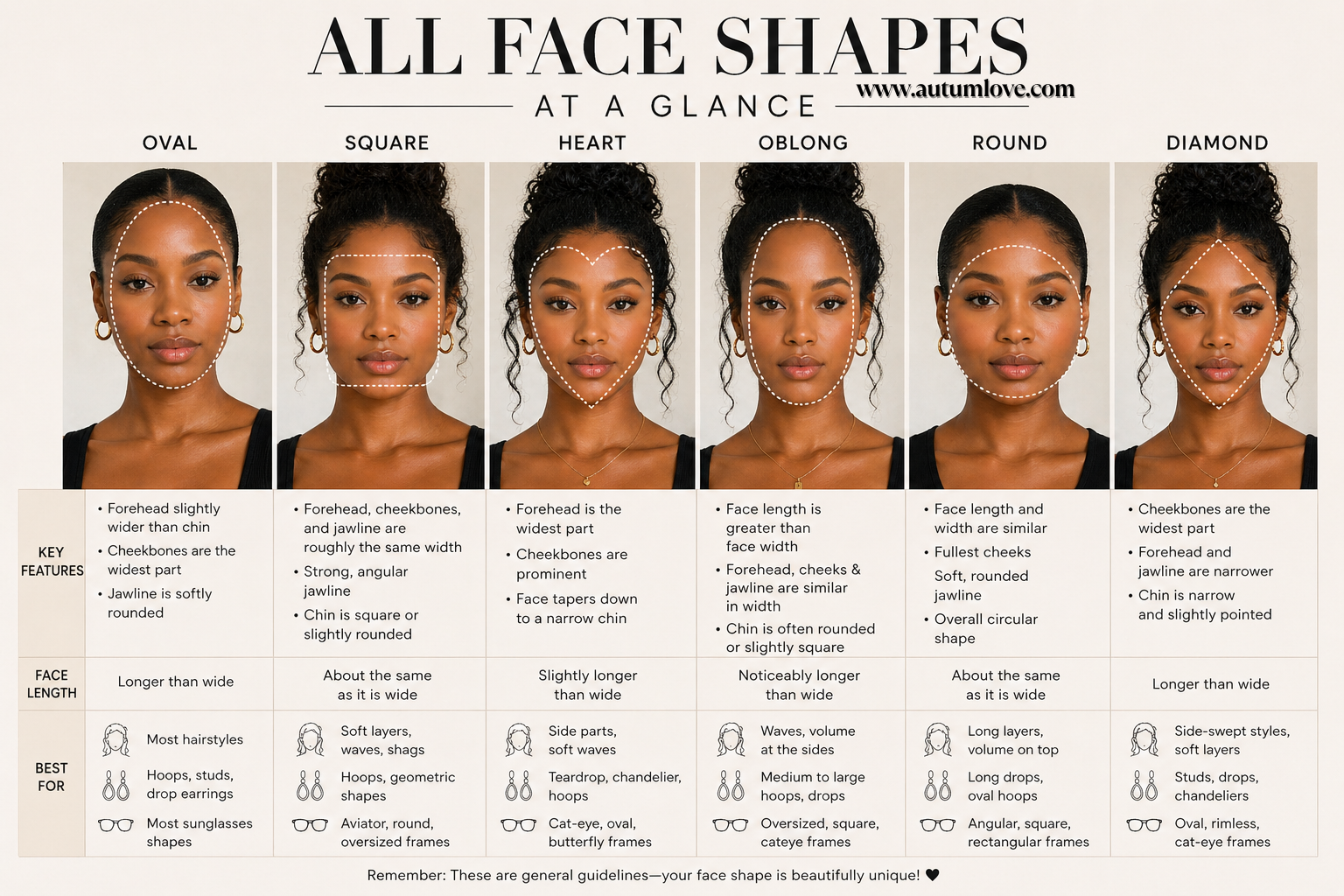
The oval face shape is often called the "ideal" face shape, not because oval faces are more attractive than others, but because the proportions are so balanced that they work with virtually everything. An oval face is approximately 1.5 times longer than it is wide, with the forehead slightly wider than the jaw and the cheekbones sitting as the widest point. The chin is slightly rounded rather than pointed or angular.
Because the proportions of an oval face are naturally balanced, very little visual correction is needed. Any hairstyle can work from a cropped pixie to waist-length waves without creating an imbalance. Any glasses frame works. Any earring shape works. The same is true for collar styles, makeup techniques, and accessories. The oval face shape has no weaknesses in terms of proportion, which is why it's considered the benchmark other shapes are measured against.
That said, having an oval face doesn't mean every choice will automatically look good. Quality, fit, color, and personal style all still matter. The oval face shape simply removes proportion as a concern which frees you to choose based purely on what you love rather than what corrects or balances.
Read This Next: 20 Best Hairstyles for an Oval Face Shape
The Round Face Shape
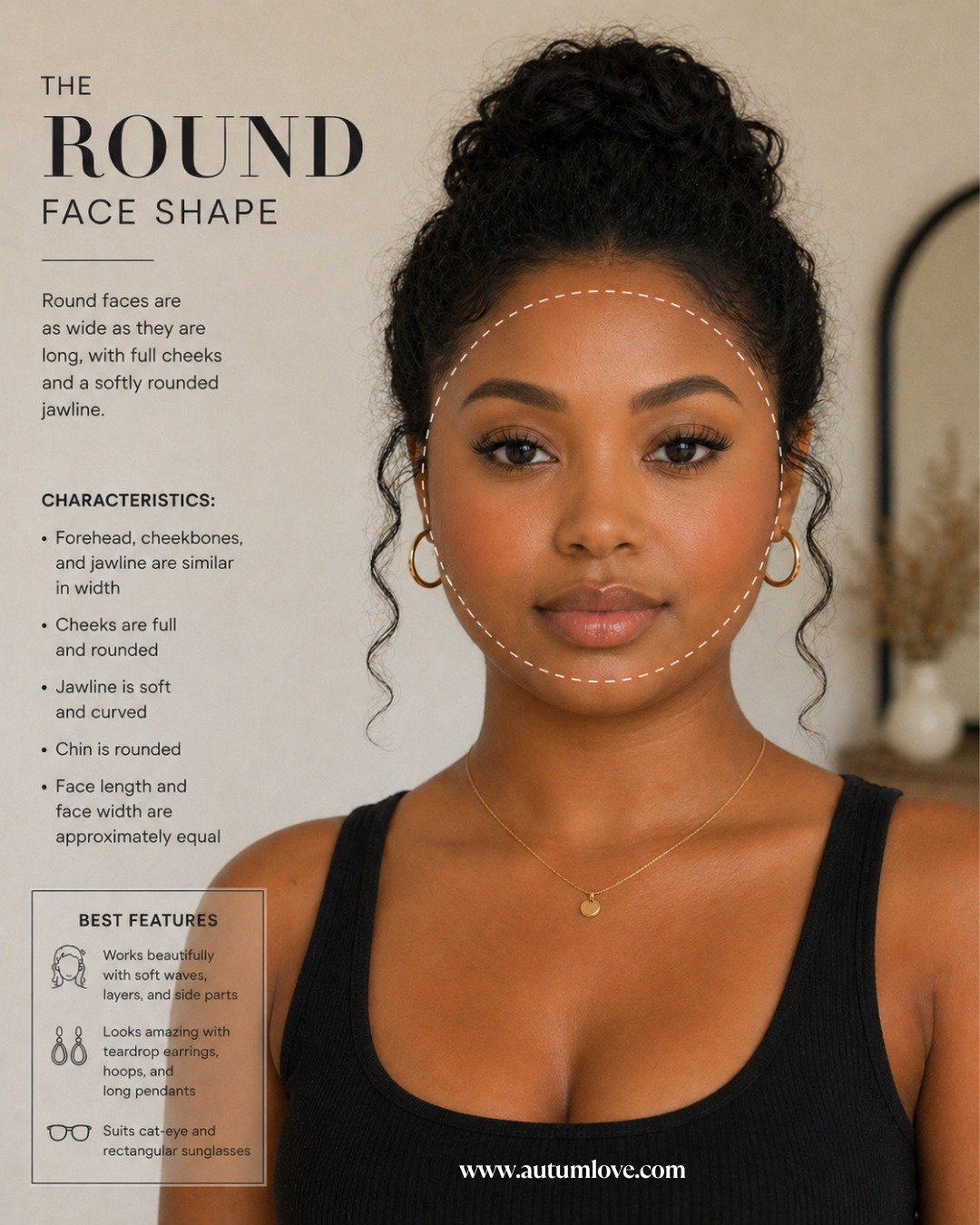
A round face has width and length that are roughly equal, with full, soft cheeks and a rounded jawline with no strong angles. The cheekbones are the widest part of the face, and the jaw and forehead curve gently rather than forming sharp lines. The overall silhouette of the face is circular rather than elongated or angular.
The styling goal for a round face shape is to create the illusion of length to make the face appear more oval by adding vertical visual lines and avoiding elements that emphasize width. What works: center parts (which draw the eye vertically down the face), long layers that fall past the chin, long earrings and drop styles, V-necklines that elongate the neck, and angular glasses frames. These choices all add vertical direction to the face, counteracting the roundness.
The Square Face Shape
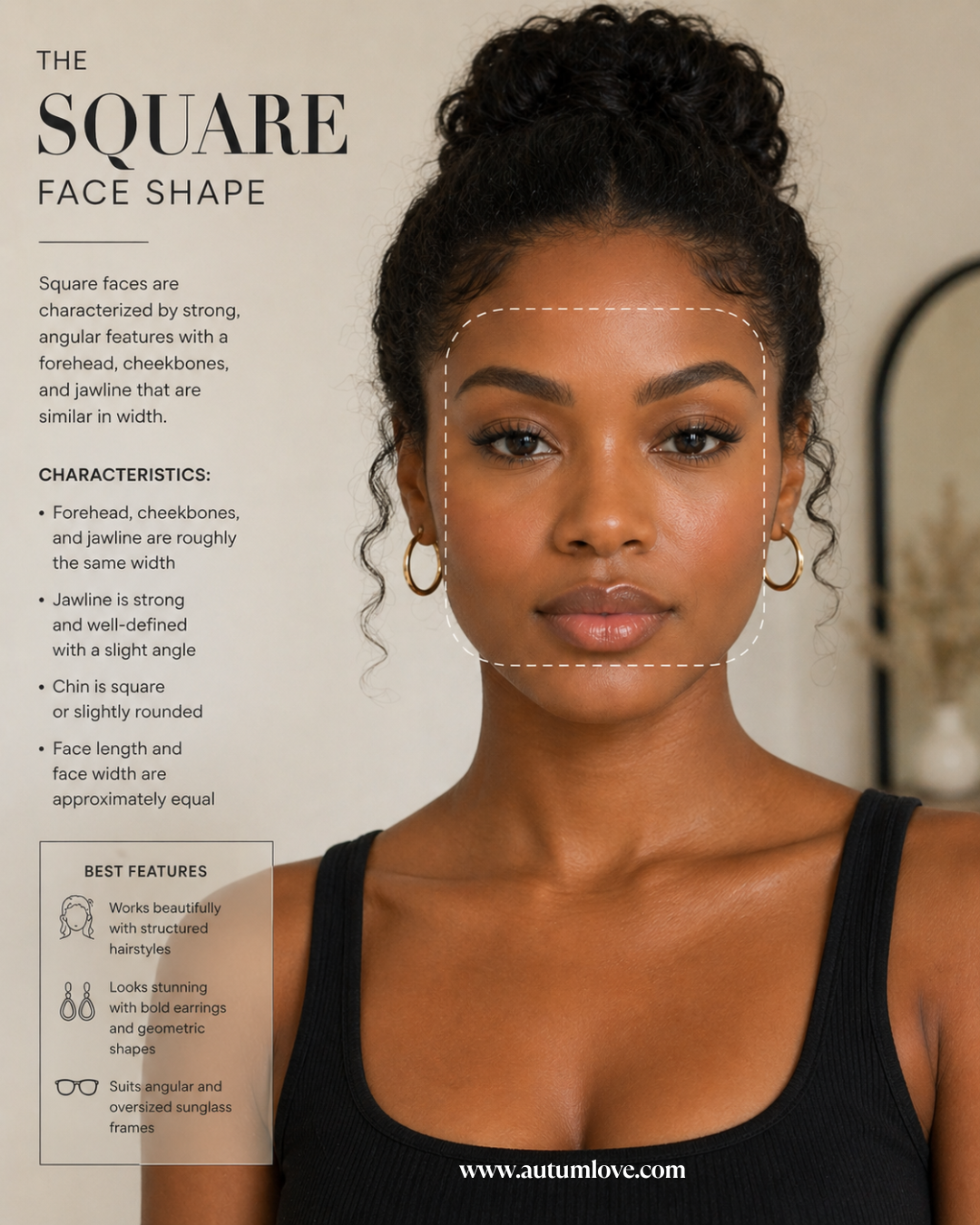
A square face has a strong, angular jawline that is roughly as wide as the forehead and cheekbones. The jaw has a relatively sharp corner rather than a rounded curve, and all three horizontal measurements forehead, cheekbones, and jaw are similar in width. The face may be longer than it is wide, but the defining characteristic is the angularity of the jawline.
The styling goal for a square face is to soften the angles to round out the strong jaw visually and reduce the blockiness that can come from equal-width proportions. What works: soft waves and curls (the organic movement of wavy texture softens angular features naturally), side-swept bangs (which break the strong horizontal line of the forehead), oval and round glasses frames, hoop earrings, and rounded collar styles. All of these choices introduce curves that contrast the angularity of the jaw.
The Heart Face Shape
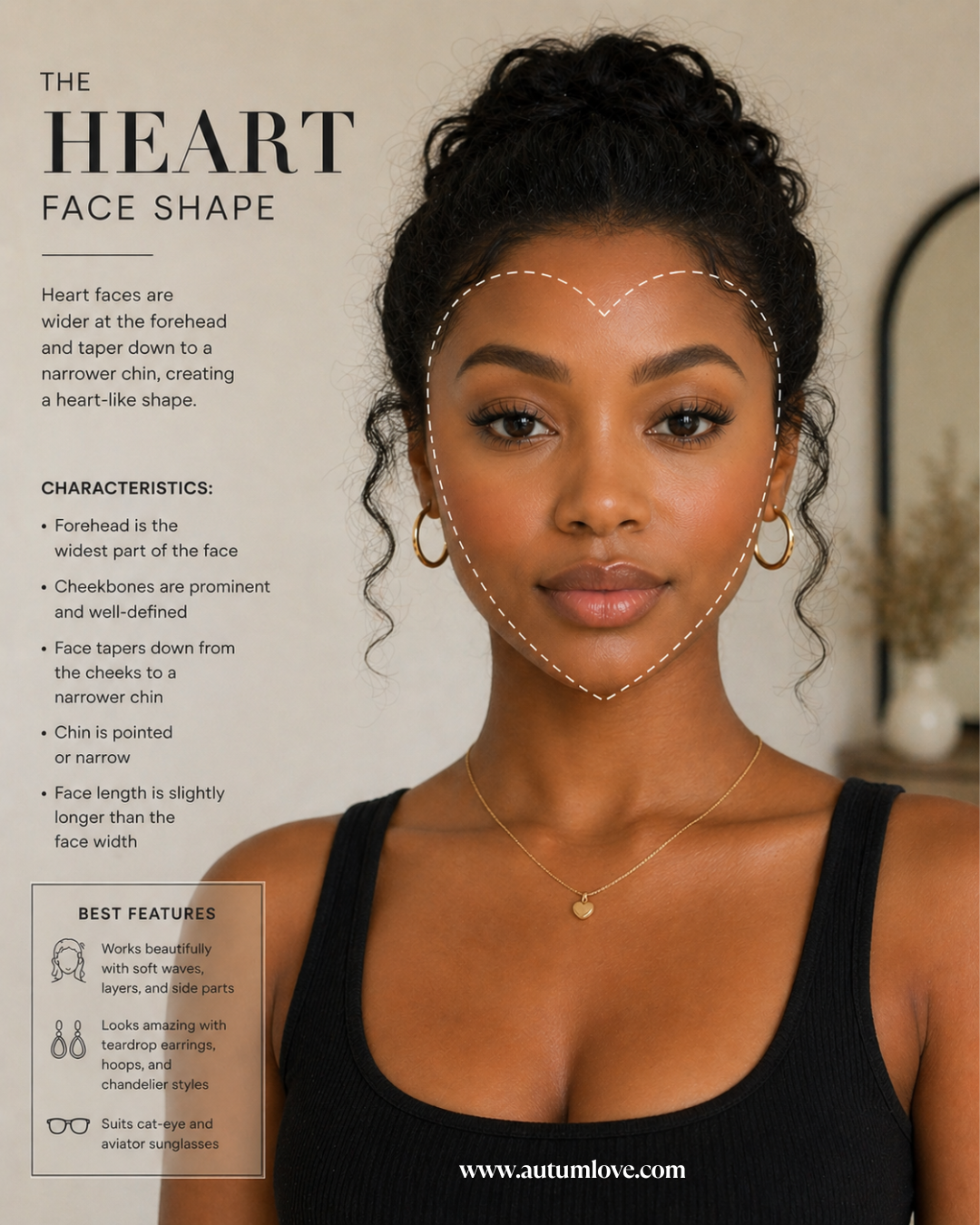
A heart-shaped face is widest at the forehead or temples and narrows to a pointed or small chin. The forehead is the broadest part of the face, and the widest measurement is across the forehead or high cheekbones rather than the jaw. The chin is noticeably narrower, and the overall face tapers downward like an inverted triangle.
The styling goal for a heart face shape is to balance the width at the top with added width at the bottom to make the lower face appear broader and reduce the visual weight of the wide forehead. What works: chin-length bobs (which add width exactly at the jaw), side-swept bangs (which break up the wide forehead and reduce its visual width), cat-eye glasses frames worn slightly wider at the bottom, drop earrings that widen at the lobe rather than the top, and off-shoulder or wide necklines that add visual width at shoulder level.
The Oblong Face Shape
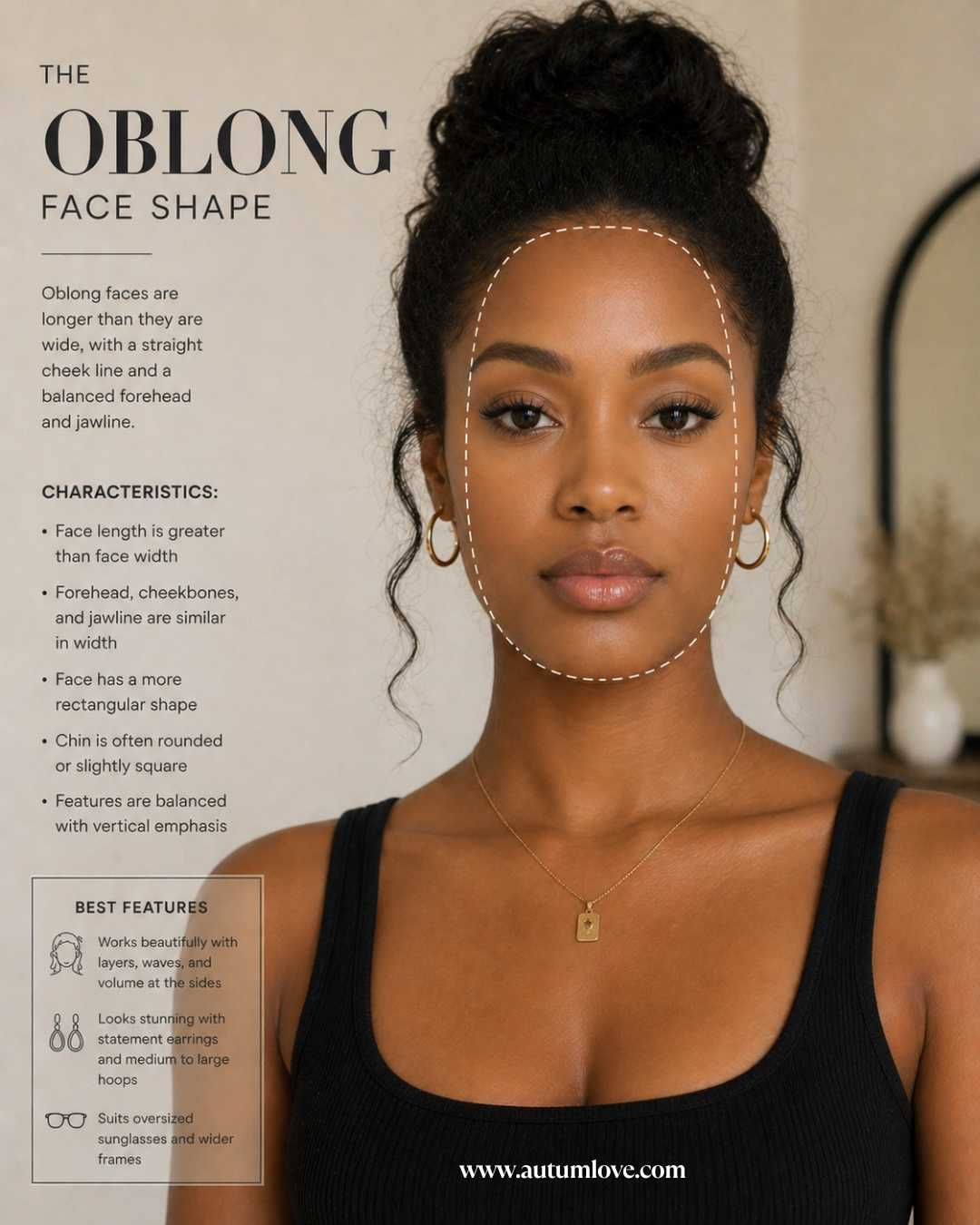
An oblong or long face shape has a face length that is noticeably greater than its width, with the forehead, cheekbones, and jawline all measuring roughly the same width. The face is long and narrow without the angularity of a square face or the sharpness of a diamond. The chin is gently rounded, and there are no dramatic wide or narrow points just consistent width from forehead to jaw and significant length.
The styling goal for an oblong face is to add visual width and reduce the appearance of length. What works: side parts (which interrupt the vertical line of the face), bangs (which shorten the appearance of the face by covering part of the forehead), wide-frame glasses, wide necklines and boat necks (which add horizontal visual width), horizontal stripes, and statement earrings that are wide rather than long. All of these choices break the vertical line of the face or add horizontal emphasis.
The Diamond Face Shape
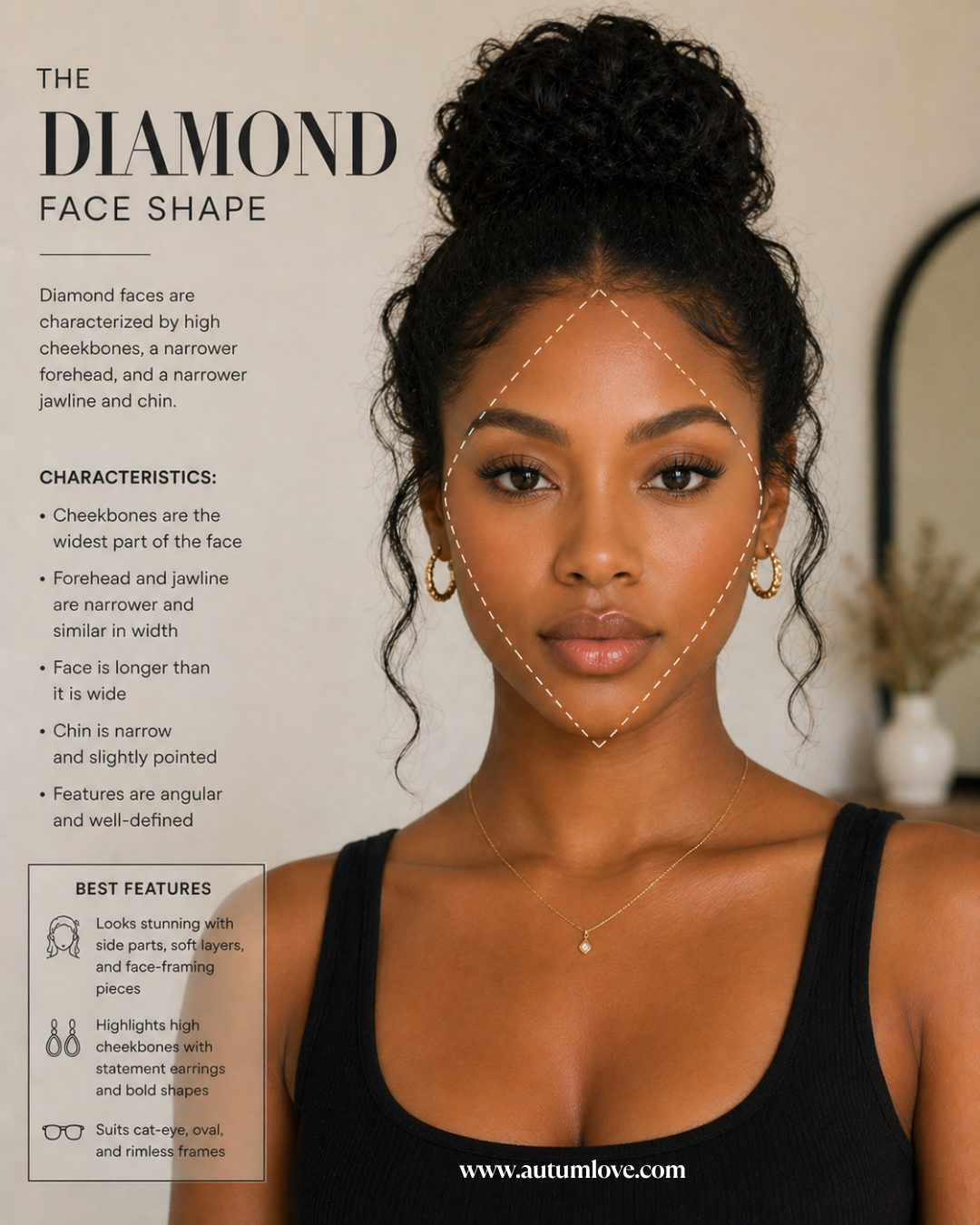
The diamond face shape has a narrow forehead and a narrow chin, with the cheekbones as the widest point of the face often dramatically so. The face is angular, with the cheekbones creating a pronounced width that tapers both upward to the forehead and downward to the jaw. Diamond is considered the rarest of the main face shapes, and it is often mistaken for oval.
The styling goal for a diamond face shape is to widen both the forehead and the jaw adding visual width at the top and bottom of the face to balance the prominent cheekbones. What works: side-swept bangs (which add apparent width to the forehead by creating diagonal lines across it), chin-length or jaw-grazing cuts (which add width at the narrowest part of the face), oval and semi-rimless glasses (which don't overemphasize the cheekbone area), and statement earrings at the lobe level that widen at the bottom.
Once You Know Your Face Shape
Your face shape is a starting point, not a rulebook. The "rules" attached to each face shape exist to explain why certain things work the underlying logic of proportion and balance not to restrict your choices or eliminate options you love. Understanding that logic is actually more useful than memorizing the rules, because once you understand why a long earring adds length to a round face, you can apply that reasoning to any new piece you're considering.
The most stylish choices are almost always deliberate ones chosen with intention rather than default. Knowing your face shape means you can decide to wear the round earrings anyway, fully aware of the effect they create, and style the rest of the look to balance it. That's different from wearing them without thinking and wondering why the outfit feels slightly off. Knowledge gives you options. Use it that way.
Ready to go deeper? Read the full face shape guide for all 6 face shapes, all the inspo.
Don’t Forget to take this quiz to find your exact face shape
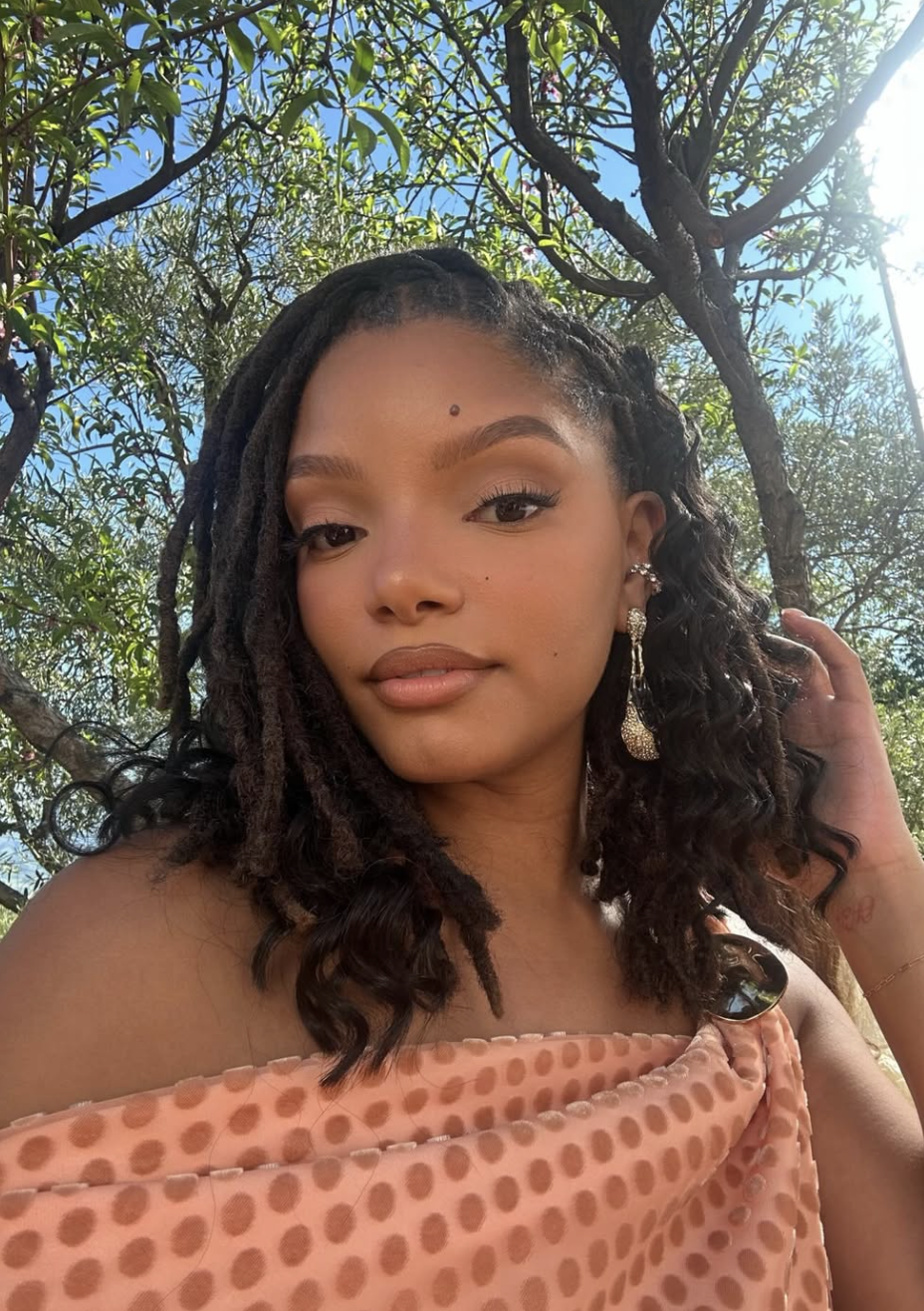
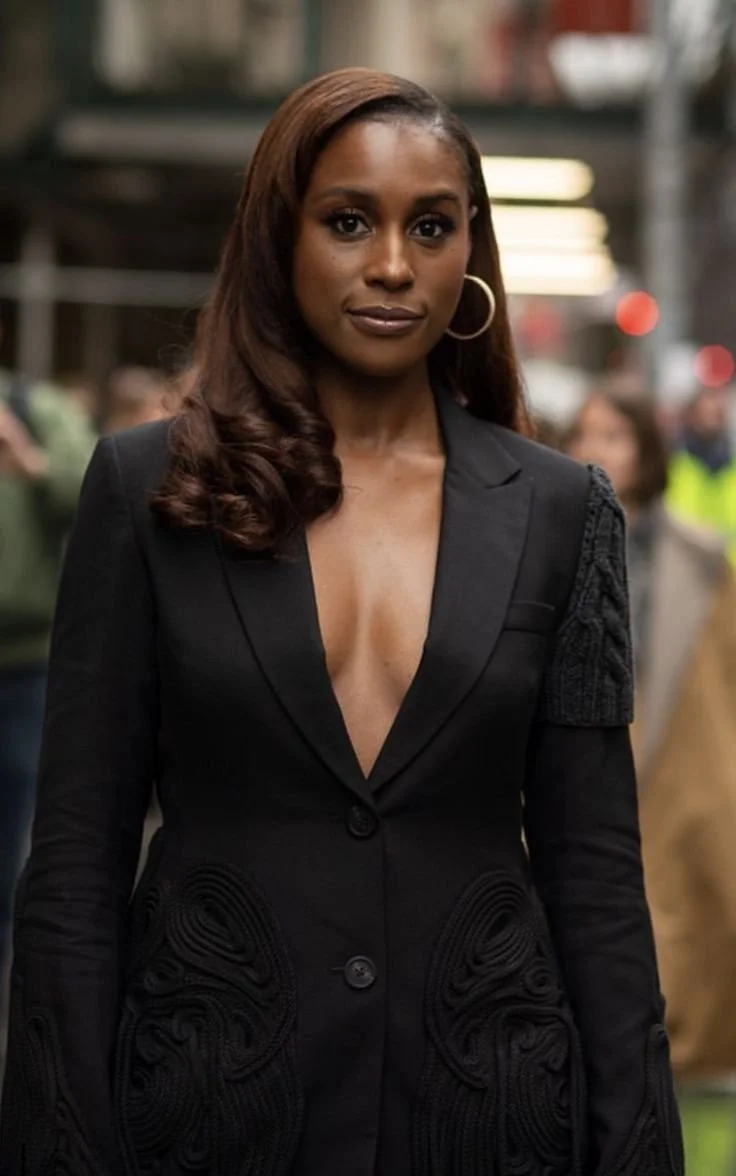
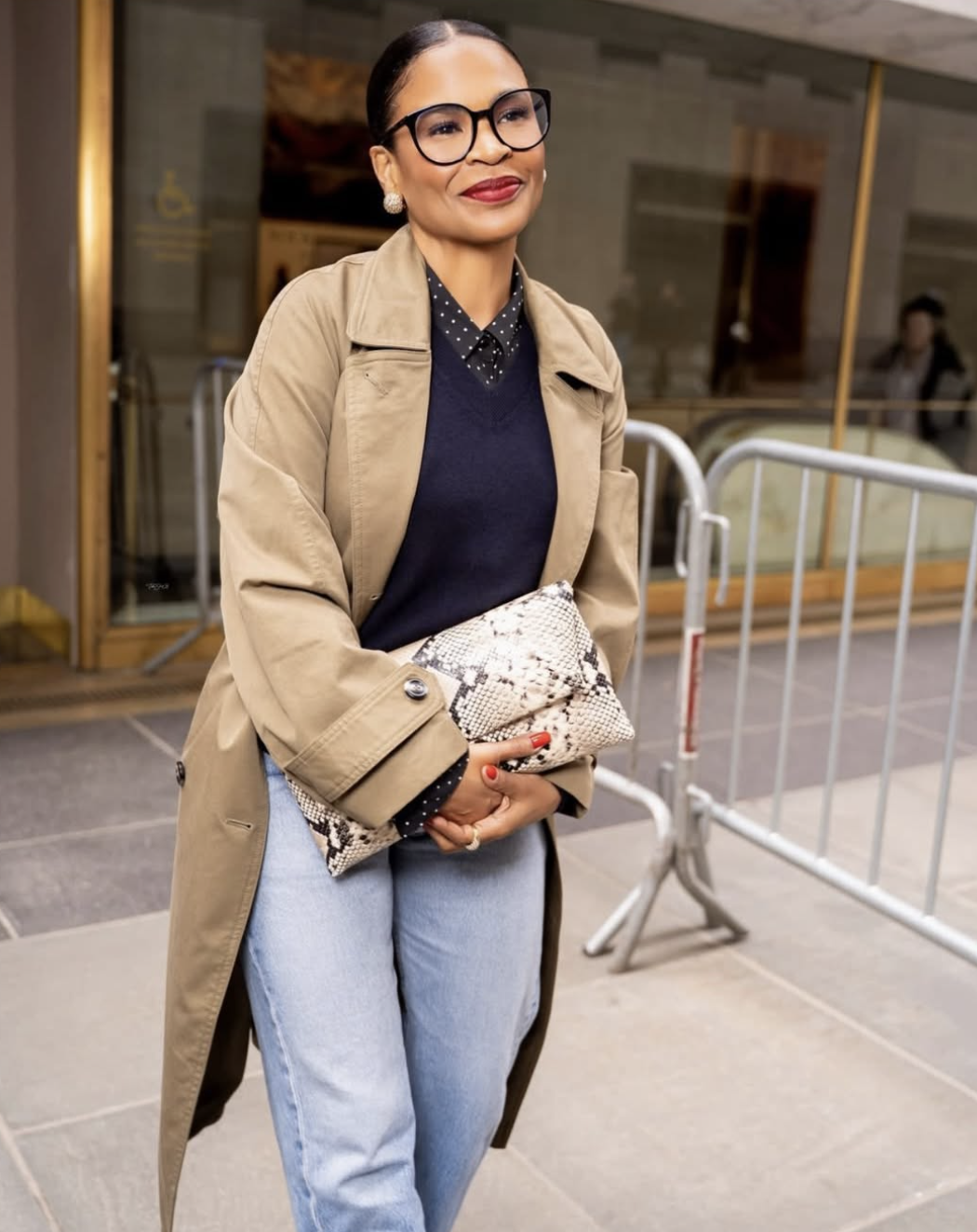

✦ Creator images used for editorial purposes only. All rights belong to their respective creators. We always link and give credit.
✦ Check Out Our Men's Site
Trending on MensOutfitsDaily