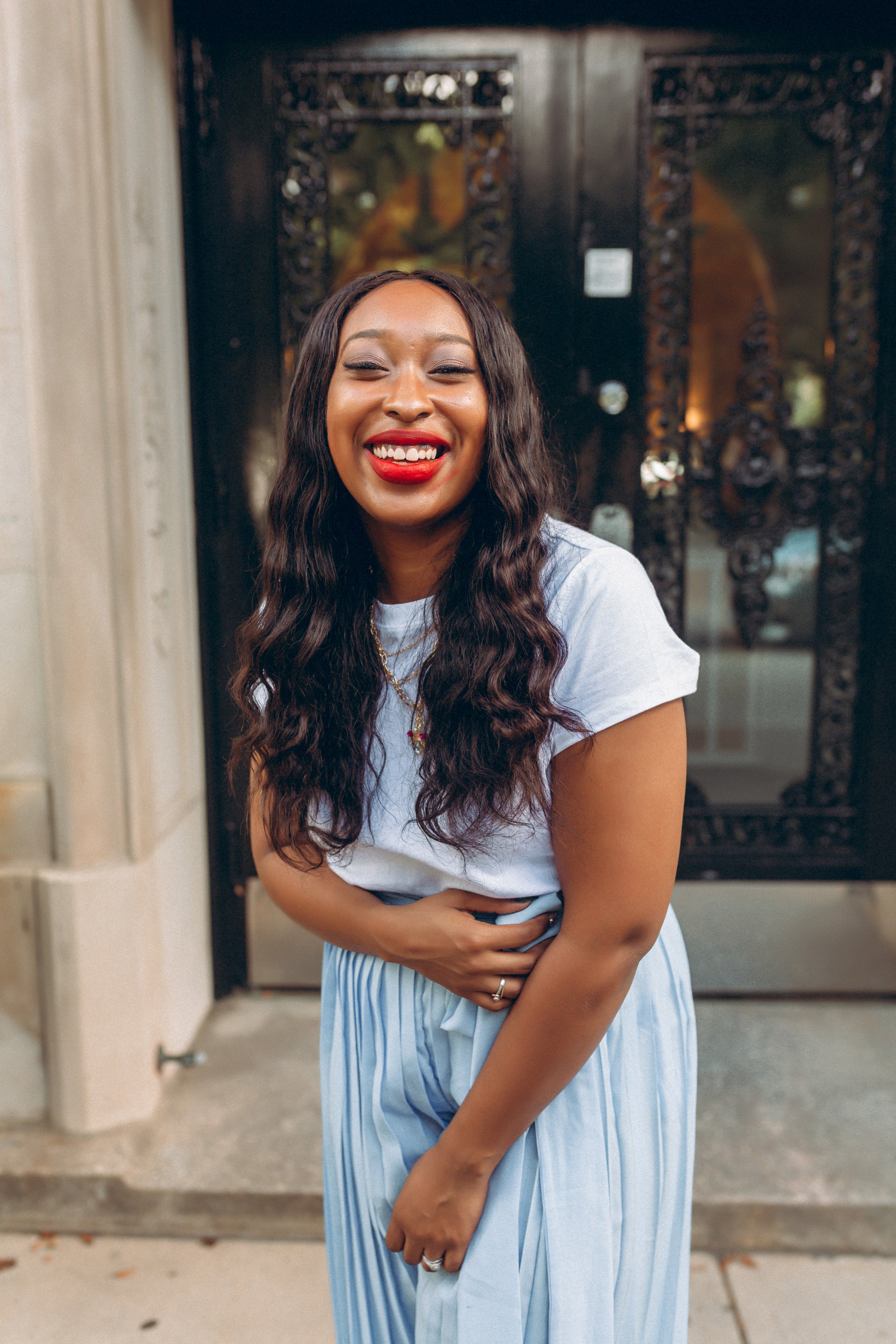
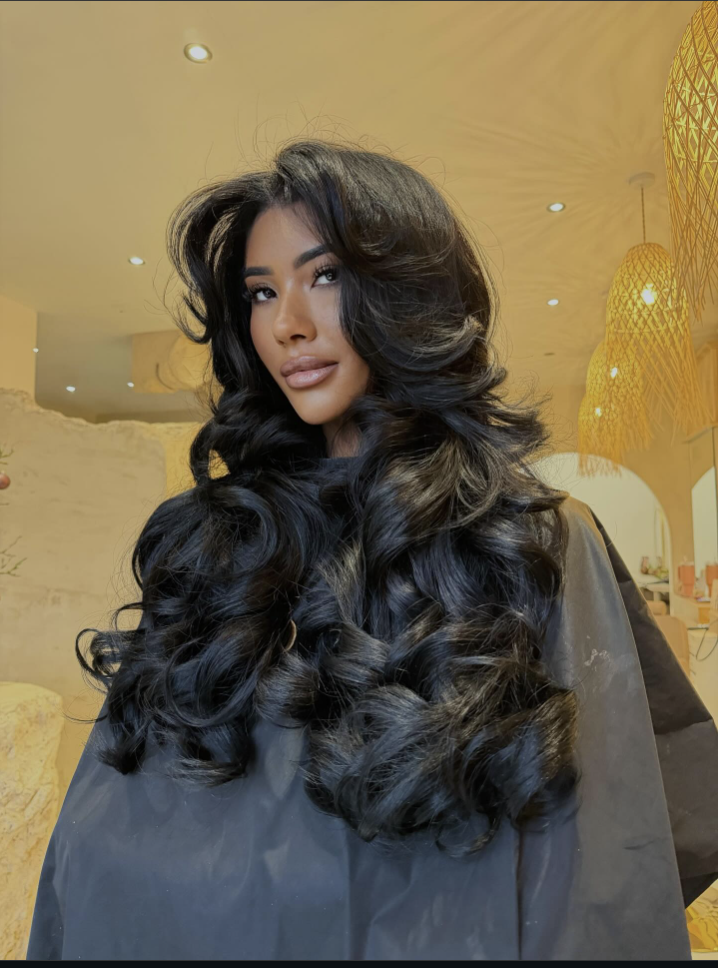
Photo Credit:@thestudio_byalex
The butterfly cut is one of those hairstyles that looks dramatically different in a finished blowout but is surprisingly simple to explain: shorter, face-framing layers sit over longer lengths, creating movement and the illusion of shorter hair without requiring you to give up most of your length.
When the layers are styled away from the face, they fan outward like wings. That airy shape is where the cut gets its name—and why it appears to move even when the overall length stays long.
The important part is understanding that the haircut and the bouncy finish are not the same thing. The layers create the structure, but the dramatic swoop seen in inspiration photos usually comes from a round-brush blowout, rollers or another styling method.
What Is a Butterfly Cut?
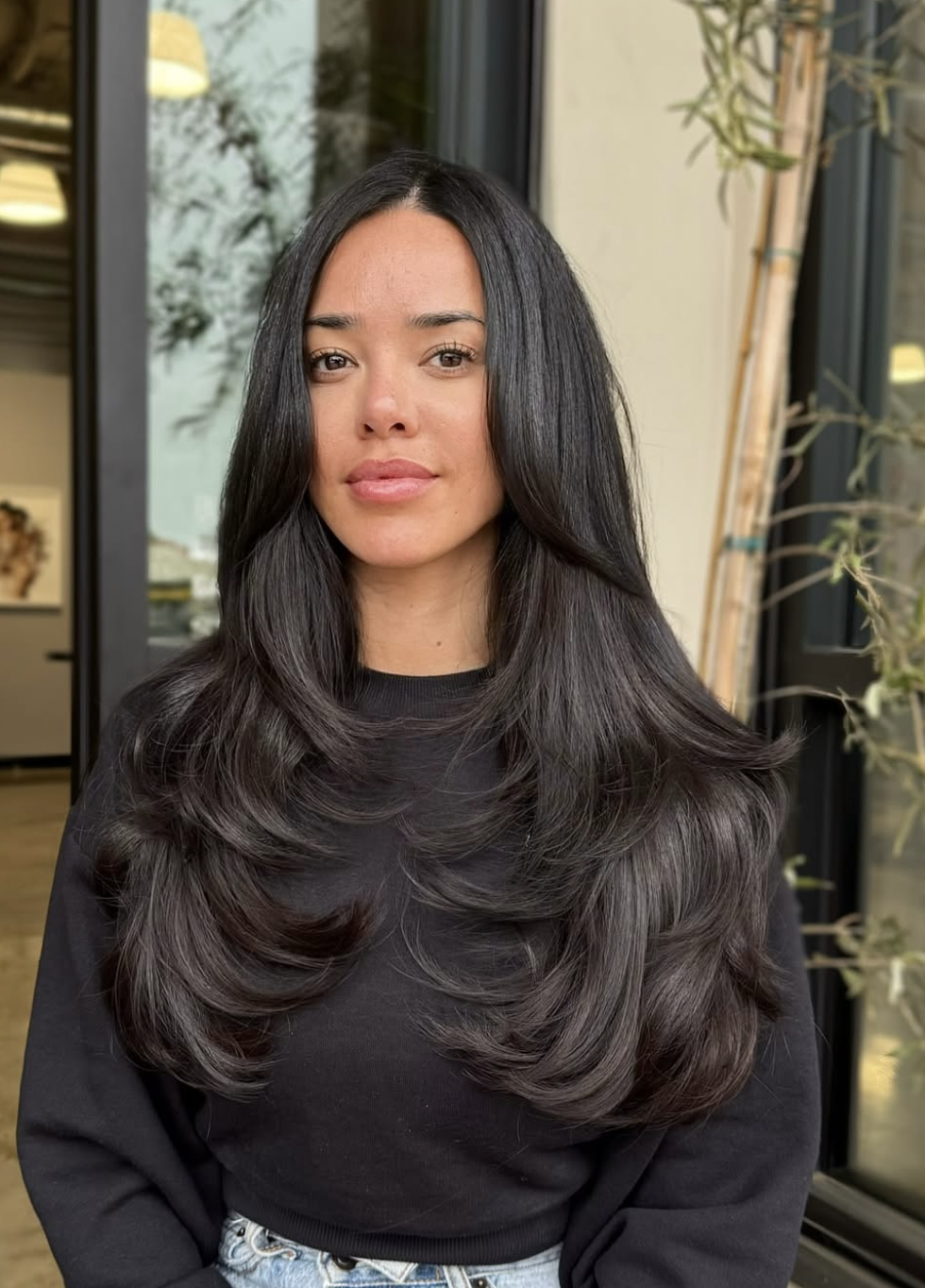
Photo Credit:@hairbyyangie
A butterfly cut is a highly layered haircut that combines shorter pieces around the face and crown with longer layers through the back and lower sections. Rather than distributing identical layers everywhere, the cut uses noticeable changes in length to create lift, movement and a soft face frame.
The shortest pieces may begin near the cheekbones, chin or collarbone. The right starting point depends on your face, hair texture, density and how much daily styling you are willing to do.
On long hair, the contrast can create the illusion of a chin-length or shoulder-length haircut at the front while the back remains long. On medium hair, it creates a rounded, bouncy silhouette with less distance between the shortest and longest layers.
Why Is It Called a Butterfly Cut?
When the front layers are curled or blown away from the face, they resemble two wings opening on either side. The cut is also light and mobile compared with a heavy, one-length shape.
The name may be trendy, but the look itself borrows from familiar references: feathered 1970s hair, bombshell 1990s blowouts and long face-framing layers.
Butterfly Cut vs. Regular Layers
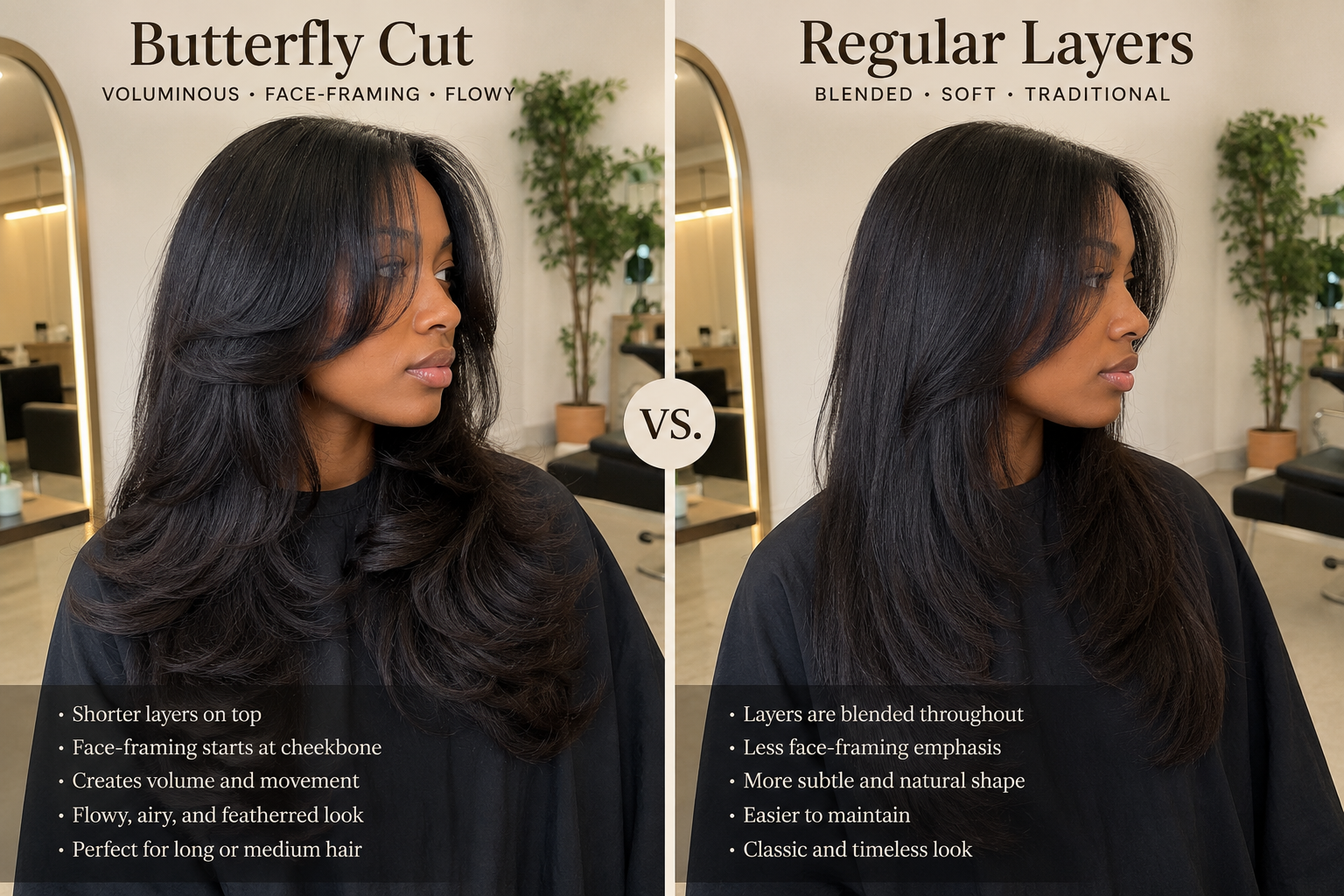
Every butterfly cut is layered, but not every layered haircut is a butterfly cut.
Traditional long layers may be blended gradually throughout the entire haircut. A butterfly cut usually places more emphasis on shorter face-framing and crown layers while preserving length underneath. That stronger contrast is what creates the “short in front, long in back” illusion.
If you want subtle movement that looks almost one-length, request traditional long layers. If you want visible lift, a pronounced face frame and a cut that comes alive during a blowout, the butterfly shape is the better reference.
Butterfly Cut vs. Wolf Cut
Both cuts use layers, but their mood is different.
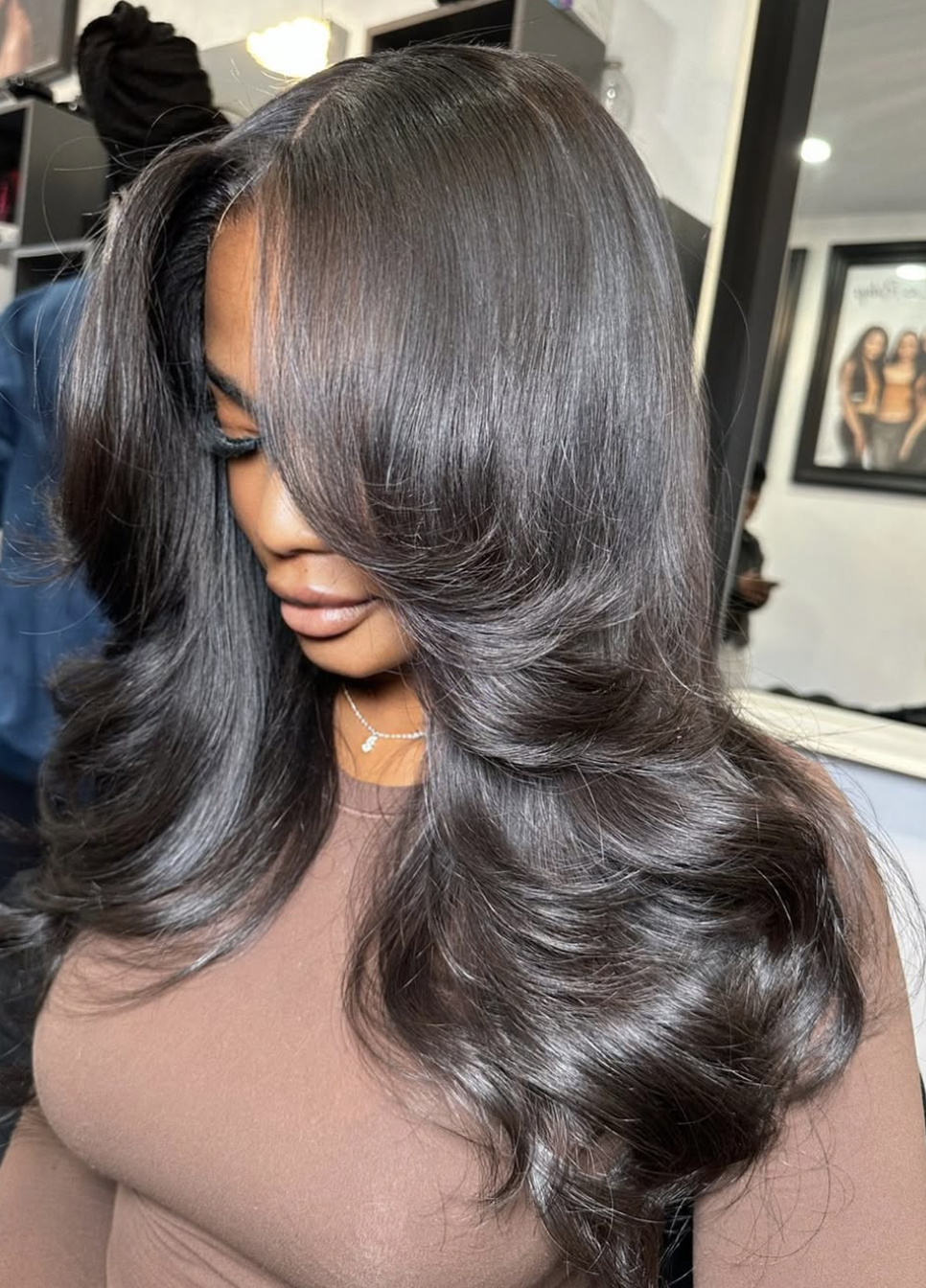
Photo Credit:@chez_les_rubys
A butterfly cut is generally softer, rounder and more polished. Its face-framing pieces are designed to sweep outward, and the longer layers retain fullness and length.
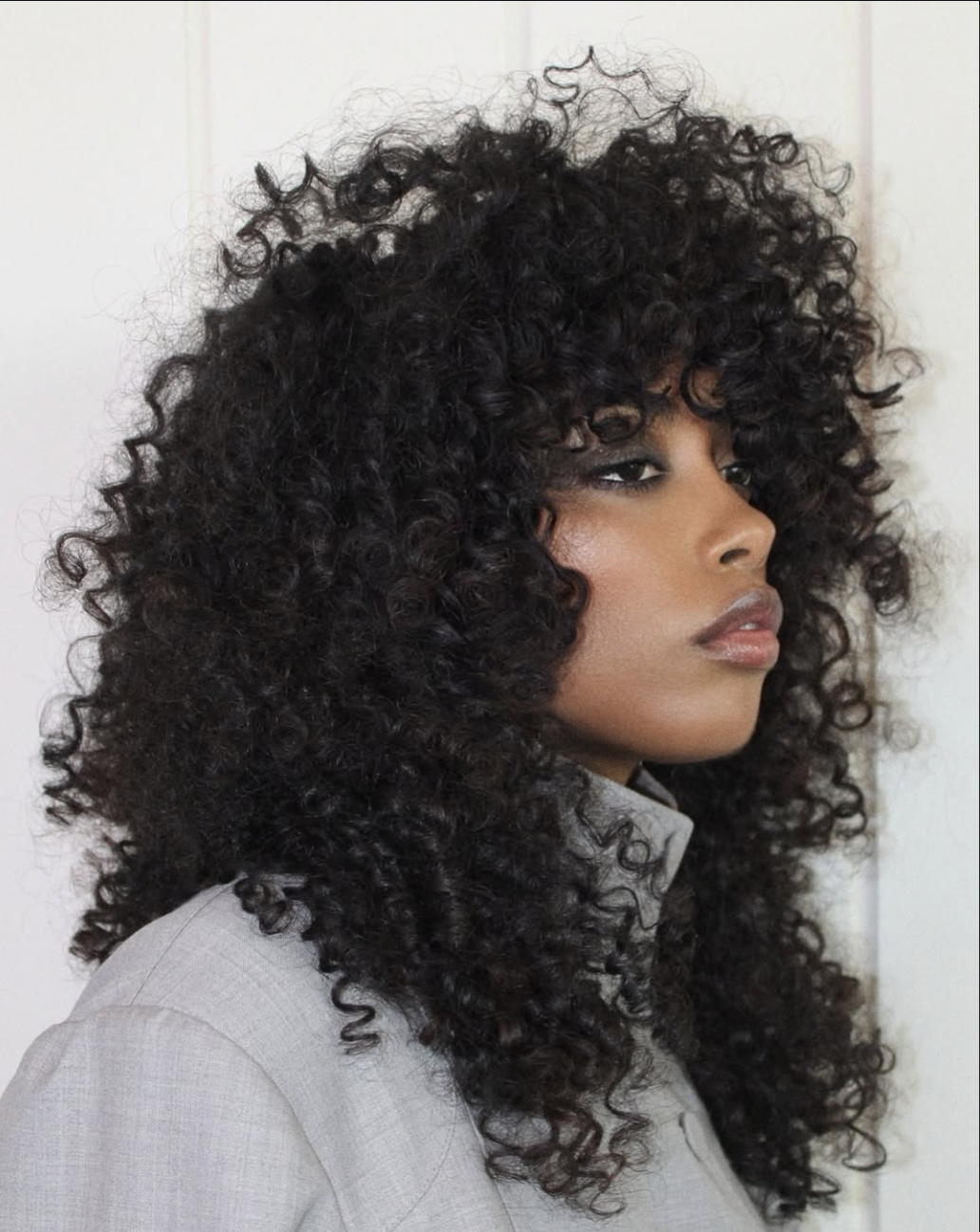
Photo Credit:@slickback_buttahtoast and @ronkingbeauty
A wolf cut typically has choppier separation, more texture through the crown and a deliberately undone finish. Think bouncy and glamorous for the butterfly cut; shaggy and rebellious for the wolf cut.
Who Does a Butterfly Cut Work For?
The cut is adaptable, but customization matters more than the trend name.
Long hair
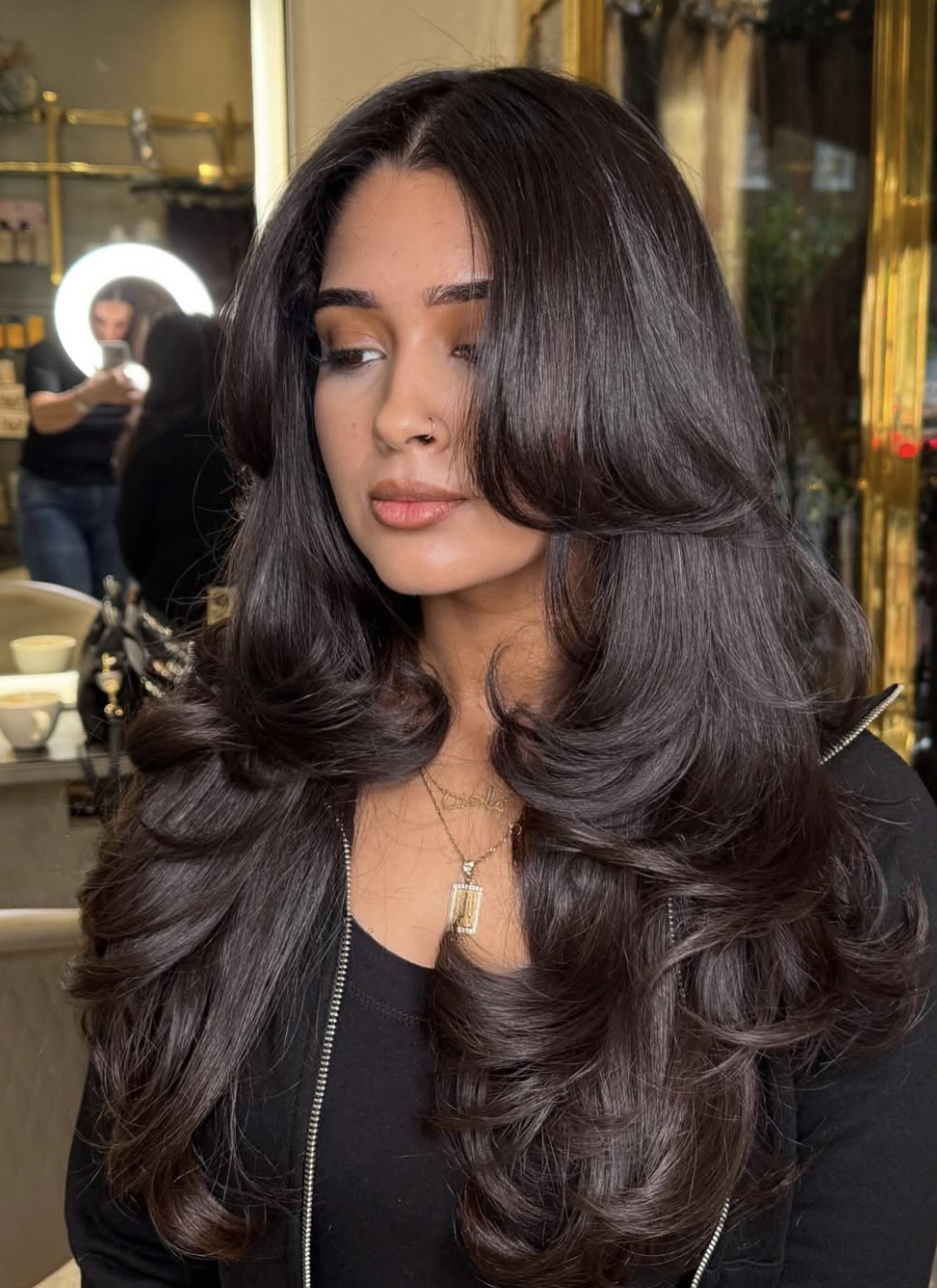
Photo Credit:@hatunhairlondon
Long hair shows the contrast most dramatically. Shorter front layers can provide movement while the lower perimeter remains long and full.
Medium-length hair
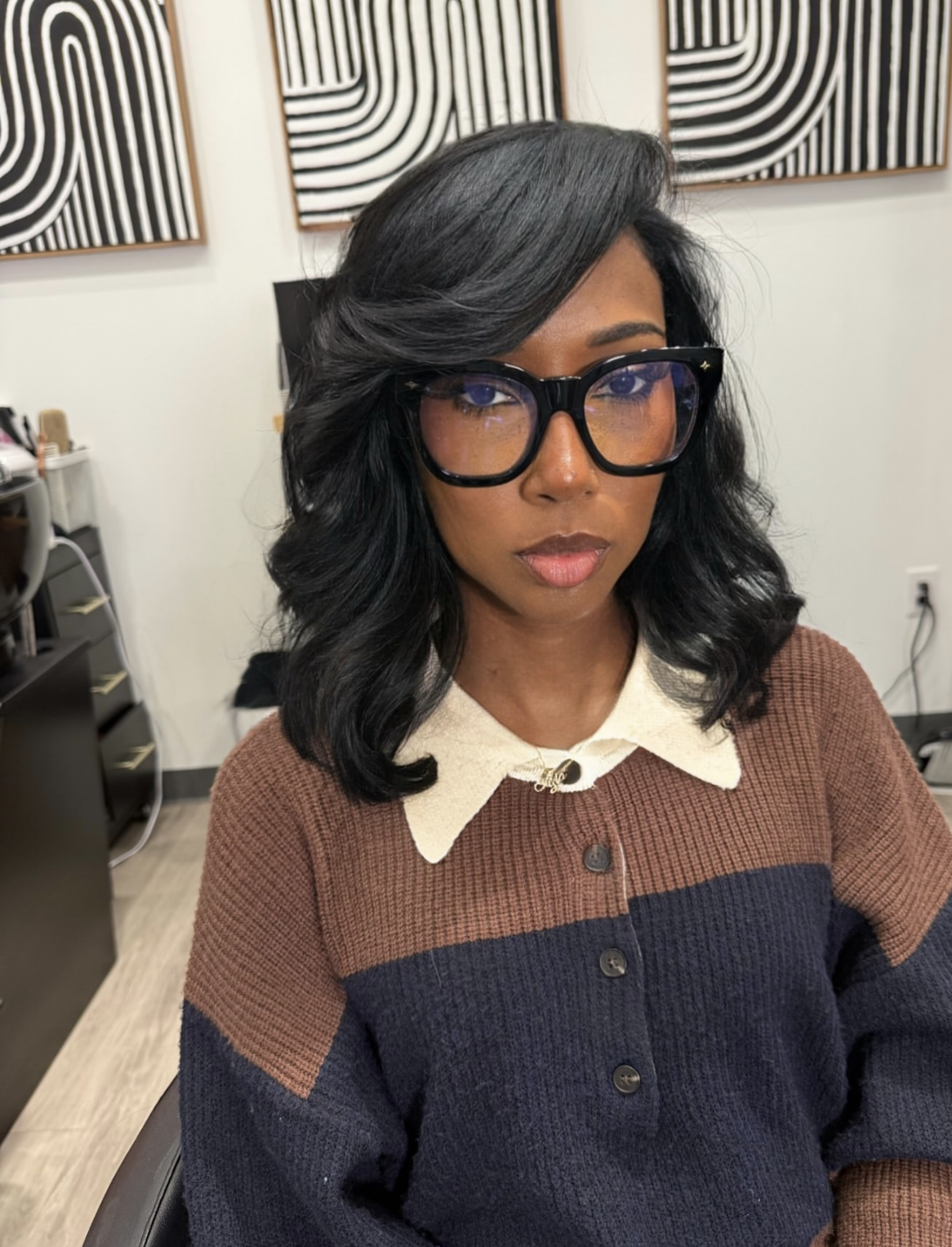
Photo Credit@herselflifestyle.co
On shoulder-length or mid-length hair, the result is rounder and more compact. Ask your stylist how short the top layers can go without making the ends feel thin.
Straight hair
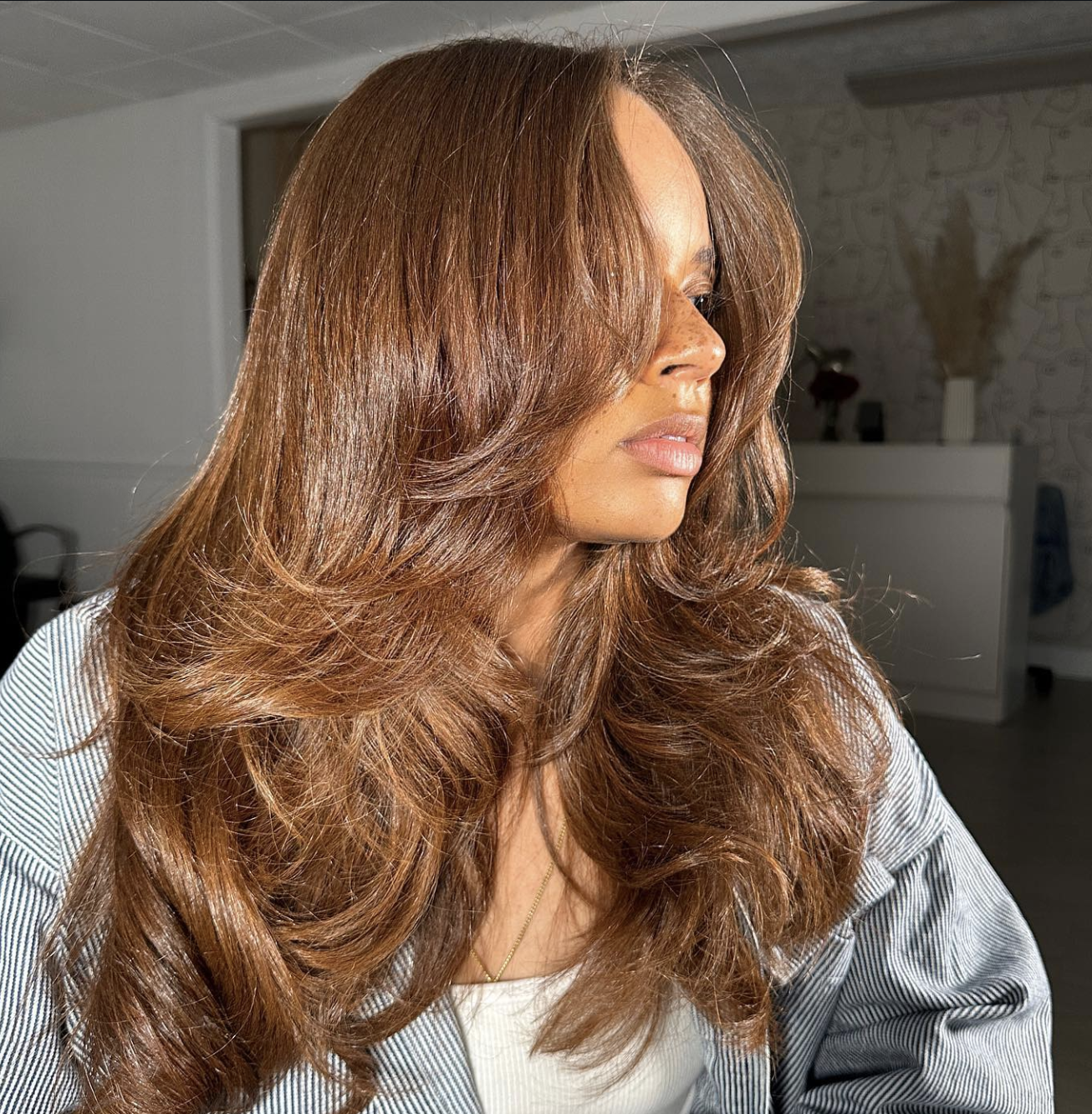
Photo Credit:@rriotstudio
Straight hair makes every layer visible, so precise blending is important. Without styling, the cut may look more like a straightforward layered haircut than the voluminous inspiration photo.
Wavy hair
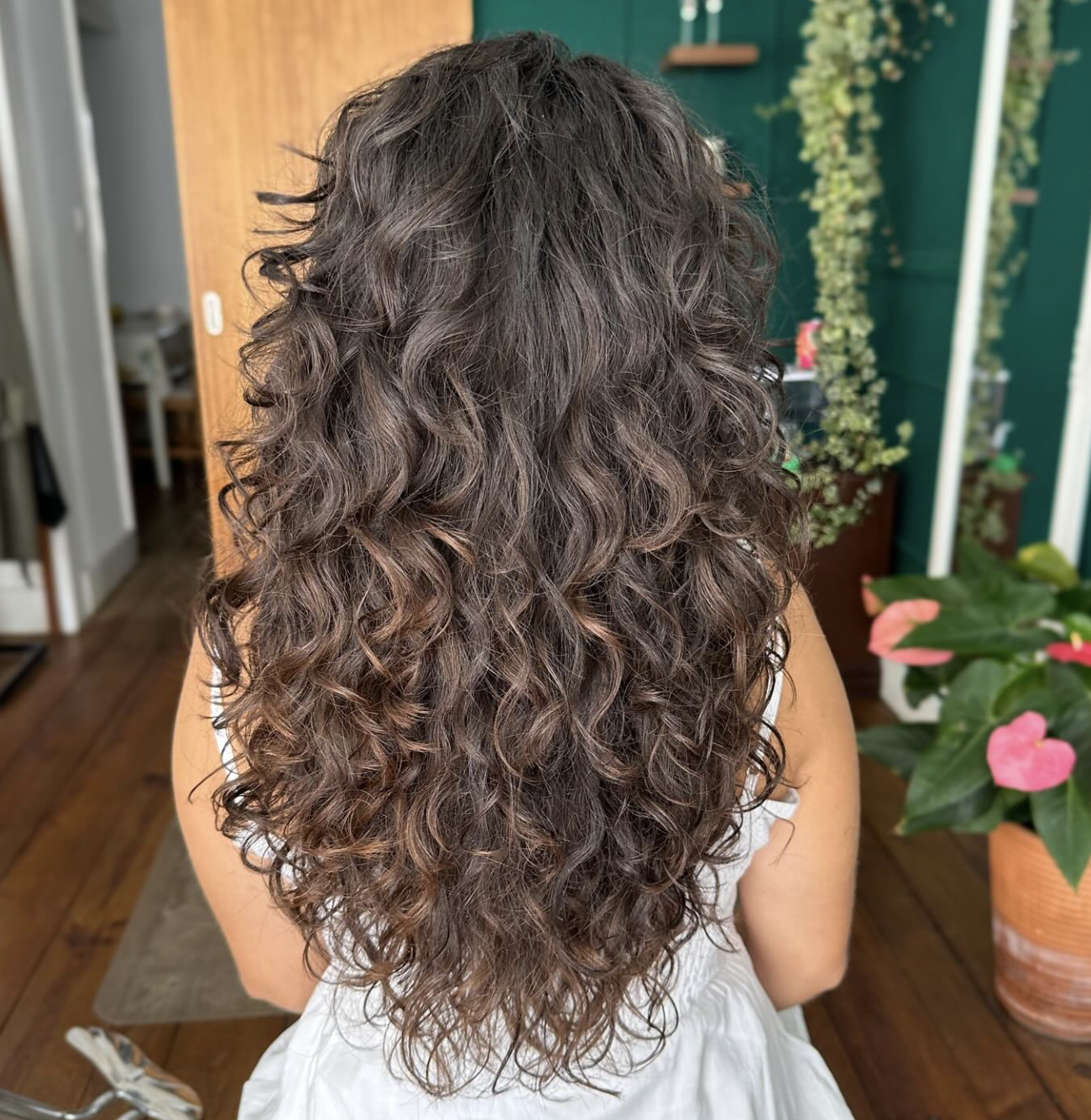
Photo Credit:@jaz.beautyartist
Natural waves can emphasize the movement with less heat styling. A lightweight mousse or air-dry cream can encourage definition while keeping the layers from collapsing.
Curly hair
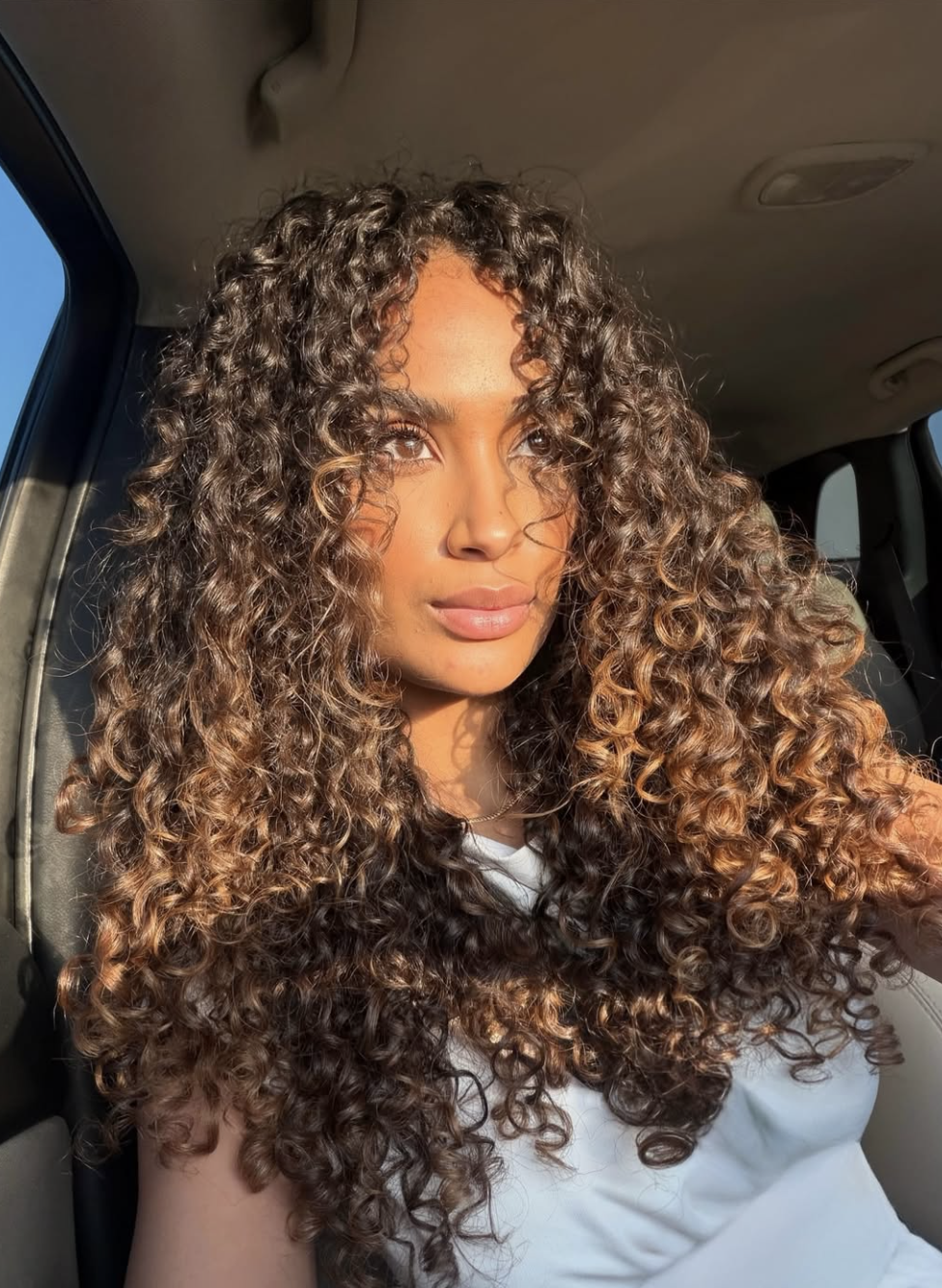
Photo Credit:@sallyxlucas
A butterfly cut can give curls lift and shape, but it should be tailored to shrinkage and curl pattern. Ask for a stylist experienced with your texture, and bring references showing curly—not blown-out—butterfly cuts.
Fine hair
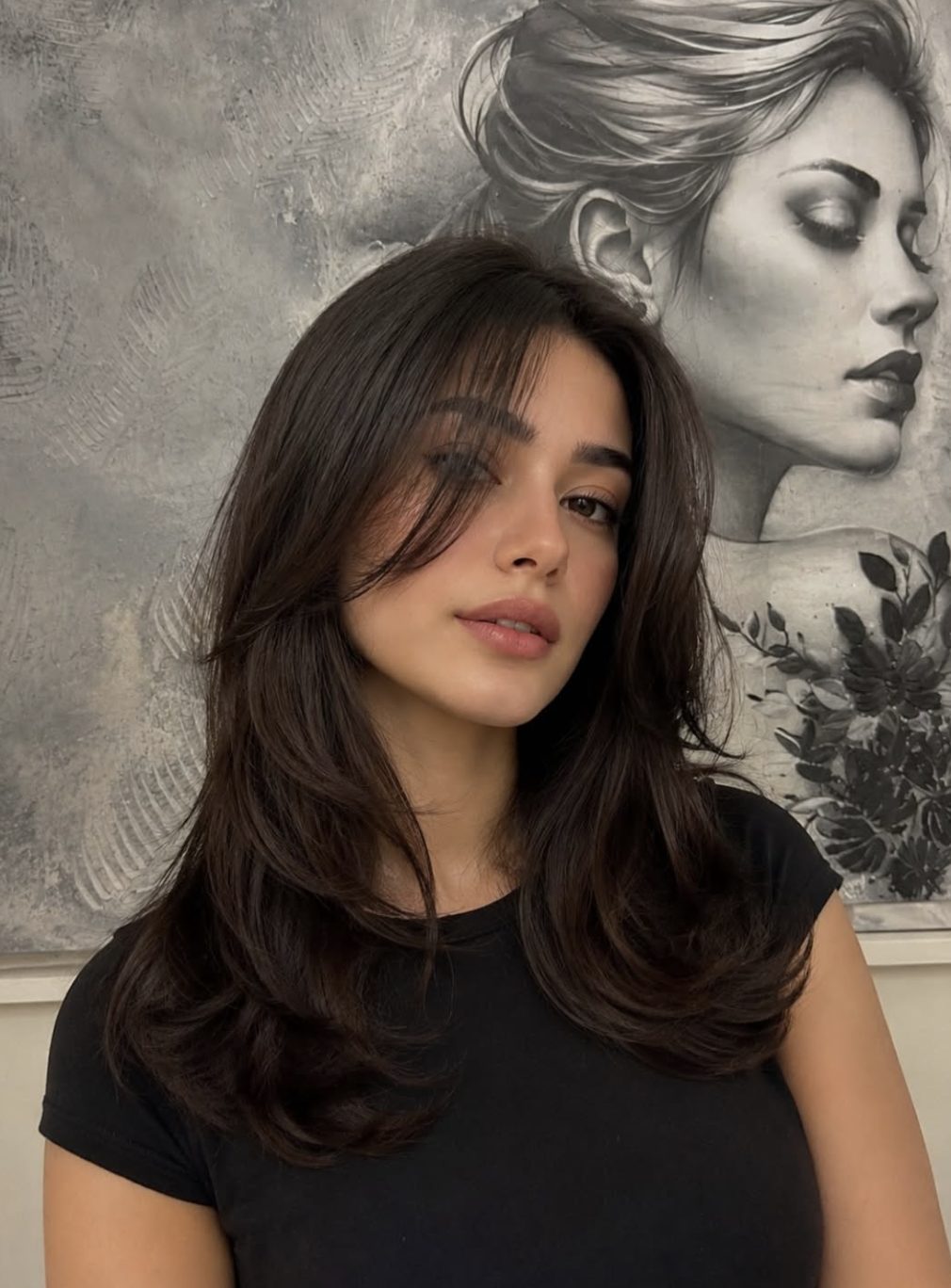
Photo Credit:@emreakhairstudio
Fine hair can wear the cut, but too many short layers may remove the density you want to preserve. Request a softer version with fewer layers and a stronger perimeter.
Thick hair
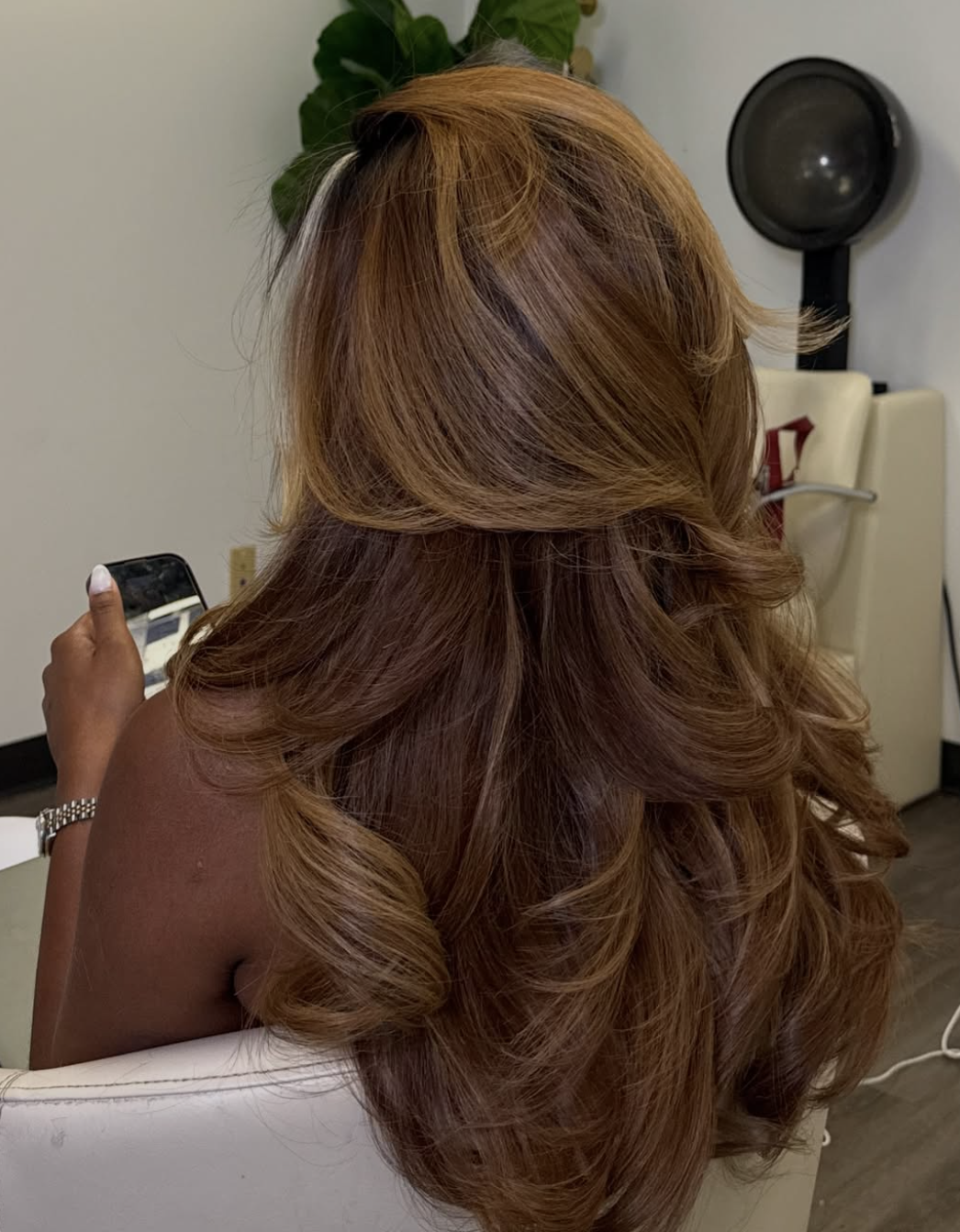
Photo Credit:@stylesby.mecee
Thick hair often benefits from the movement and weight removal, but the stylist still needs to avoid creating a bulky shelf between the shorter and longer sections.
What to Know Before Committing
The butterfly cut is not automatically low-maintenance just because it preserves length. It can be easy to wear naturally, but the specific photos that make people save the trend are often professionally blown out.
Before the appointment, ask yourself:
Do I like the haircut when it is not styled?
Am I comfortable with visible layers?
Do I want fullness at the crown or density at the ends more?
Does my inspiration photo show a texture similar to mine?
Will I style the front pieces when I want the dramatic effect?
Those questions help your stylist create a version that works after the first shampoo—not only in the salon chair.
You May Also Like
The Bixie Haircut Is Everywhere Right Now — Here's Everything to Know