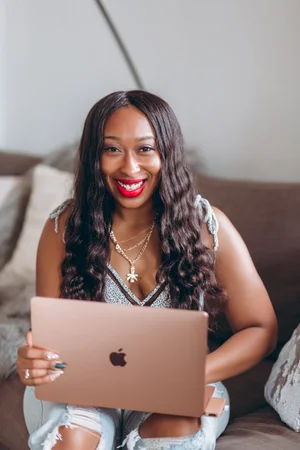

Photo Credit:@autumlovedaily
After I gave birth, getting dressed stopped feeling like a small, ordinary part of my morning. My body had changed. Clothes I once reached for without thinking sat differently, and every outfit seemed to draw my attention toward the parts of myself I was still learning how to accept.
For a while, I hid in sweatpants and oversized clothes. There is nothing wrong with either—I still love a good oversized look—but I was not choosing them because they expressed my style. I was using them to disappear. I compared myself with women who seemed to “bounce back,” avoided going places when I did not feel good in my clothes and gradually lost touch with the person I had been before my wardrobe became a daily source of frustration.
What helped was surprisingly simple: I started documenting my outfits.
Not for Instagram. Not because every outfit was worth posting. I took quick photos because my memory was unreliable. I could stand in front of my closet convinced that nothing worked, then completely forget the outfit from three days earlier that had made me feel comfortable and pulled together. The camera gave me a record of what was actually happening—not the harsher story I sometimes told myself in the mirror.
Over time, those pictures became a wardrobe audit. They showed me what I repeatedly wore, what looked promising but annoyed me after an hour, which colors made my closet feel cohesive and which purchases belonged to a fantasy version of my life. More importantly, outfit journaling helped me reconnect with my body without treating it like a problem I needed to dress around.
If your closet is full but getting dressed still feels difficult, try taking one outfit photo a day before buying anything else. You do not need a content-creator setup, a perfect body or a fashionable life. You need a phone, a consistent angle and enough honesty to notice what your clothes are already telling you.
Why Outfit Photos Work Better Than Memory

Photo Credit:@autumlovedaily
Most of us evaluate an outfit in a rushed moment. We are standing too close to the mirror, thinking about the meeting we are late for or focusing on the one detail that feels wrong. By the end of the day, we remember the frustration more clearly than the outfit itself.
A photograph creates distance. It lets you look at proportion, color and repetition later, when you are not emotionally tangled in the decision. The point is not to judge whether you looked thin enough or photogenic enough. The useful question is: Did this outfit support the day I actually had?
That shift turns a camera roll into an outfit tracker. After a few weeks, you stop guessing about your wardrobe and start seeing evidence.
What Daily Outfit Photos Can Teach You
1. You have a personal uniform—even if you have never named it
You may think your style changes constantly, but your outfit photos will usually reveal a few repeated formulas. Maybe it is a fitted top with wide-leg jeans, a column dress with a cropped layer or leggings with a polished jacket and sneakers. Repetition is not boring; it is information.
Those formulas are the foundation of your real wardrobe. Once you identify them, you can create variations instead of reinventing yourself every morning. Our guide to building a style uniform can help you turn those repeat outfits into a flexible system.
2. Your most-worn clothes may not be your favorite-looking clothes
Closet favorites and life favorites are not always the same. The dramatic dress may be the prettiest item you own, while the soft black trousers quietly appear in eight photos because they work for errands, meetings and dinner. Your camera roll will show which pieces earn their space through usefulness.
This is where cost per wear becomes more than a shopping buzzword. A moderately priced piece worn every week may offer more value than the “investment” purchase that only works with one bra, one pair of shoes and very specific weather.
3. You can see the difference between an outfit that photographs well and one that lives well
Some outfits look wonderful for ten seconds and become irritating by lunch. A waistband rolls. A blazer restricts your arms. The shoes are fine until you walk three blocks. A useful outfit journal records the photo and the experience, because style has to work after you leave the mirror.
When reviewing a look, ask whether you adjusted it all day, avoided sitting down or wished you had brought another layer. Those details explain why certain “good” outfits never become repeats.
4. Your wardrobe gaps become specific
Without evidence, a wardrobe gap sounds like “I need more tops.” Outfit photos make it precise: you may need one washable knit that works with your three most-worn bottoms, a comfortable shoe for long walking days or a third piece that makes basic outfits feel finished.
Specific gaps create better shopping lists. They also prevent you from buying another cute top when the real problem is that none of your current tops work under the jacket you wear twice a week.
5. You can spot the fantasy-self purchases

Photo Credit:@autumlovedaily
There is often a gap between the woman we shop for and the life we actually live. Maybe you own several office dresses while working from home, delicate shoes even though you walk everywhere or vacation pieces that take up an entire section of a closet in a cold climate.
Your daily record does not shame you for those purchases. It simply shows the ratio. If 80 percent of your photos reflect casual, active days, then most of your wardrobe budget should support those days too.
6. Color patterns become impossible to miss
Lay out two weeks of outfit photos and look only at color. You may discover that you feel best in warm earth tones, that every successful outfit includes black or that the bright colors you love online rarely leave your closet.
That does not mean you must eliminate variety. It means you can build a personal color palette around what you genuinely wear, then add accents that cooperate with that base.
7. Your body is not the problem every time an outfit fails
This may be the most important lesson. A photograph can help separate “I hate my body in this” from “this garment is pulling at the shoulder,” “the rise is wrong” or “the proportions need a shorter layer.” Clothing has construction, fit and styling problems. You do not have to make every bad outfit a verdict on yourself.
When something feels off, name the garment issue before criticizing your body. Sometimes the solution is tailoring. Sometimes it is a different shoe or hem length. Sometimes the piece simply does not deserve any more of your energy.
How to Start a 30-Day Outfit Tracker

Photo Credit:@autumlovedaily
Thirty days is long enough to reveal patterns without turning the project into a second job. You can use your phone’s camera roll, a private album, a notes app, a spreadsheet or a dedicated outfit journal. The tool matters far less than making the process easy enough to repeat.
Step 1: Take one quick photo
Use the same mirror or phone position when possible so you can compare proportions from day to day. Face a window if the room is dark, but do not turn this into a photography session. One front-facing photo is enough. A side or back view is only useful when you are evaluating a specific fit issue.
Step 2: Record the context
Write down where you went, the weather and the main activity. An outfit cannot be evaluated without context. A look that feels perfect for a coffee meeting may fail on a school pickup, travel day or eight-hour desk shift.
Step 3: Give the outfit three ratings

Photo Credit:@autumlovedaily
Use a simple one-to-five scale so reviewing the month is easy:
Comfort: Could I move, sit, walk and handle the weather?
Confidence: Did I feel like myself rather than someone I was trying to copy?
Function: Did the outfit work for everything the day required?
An outfit does not need three perfect scores to be useful. A lower rating tells you what needs changing.
Step 4: Write one sentence about what worked
Keep it concrete: “The cropped jacket balanced the wide-leg jeans.” “These shoes made the dress comfortable enough for errands.” “The gold earrings kept the sweater from feeling plain.” These are instructions you can reuse.
Step 5: Write one sentence about the friction
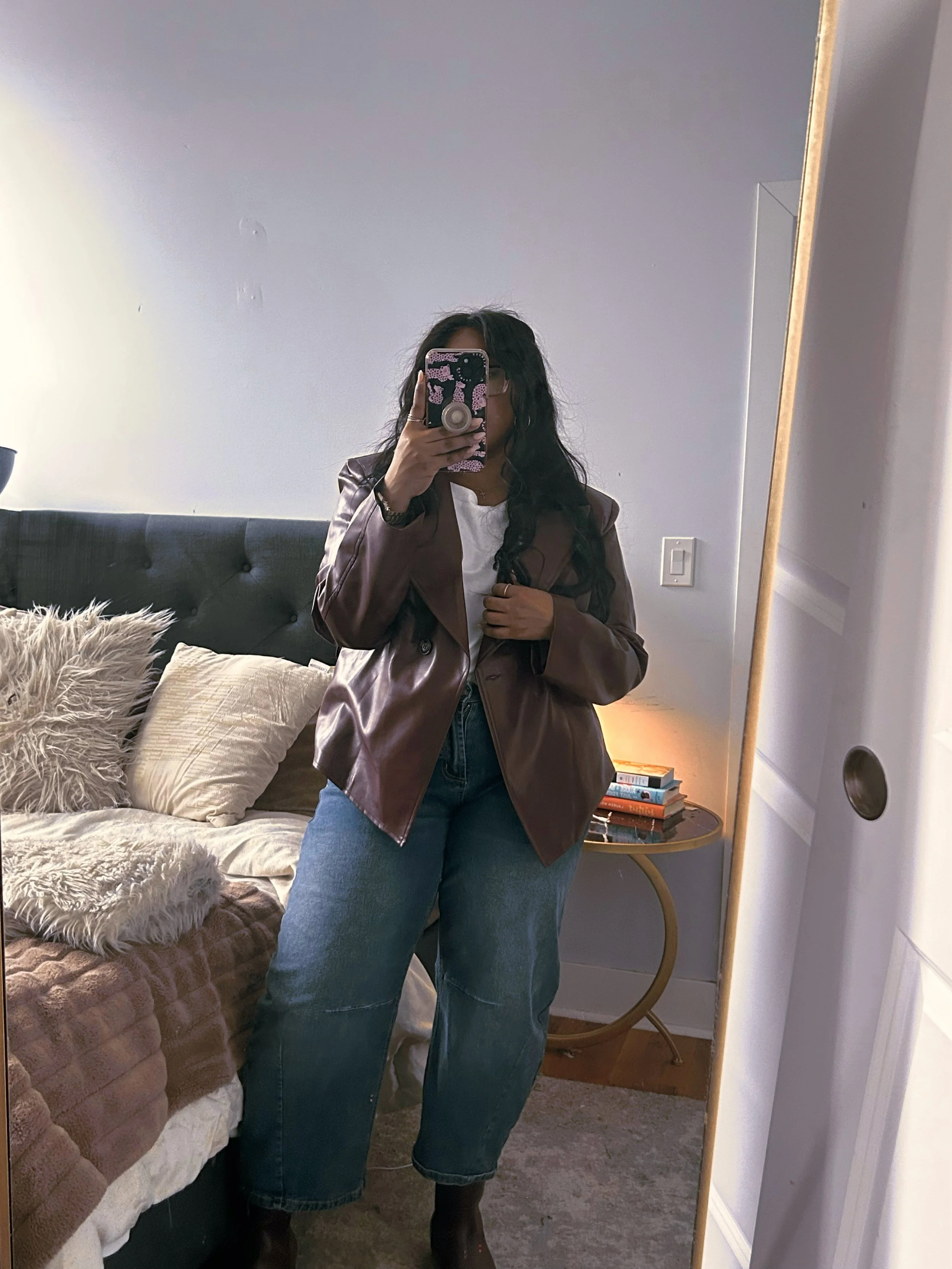
Photo Credit:@autumlovedaily
Name the problem without insulting yourself: “The shirt kept untucking.” “I needed a warmer layer.” “The skirt only works with shoes I cannot walk in.” Friction notes turn vague dissatisfaction into solvable wardrobe decisions.
Step 6: Review the photos once a week
Do not analyze every picture immediately. At the end of the week, compare the seven looks and choose:
The outfit you would happily repeat tomorrow
The piece that appeared most often
The outfit that needed the most adjusting
One combination you want to try next week
This review keeps the practice constructive. You are looking for patterns, not producing a daily scorecard for your appearance.
The Five Questions to Ask at the End of the Month
After thirty days, place your photos in a grid or scroll through the album without stopping. Then answer these five questions:
Which five outfits felt most like me?
Which pieces appeared repeatedly, and why?
What did I avoid wearing even when I tried to style it?
Which colors, proportions and shoes appeared in my best-rated looks?
What one purchase, alteration or removal would improve the greatest number of outfits?
That final question is the one that saves money. Instead of leaving the project with a twenty-item wish list, choose the single change with the largest effect. It may be hemming two pairs of trousers, replacing an uncomfortable everyday shoe or adding one cardigan that works across several outfit formulas.
What Not to Do When Photographing Your Outfits
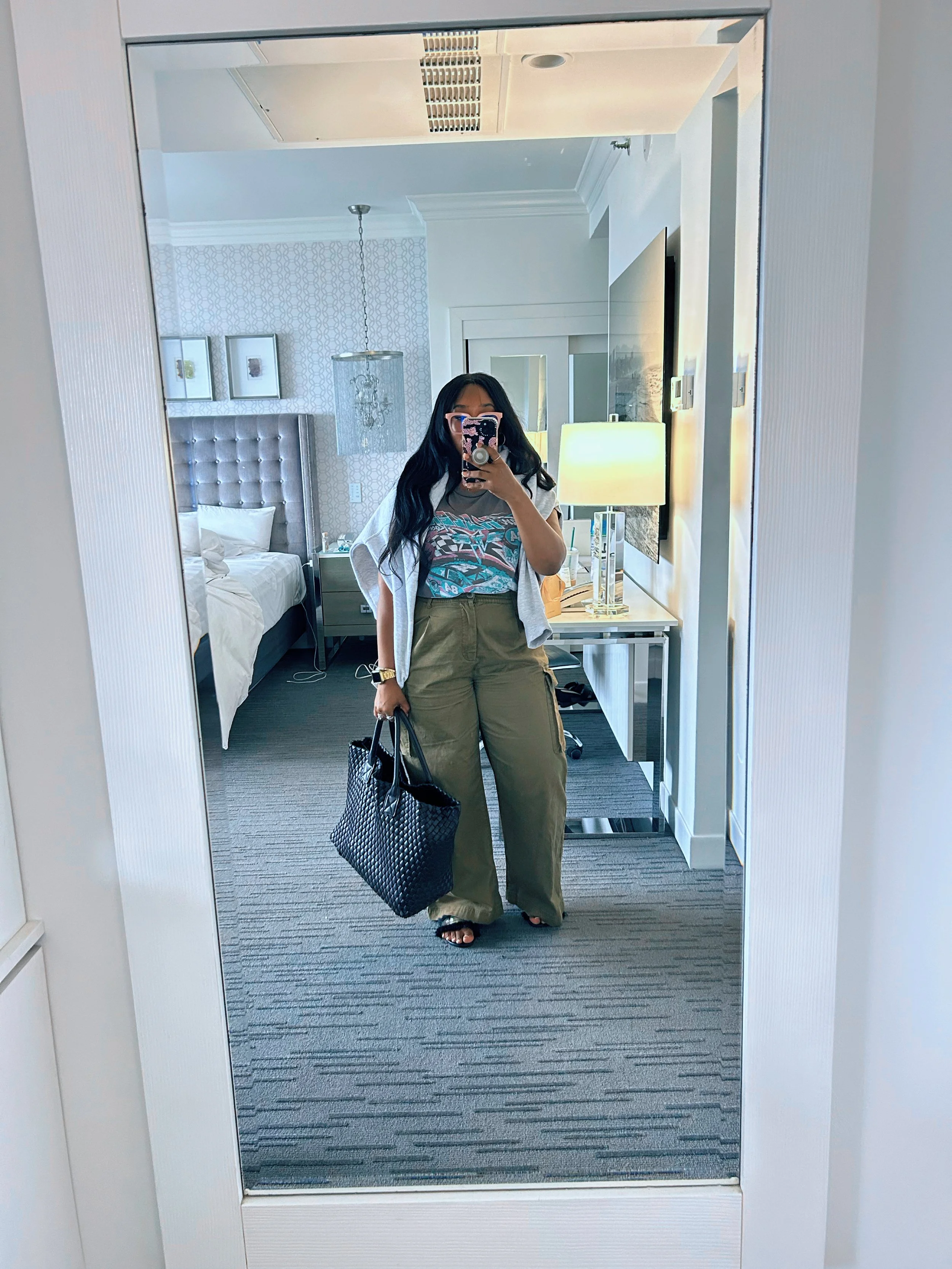
Photo Credit:@autumlovedaily
Do not pose differently every day
The purpose is comparison, not content creation. A relatively consistent stance and camera height make it easier to evaluate proportion. You are not trying to trick the camera into liking an outfit.
Do not delete the outfits you dislike
The disappointing photos may teach you more than the favorites. Keep them private, add a factual note and move on. You never have to show the album to anyone.
Do not make immediate shopping decisions
One awkward outfit does not prove you need a new wardrobe. Wait until the same gap or frustration appears at least three times. Repeated evidence deserves action; one bad Tuesday usually does not.
Do not use the project to monitor your body
If the photos begin to make you obsess over your size, weight or perceived flaws, pause the visual portion and keep written comfort-and-function notes instead. The practice is supposed to make your wardrobe kinder and more useful—not turn your camera roll into another place to criticize yourself.
Do not quit because you missed a day
This is not a streak. Three or four photos a week can still reveal meaningful patterns. Consistency helps, but perfection is not the assignment.
How to Turn Your Photos Into a Better Wardrobe

Photo Credit:@autumlovedaily
Once the month is complete, sort what you learned into four actions.
Repeat
Save your five strongest looks in a favorites album. On rushed mornings, choose one and recreate it. The seven outfits women wear on repeat are often more useful than an endless feed of new inspiration.
Restyle
Choose pieces you like but rarely wore and pair each with one of your proven formulas. If a blouse never worked with your skirts but looks good under your most-worn jacket with jeans, it now has a clear job.
Repair or tailor
Create a short list of items blocked by fixable problems: loose buttons, overly long hems, slipping straps or a missing hook. A small alteration can unlock more outfits than another shopping order.
Release
If an item repeatedly photographs poorly, feels uncomfortable and does not serve your lifestyle, let it go without making the purchase a moral failure. You gathered the information. Now your closet can reflect it.
A Simple Outfit Journal Template
For each day, record:
Photo
Date or day number
Where I went and what I did
Weather
Comfort, confidence and function ratings
What worked
What created friction
Would I repeat it? Yes, with changes or no
If you want the structure already built, the Daily Style Journal is a 30-day digital guide with photo space, daily reflection prompts and weekly check-ins.
Outfit Journaling FAQ
Do I really need to take an outfit photo every day?
No. Daily photos reveal patterns faster, but three or four consistent entries per week can still help. Photograph ordinary outfits—not only special occasions—because the ordinary ones represent most of your wardrobe.
Do I need an outfit tracker app?
No. A private phone album and a note can do the job. An app, spreadsheet or journal becomes useful when you want searchable clothing records, cost-per-wear calculations or guided reflection.
How long should I keep an outfit journal?
Start with thirty days. Repeat the exercise during another season if your climate or lifestyle changes significantly. You can also keep only the weekly review after the first month.
What if I hate how I look in photos?
Begin by cropping your face or photographing the outfit laid flat if seeing yourself is too distracting. Focus your notes on comfort, fit, function and styling. The goal is wardrobe information, not proving that you photograph well.
Can outfit photos help me shop less?
Yes—if you use them to delay purchases until a need repeats. The record shows which categories you already own in abundance, what you actually rewear and whether a proposed purchase would work with your proven outfits.
The Part That Surprised Me Most
I started outfit journaling because I wanted to feel better in my clothes after my body changed. What I gained was not a list of rules for hiding those changes. I learned how to look at an outfit as a collection of choices I could adjust—and how to stop making my body responsible for every garment that failed.
The photos also gave me proof that I did have style during a season when I felt disconnected from it. It was there in the colors I repeated, the silhouettes that let me move through my day and the small details that made me feel like myself. I did not need a completely new closet. I needed to notice what was already working.
Take the picture tomorrow morning. It does not have to be flattering, postable or even particularly interesting. Give yourself a month of honest evidence. Your wardrobe may be making more sense than you think.
Read next:
Find Your Personal Style | How to Build a Style Uniform That Works for Your Life | How to Create Goals for Your Personal Style | How to Get Dressed Faster | The 7 Outfits Every Woman Wears on Repeat