New Season, New Hair—The Fall Hair Colors I Can’t Stop Thinking About

The quickest way to make me want a hair appointment is apparently for the temperature to drop five degrees.
Suddenly the blonde I loved in July feels a little too summery. The brown I’ve worn for months needs more depth. And every copper, espresso and honey-colored head of hair on Pinterest starts looking like a perfectly reasonable life decision.
Fall hair color does that to us.
But the biggest fall hair colors for 2026 are actually less about becoming a completely different person by your next salon appointment. Colorists are leaning into richer versions of what you already have: glossy chocolate brunettes, dimensional espresso, cinnamon and auburn reds, honey-bronde ribbons and softer blondes that grow out without requiring your colorist to become your emergency contact.
The part I think gets skipped in a lot of fall hair-color inspiration, though, is whether the shade you saved actually works with you.
A gorgeous copper can lean golden, brown or red. Blonde can be honey, beige, taupe or icy. Even espresso can read warm, neutral or cool. Your skin undertone, natural hair color, the amount of contrast you like and how much maintenance you’re willing to sign up for all change which version makes the most sense.
And none of this is a rulebook. If you have warm undertones, you are absolutely allowed to wear cool hair. Undertone is simply one tool for choosing a version of a color that gives you the effect you want.
So before you hand your colorist a folder with 37 screenshots, here are the fall hair colors worth saving for 2026, plus which version to ask for, how much lifting they may require and what the maintenance actually looks like.
Not sure what hair color looks right on you? Take our free color analysis quiz
First, Figure Out Your Undertone
Your skin tone and your undertone are not the same thing.
Skin tone describes the depth of your complexion. Undertone is the subtler warmth, coolness or neutrality underneath it. Deep skin can have cool undertones. Fair skin can be warm. Medium skin can be neutral.
A few clues can help:
Warm undertones often read golden, peachy or yellow.
Cool undertones can read pink, rosy, red or bluish.
Neutral undertones tend to sit somewhere between the two.
Do not panic if the vein test has never made sense to you. Mine would personally have me standing under three different bathroom lights conducting a forensic investigation. Looking at which jewelry, clothing colors and makeup tones consistently flatter you can be more useful, and a good colorist can help you evaluate your complexion in person.
There is also more than one way to use undertone. Matching warm hair to warm undertones can create harmony. Choosing a slightly cooler shade against warm skin can create contrast. Neither is automatically better.
If you want a deeper breakdown, start with my guide to choosing the best hair color for your skin tone.
1. Espresso Brunette

Photo Credit:@jalisaevaughn and @hautehairatl
Espresso is one of those colors that sounds simple until you start looking closely.
The fall 2026 version is glossy, deep and dimensional rather than flat black. Some espresso brunettes lean smoky and cool; others have chocolate or hazelnut warmth running through them. That flexibility is exactly why this is one of the easiest trends to customize around your complexion.
If your skin has cool or neutral undertones, ask about a smoky, neutral espresso. If you have warm undertones and worry that an extremely ashy brown will look severe, a chocolate-espresso or hazelnut variation can keep the depth while adding softness.
On naturally dark Black hair, this may be one of the lowest-commitment changes in the entire story. A gloss or subtle tonal shift can make dark hair look richer without requiring you to lift your base dramatically. It also looks beautiful on a silk press, curls, a dark wig or glossy locs.
ASK FOR: A rich espresso brunette customized warm, cool or neutral to your complexion, with subtle dimension instead of flat one-note color.
2. Chocolate Brunette

Photo Credit:@therealmarcmendez
BEST FOR: Warm and neutral undertones; cool undertones can try a more neutral cocoa version
STARTING BASE: Medium to dark brunette
BLEACH LEVEL: None to low unless adding lighter dimension
MAINTENANCE: Low
Chocolate brown in fall is hardly groundbreaking, and I mean that as a compliment.
This is the color you choose when your brunette does not need a personality transplant. It just needs to look richer.
Think dark chocolate, cocoa and warm walnut rather than obvious highlights. On deep skin, a glossy chocolate can soften natural black hair without creating an extreme contrast. On medium and lighter complexions, it can add enough depth to make the face feel more defined.
If you want dimension, keep the lighter pieces close to the base color rather than jumping straight to blonde.
ASK FOR: A glossy chocolate brunette with tonal dimension and no harsh highlight lines.
3. Caramel Highlights on Dark Hair

Photo Credit:@district.308 and@_bypayton
Caramel highlights are one of the easiest ways to warm up dark hair for fall without changing your entire color.
Instead of taking the whole head lighter, caramel, toffee or honey-brown pieces are added through a dark base to create dimension. On curls and coils, the lighter pieces catch different parts of the curl pattern, making the color look especially dimensional. On a silk press, they can be softer and more blended, almost like ribbons running through the hair.
If you have warm undertones, golden caramel and honey-caramel shades are a natural place to start. Neutral undertones can usually move between golden and more balanced caramel shades. For cooler undertones, a colorist can take the caramel slightly deeper or more neutral so it reads less orange against the skin.
And you don’t necessarily have to color your natural hair to get the look. Caramel highlights can be recreated with highlighted wigs, sew-ins, braiding hair, faux locs and twists, which makes this one of the easiest fall colors to experiment with before committing to bleach.
4. Honey Bronde

Photo Credit:@alysechapmanhair
If you cannot decide whether you want to be blonde or brunette, congratulations, bronde has entered the chat.
Honey bronde keeps enough brunette depth to feel grounded for fall, then adds golden ribbons through the lengths and around the face. The darker root is part of what makes it more forgiving than a bright blonde from scalp to ends.
It is also one of the smartest blonde-adjacent options for naturally dark hair because you can control how much of the hair is actually lightened.
For Black women who want the look without coloring their natural hair, honey-bronde wigs, highlighted braiding hair and dimensional sew-ins give you the same warm contrast.
5. Golden Honey Blonde

Photo Credit:@peacheslatto and@peacheslatto2
Warm blonde is having a very good fall.
Instead of icy, nearly white blonde, the 2026 version is honey, gold, butter and caramel. It reflects more warmth and can feel softer against the complexion.
On deep and medium Black skin, honey blonde is one of those shades that can create incredible contrast without looking disconnected from the warmth in the skin. And it does not need to mean bleaching your natural curls from root to end. Honey-blonde locs, knotless braids, wigs and highlighted extensions all belong in this conversation.
If you are coloring naturally dark hair, though, this is not a casual Tuesday-night transformation. Getting to a clear blonde requires lifting, and your hair’s condition matters more than the trend.
6. Mushroom or Taupe Blonde

Photo Credit:@@lizzierodriiguez & @bs_hair1
Not every fall color needs to look like cinnamon sprinkled over a latte.
Mushroom blonde gives you the other side of fall: muted beige, taupe and soft neutral brown. It is especially useful for blondes who want to go slightly deeper without returning all the way to brunette.
The key here is avoiding a formula that turns dull or gray against your complexion. Cool and neutral undertones can often carry the taupe beautifully. If your skin is very golden, ask about a creamier beige version that keeps the muted effect without draining all the warmth.
7. Cinnamon Brown

Photo Credit:@iamtracid
Cinnamon is the gateway red.
It still reads brown first, but there is enough copper and red warmth underneath it to make brunette hair look completely different in the sun.
That makes it a good option if full copper feels like too much commitment. On dark hair, you can keep the base deep and let the cinnamon show through as dimension. On curls, the effect can look especially rich because the red-brown shifts as the hair moves.
8. Spiced Auburn

Photo Credit:@shrinkage.city
Auburn comes back every fall because it understands the assignment.
For 2026, it is less about screaming red and more about a believable red-brown: chestnut, copper and red layered together so the color looks rich instead of fluorescent.
Warm undertones can lean into coppery auburn. Neutral undertones have a lot of room to play. If your complexion is cooler, ask for a deeper auburn with berry or true-red influence rather than pushing heavily orange.
And on deep skin? Please do not let anyone convince you red is reserved for pale complexions. Auburn, mahogany and rich copper can be gorgeous against deep skin, particularly when the depth of the color is preserved.
9. Deep Wine Red

Photo Credit:@_latiara
Wine red is for the person who read “subtle seasonal refresh” and respectfully declined.
Think merlot, burgundy, black cherry and deep berry rather than bright primary red.
This color is especially good on dark bases because you can decide how obvious you want it to be. A deep wine can almost read brunette indoors and flash red in brighter light, or it can be lifted into something much more vivid.
Cool undertones can play beautifully with berry and violet-red versions. If your skin is warm, look toward mahogany, warm burgundy or red-brown so the shade has some earthy warmth.
Red pigments are notorious for fading, so this is not the shade I would choose if your maintenance philosophy is “I’ll see my colorist again when fate brings us together.”
10. Amber Highlights

Photo Credit:@dereqc
Amber highlights are the fall equivalent of changing the lighting in the room.
Your base stays recognizable, but warm golden-brown pieces create glow around the face and movement through the hair.
This is another excellent option for someone with dark hair who wants noticeable color without committing to an entirely lighter head. The placement can be subtle on curls and coils, concentrated around the face on a silk press, or mimicked with highlighted extensions and braiding hair.
11. Golden Chestnut

Photo Credit:@janaeraquelmiller
Chestnut sits right between brunette and red, which is why it is such a useful fall color.
It gives brown hair warmth without immediately reading copper. Golden chestnut adds a little amber or red-gold reflection, making it particularly pretty if you want your hair to look warmer without going dramatically lighter.
This can also be a smart first step for someone considering auburn but not ready to fully enter their red era.
12. Soft Black With a Glossy Finish
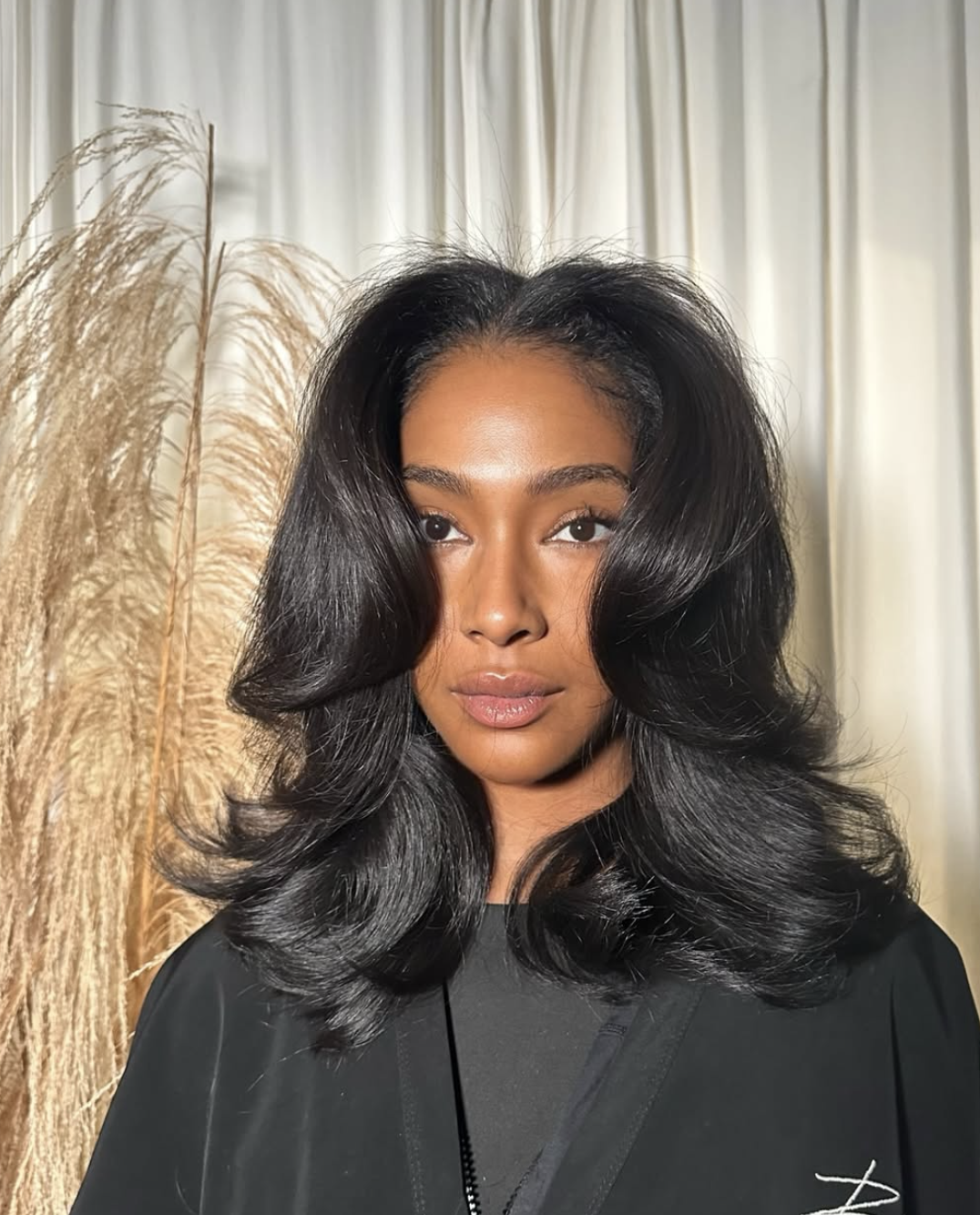
Photo Credit:@blake.edwardhc
Sometimes the fall hair transformation is not lighter.
It is darker, shinier and more intentional.
A soft black or near-black gloss can make faded dark hair look incredibly polished without introducing highlights at all. If jet black feels too severe, ask for a soft natural black or deepest brunette instead.
This is also the option I would not skip in an article meant to include Black women. Natural dark hair does not need caramel streaks added to it before it becomes worthy of an “inspiration” photo. Healthy-looking black curls, glossy silk presses, deep locs and rich dark protective styles absolutely belong on the fall mood board.
✦ Creator images used for editorial purposes only. All rights belong to their respective creators. We always link and give credit.
✦ Check Out Our Men's Site
Trending on MensOutfitsDaily