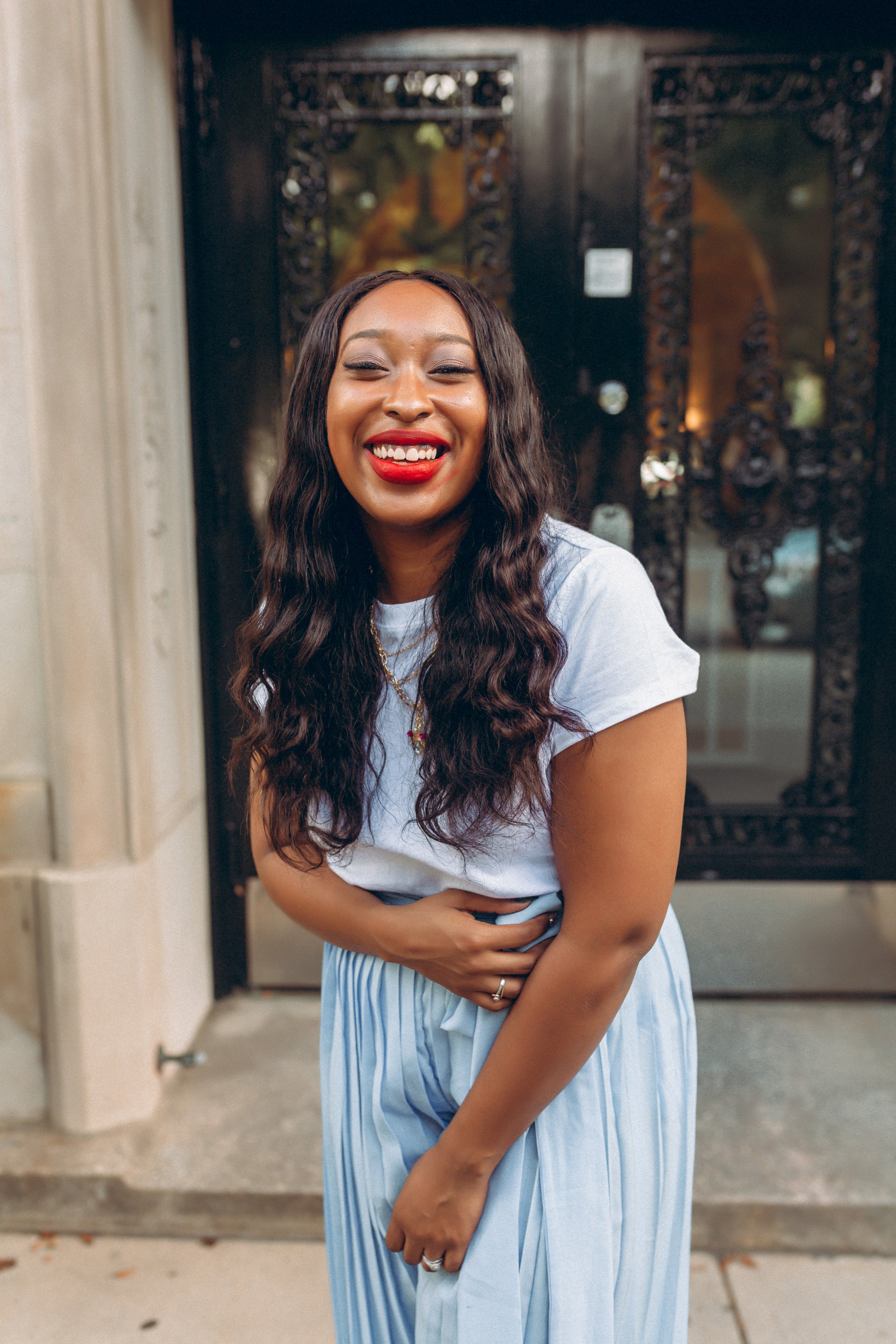
How to Find the Best Hair Color for Your Skin Tone
According to a Beauty Editor— The Shades That Actually Work on Deep, Medium, and Light Complexions
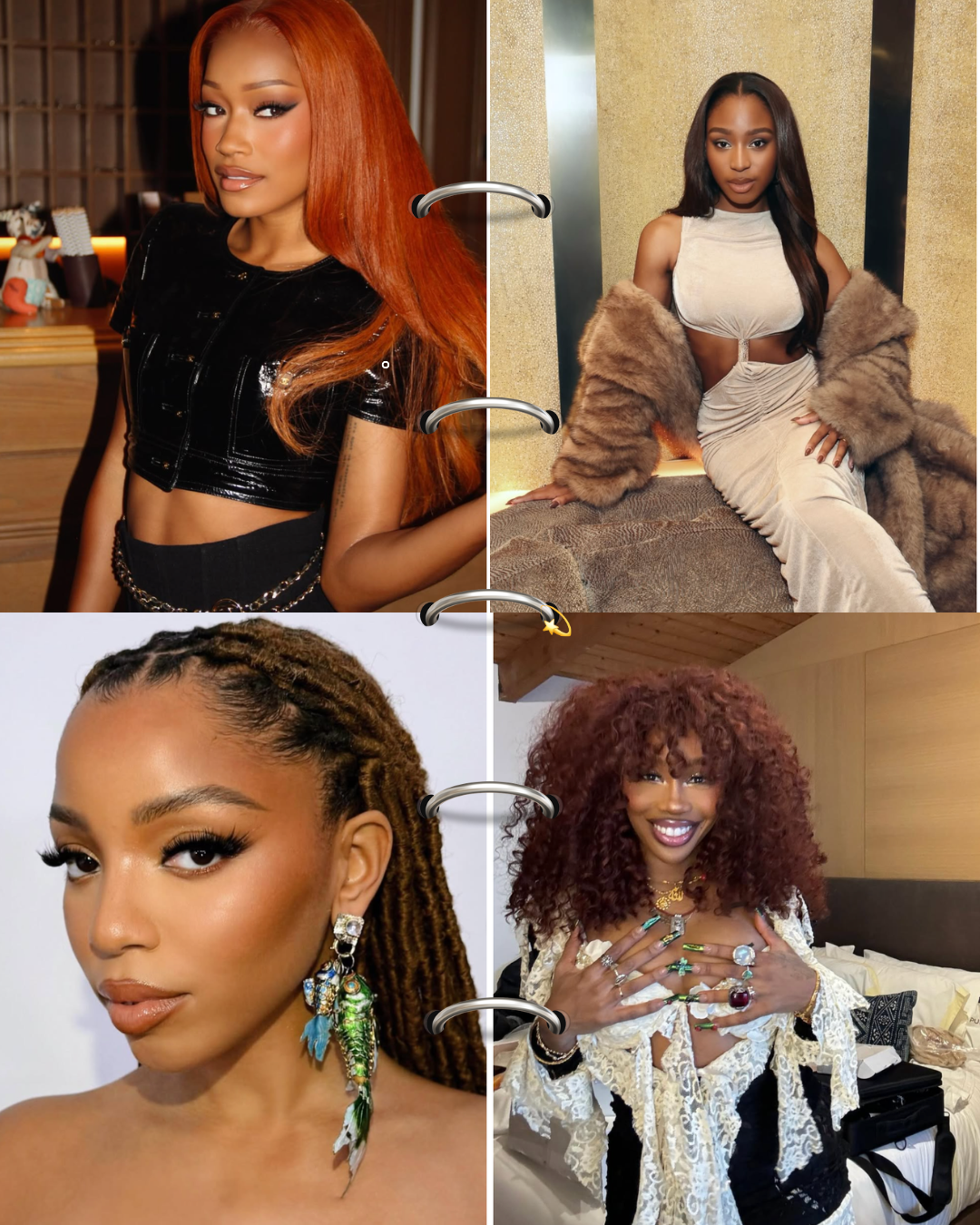
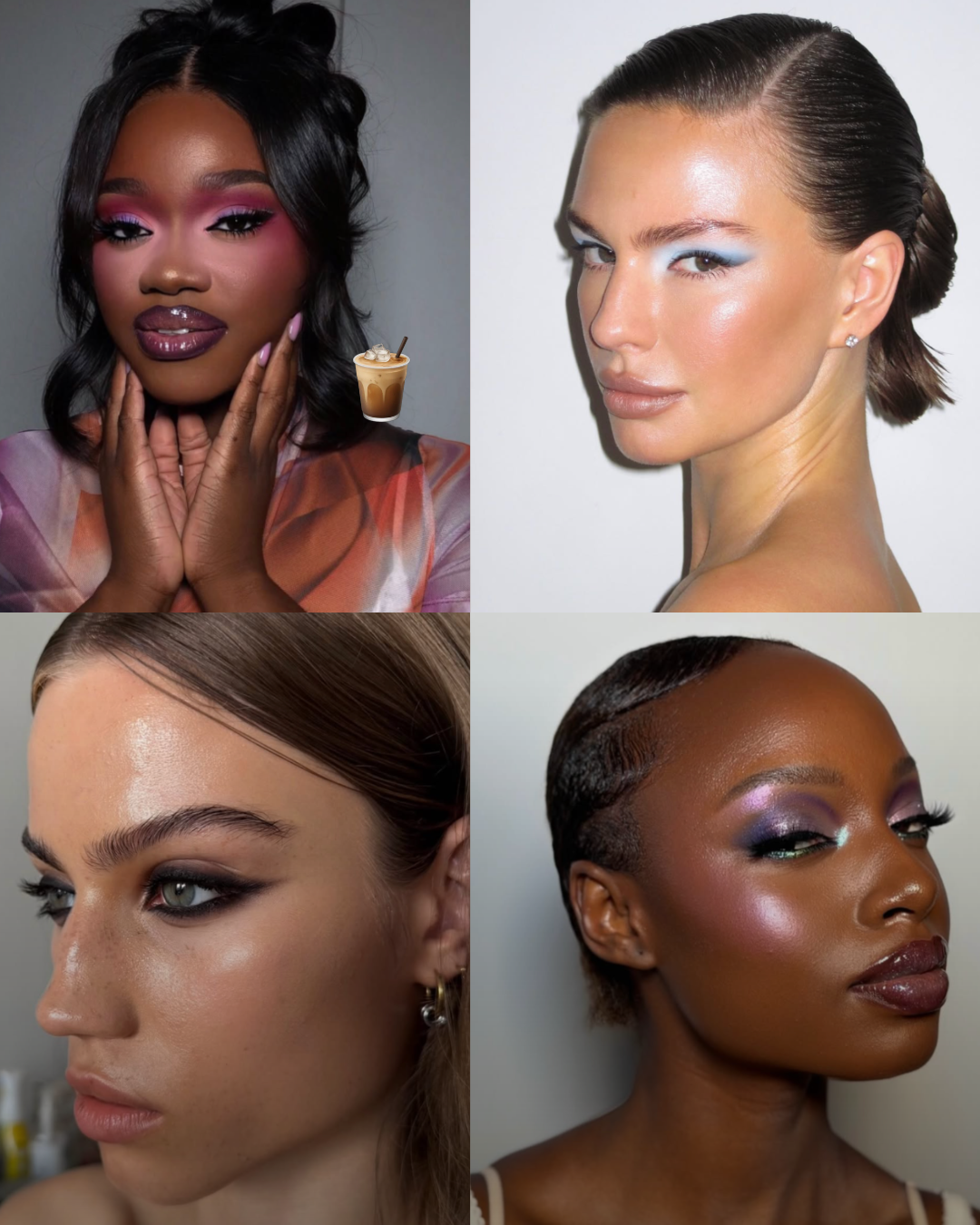
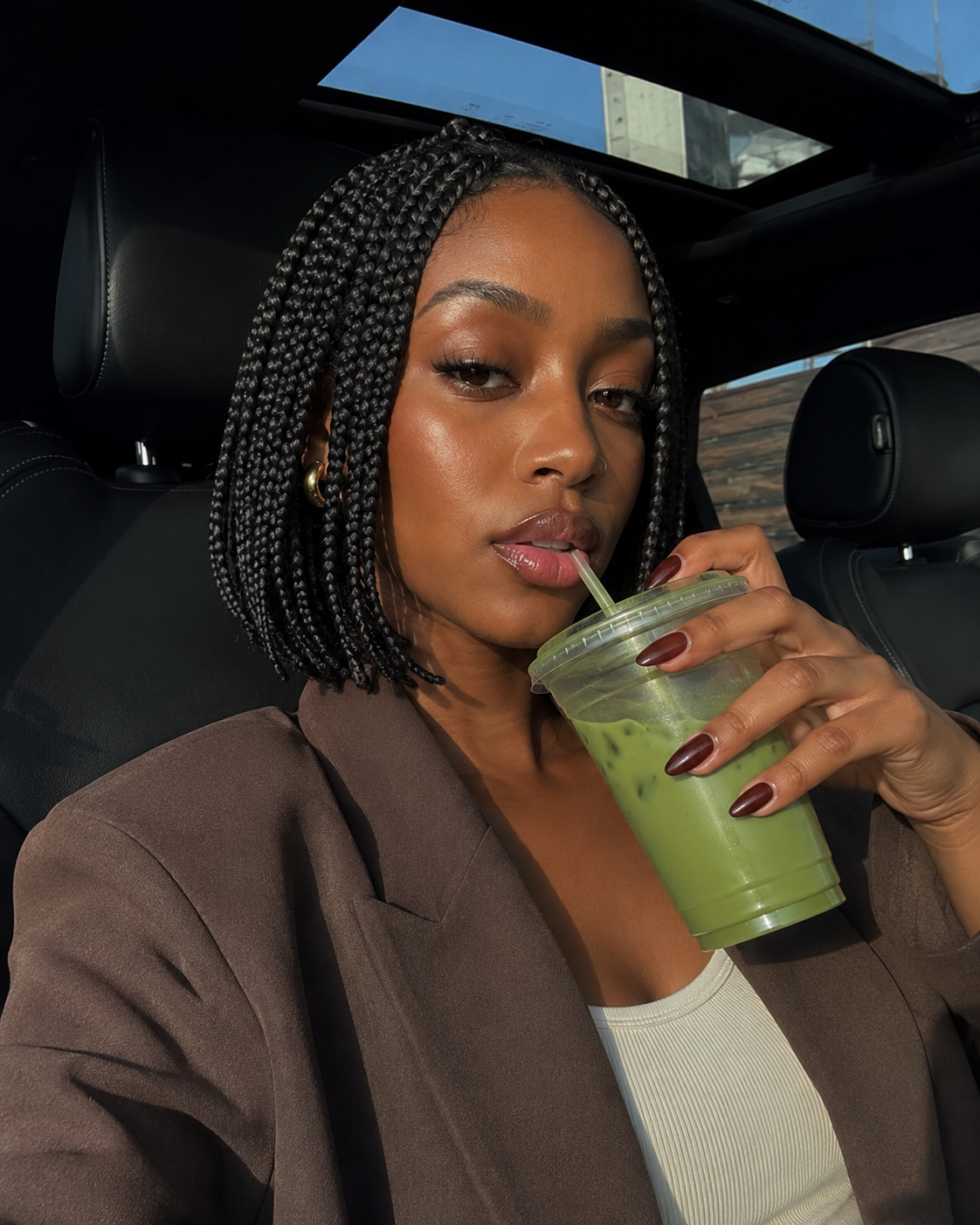
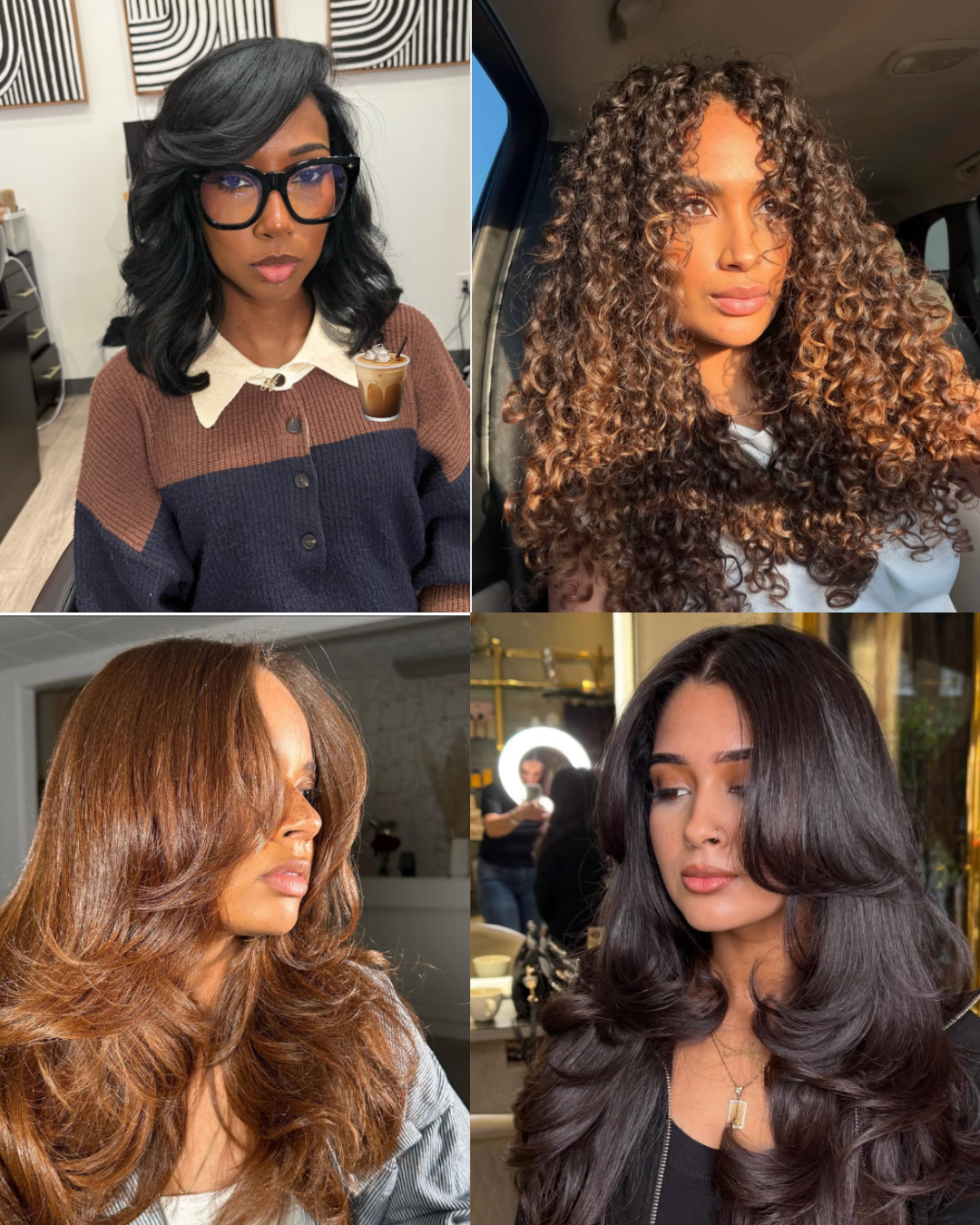
Phoro Credit: @keke , @normani, @sza ,@chloebailey
The right hair color doesn’t just change your hair it changes your whole face. It can make your complexion look warmer, brighter, and more radiant. The wrong one can wash you out, dull your skin, or fight your natural undertone in a way that’s hard to put your finger on but you can definitely feel.
As a style expert and beauty editor, this is honestly one of the most common questions I see from women: ‘What color should I go?’ And the answer always starts in the same place: your complexion and your undertone. Not the trend, not what’s all over your Pinterest board, not even what your favorite celebrity is wearing your skin. Because the color that lit up Latto’s complexion might not do the same for yours, and that’s not a problem, it’s just chemistry.
This guide breaks it down by skin tone and undertone so you can walk into your next salon appointment (or your next wig shopping session) knowing exactly what you’re looking for.
✓ What this covers: Protective styles, natural hair, sew-ins, wigs, and everything in between. Whether you’re coloring your natural hair, choosing a colored wig, or picking out braiding hair with highlights this guide helps you find the shades that will make your complexion glow.
FIRST: SKIN TONE VS. UNDERTONE — WHAT’S THE DIFFERENCE?
Your skin tone is what you see on the surface fair, light, medium, tan, deep, or rich. Your undertone is the subtle hue underneath that stays constant regardless of sun exposure or seasons. It’s the most important factor when choosing a hair color.
• Warm undertone: golden, peachy, yellow, or olive hues in your skin. Your veins look greenish. Gold jewelry looks better than silver on you.
• Cool undertone: pink, red, or bluish hues. Veins look more purple or blue. Silver jewelry tends to look better.
• Neutral undertone: a mix of both warm and cool. Both gold and silver jewelry work equally well. You have the most flexibility with hair color.
Take this Free Face Shape Quiz to get your personalized hair guide in under 2 minutes.
Quick Test: Look at the inside of your wrist in natural light. Green-ish veins = warm undertone. Blue or purple veins = cool undertone. A mix of both = neutral. This single check will make every color decision easier.
01 DEEP & RICH COMPLEXIONS
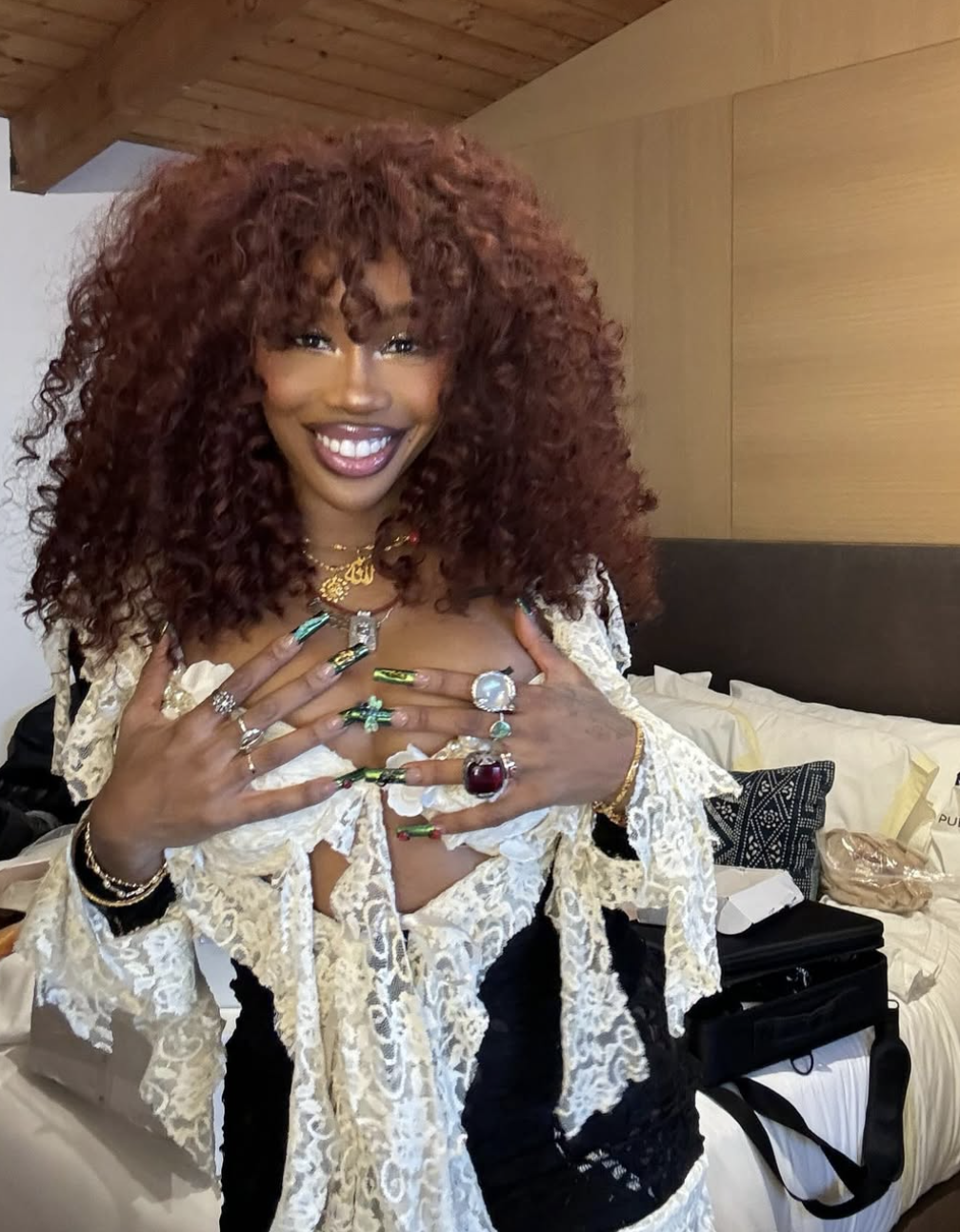
Photo Credit:@sza
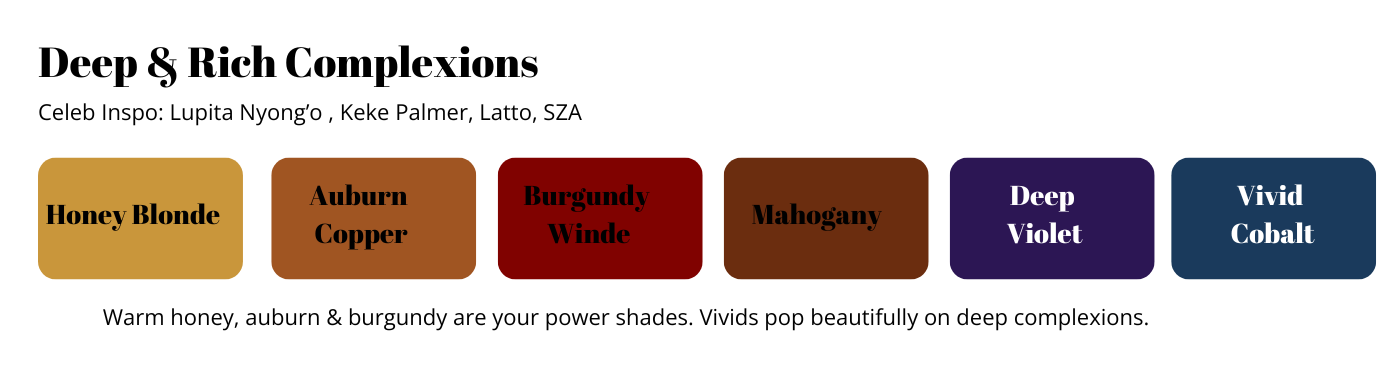
Deep and rich complexions have the most range when it comes to hair color and they’re the least talked about in mainstream color guides, which is a crime. Both warm and cool undertones within this range have incredible options.
The goal is to find shades that create contrast and luminosity against the depth of the skin, rather than colors that blend in and disappear. Warm honey tones, vivid reds, deep chestnuts, and even unexpected pastels can be stunning on deep complexions with the right execution.
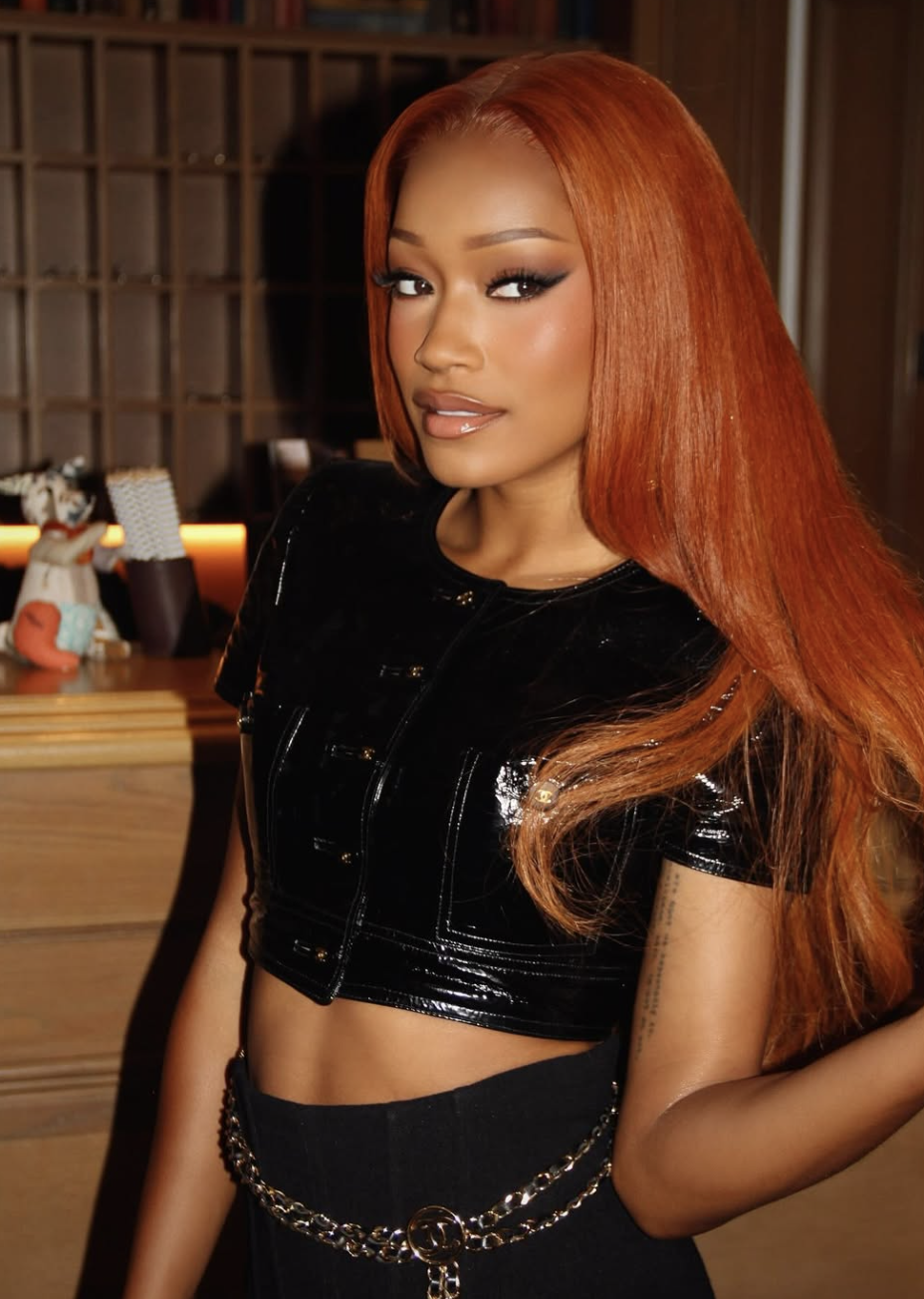
Photo Credit:@keke
Hair Colors That Pop on This Complexion:
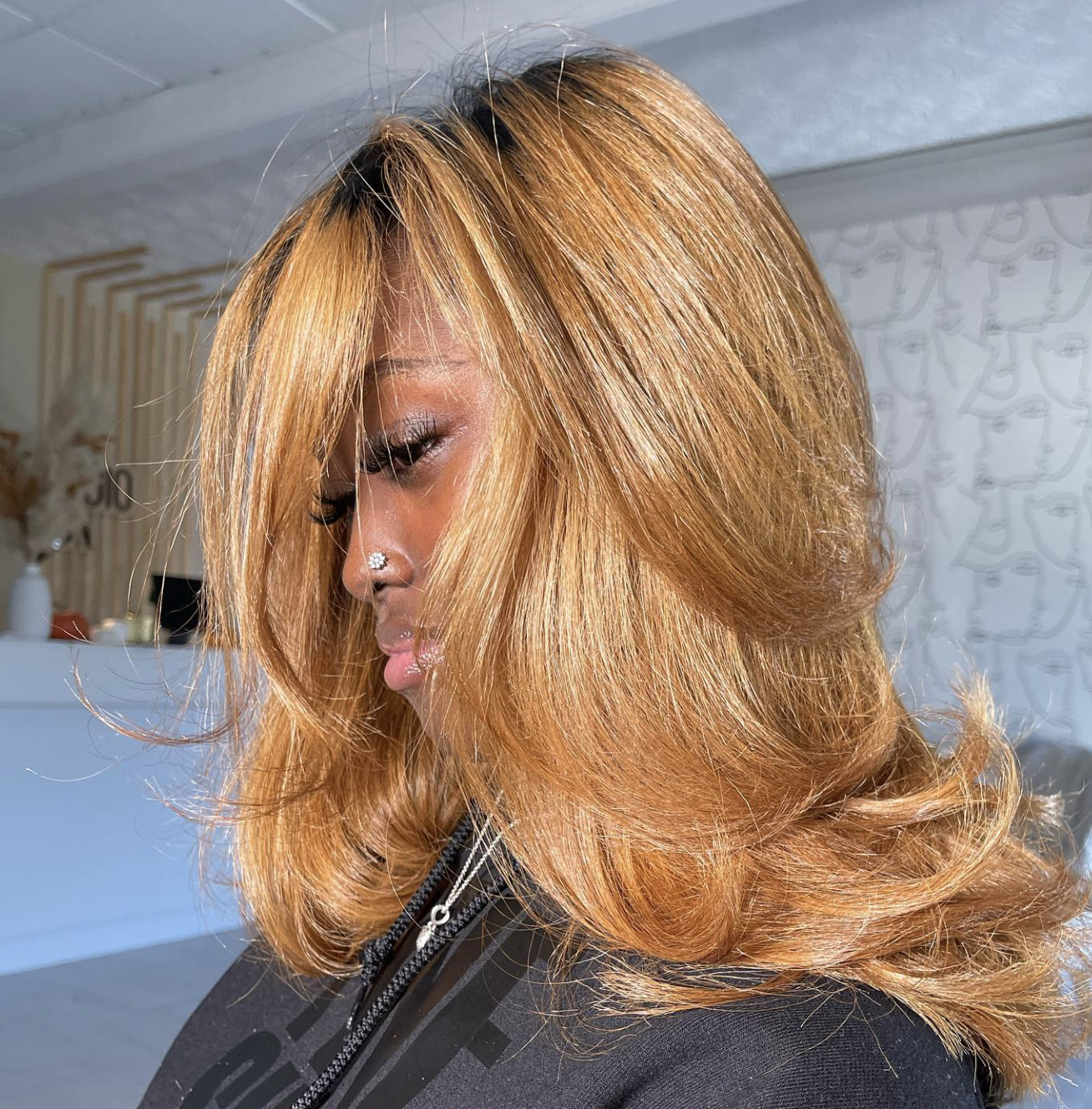
• Honey blonde warm, golden, and luminous against deep skin. Think Beyoncé-era honey tones on protective styles and wigs.
• Auburn and copper red one of the most flattering color families for deep complexions. Especially stunning in sew-ins and faux locs.
• Burgundy and wine deep, rich, and incredibly intentional. Works on natural hair, braids, and wigs.
• Chestnut and mahogany brown adds warmth and dimension without going fully light.
• Caramel highlights on natural black hair the contrast is chef’s kiss.
• Bold vivids (cobalt blue, emerald green, deep violet) deep complexions carry vivid color with a power that lighter skin tones can’t match.
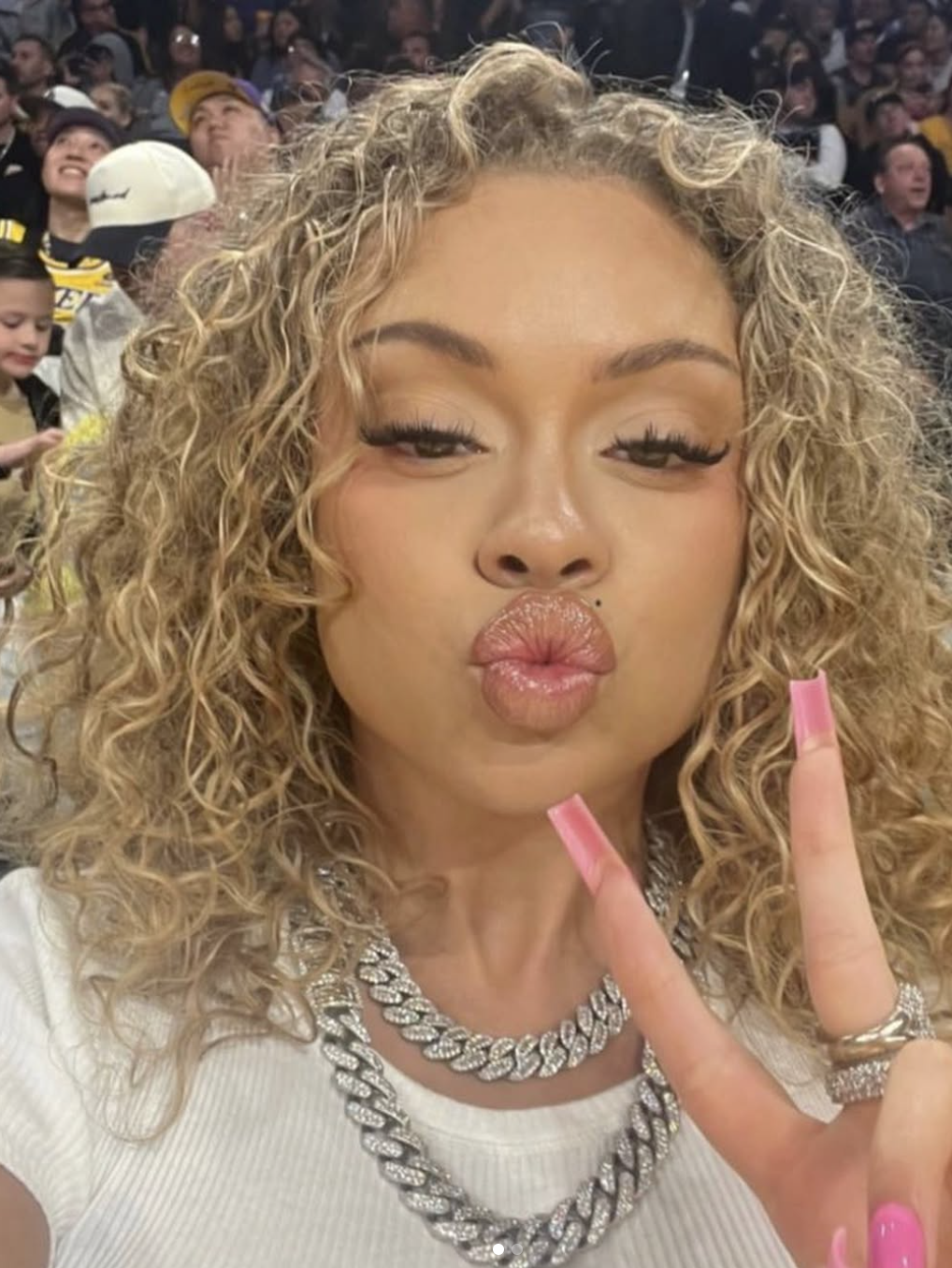
Photo Credit:@latto
Worth Exploring (with the Right Undertone Match):
• Warm platinum blonde requires significant lightening but can look stunning when done by an experienced colorist.
• Pastel tones (lavender, rose gold, ice blue) require a light base but the contrast against deep skin is genuinely striking.
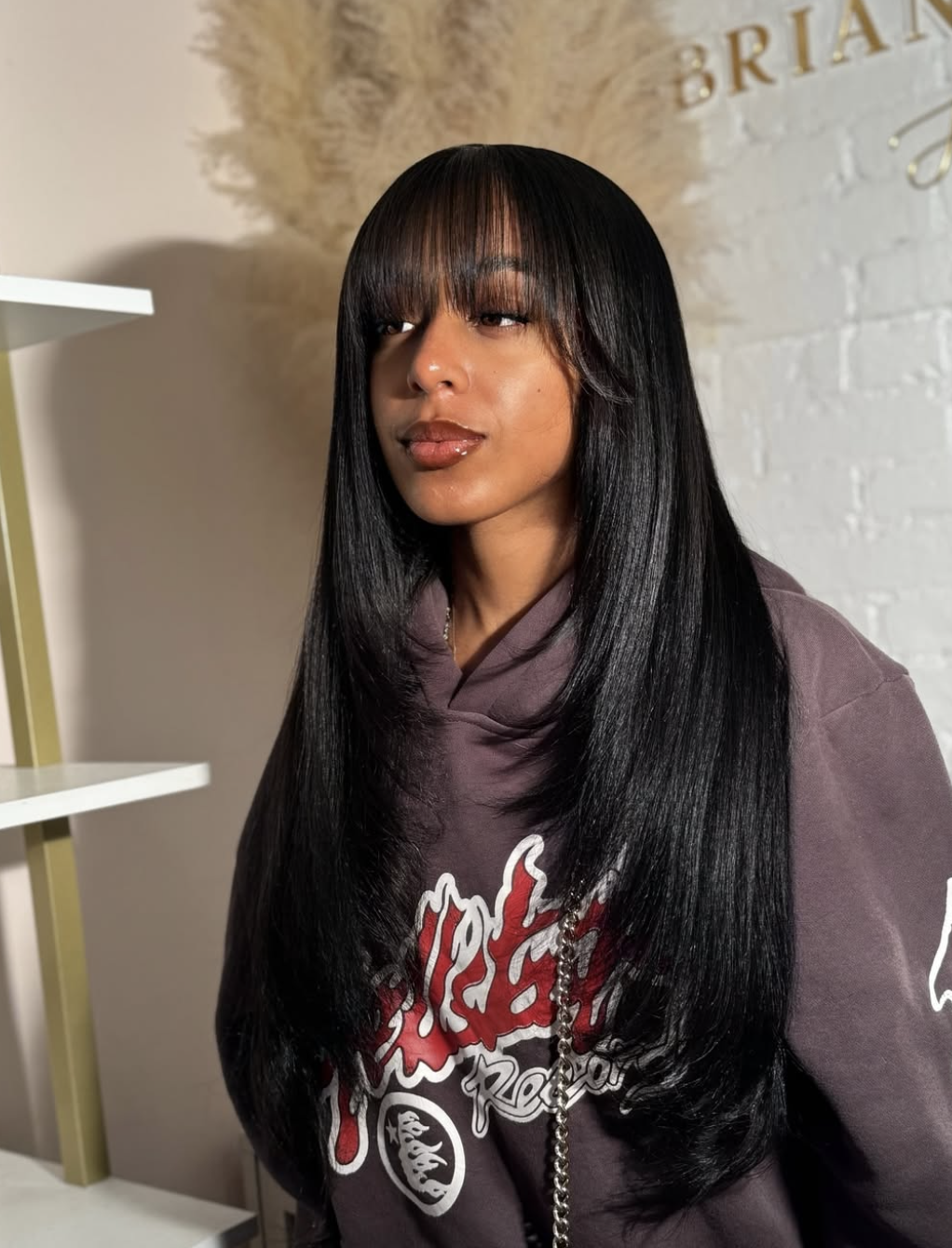
• Jet black with a sheen sometimes the best color is your natural shade, just healthier and more glossy.
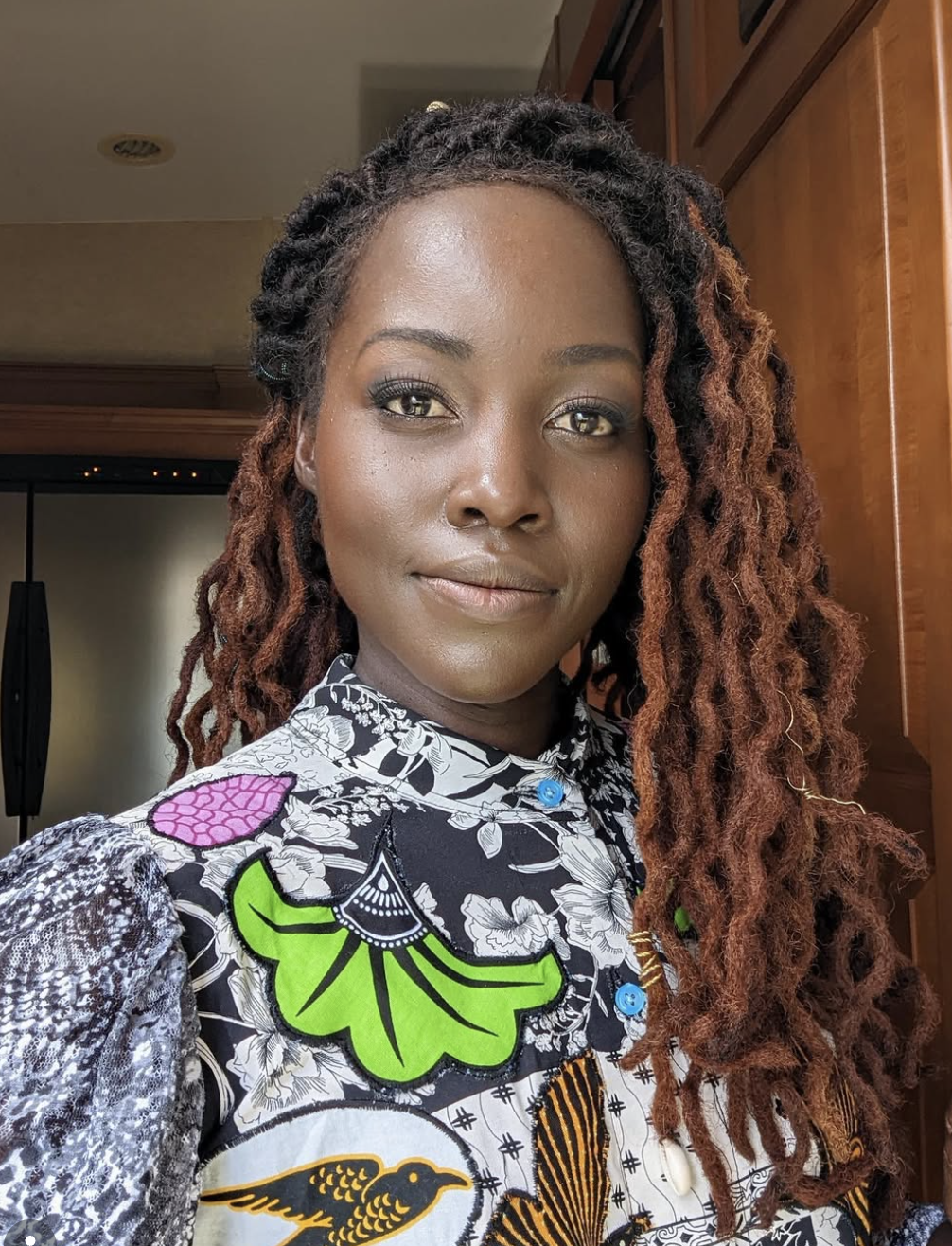
Photo Credit:@lupitanyongo
Colorist Tip: For deep complexions, warm-toned colors (honey, copper, auburn, burgundy) almost always land better than cool-toned ones. A cool ash blonde on a warm deep complexion can look murky or grey but a warm golden blonde on the same skin looks like sunlight. If you want to go blonde, always ask your colorist for a warm or golden blonde, not ash.
02 MEDIUM, TAN & CARAMEL COMPLEXIONS
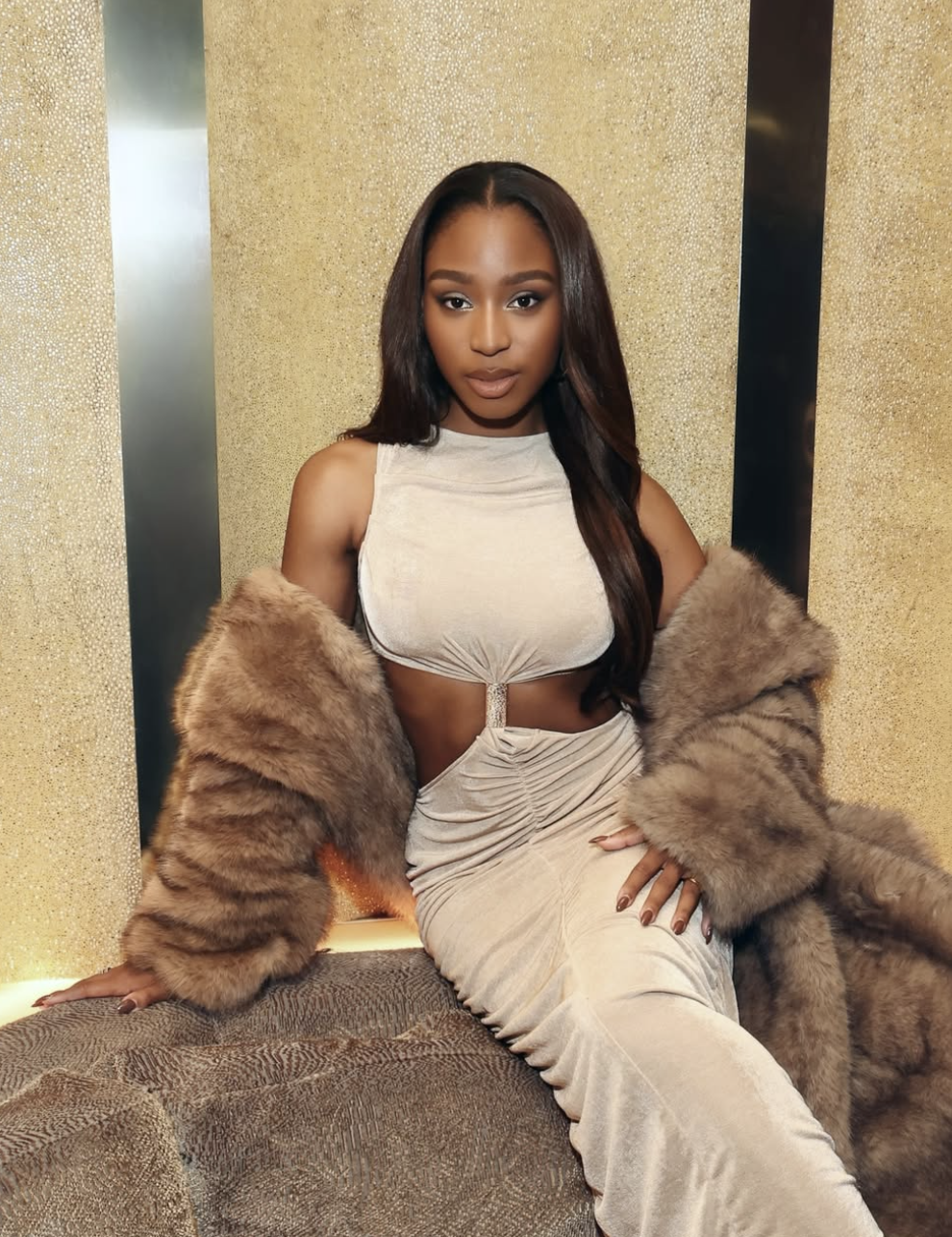
Photo Credit:@normani
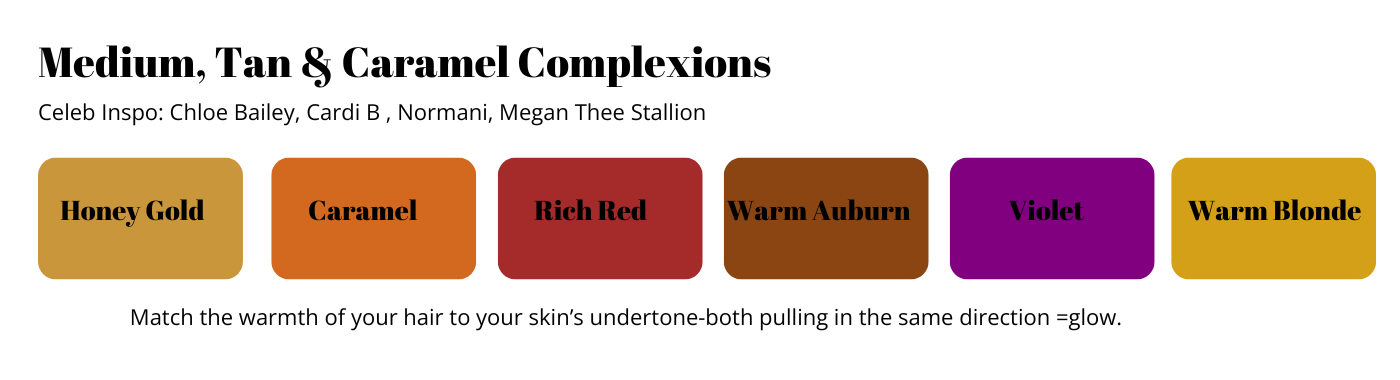
Medium, tan, and caramel complexions sit in one of the most versatile ranges for hair color. Whether your undertone is warm (golden, peachy), cool (rosy, neutral), or neutral, this range plays beautifully with both warm and cool tones in hair.
The key is matching the warmth or coolness of your hair color to your skin’s undertone, so both pull in the same direction. Chloe Bailey’s warm honey-blonde locs against her caramel complexion are the perfect example of a warm undertone meeting a warm hair color it glows.
Hair Colors That Pop on This Complexion:
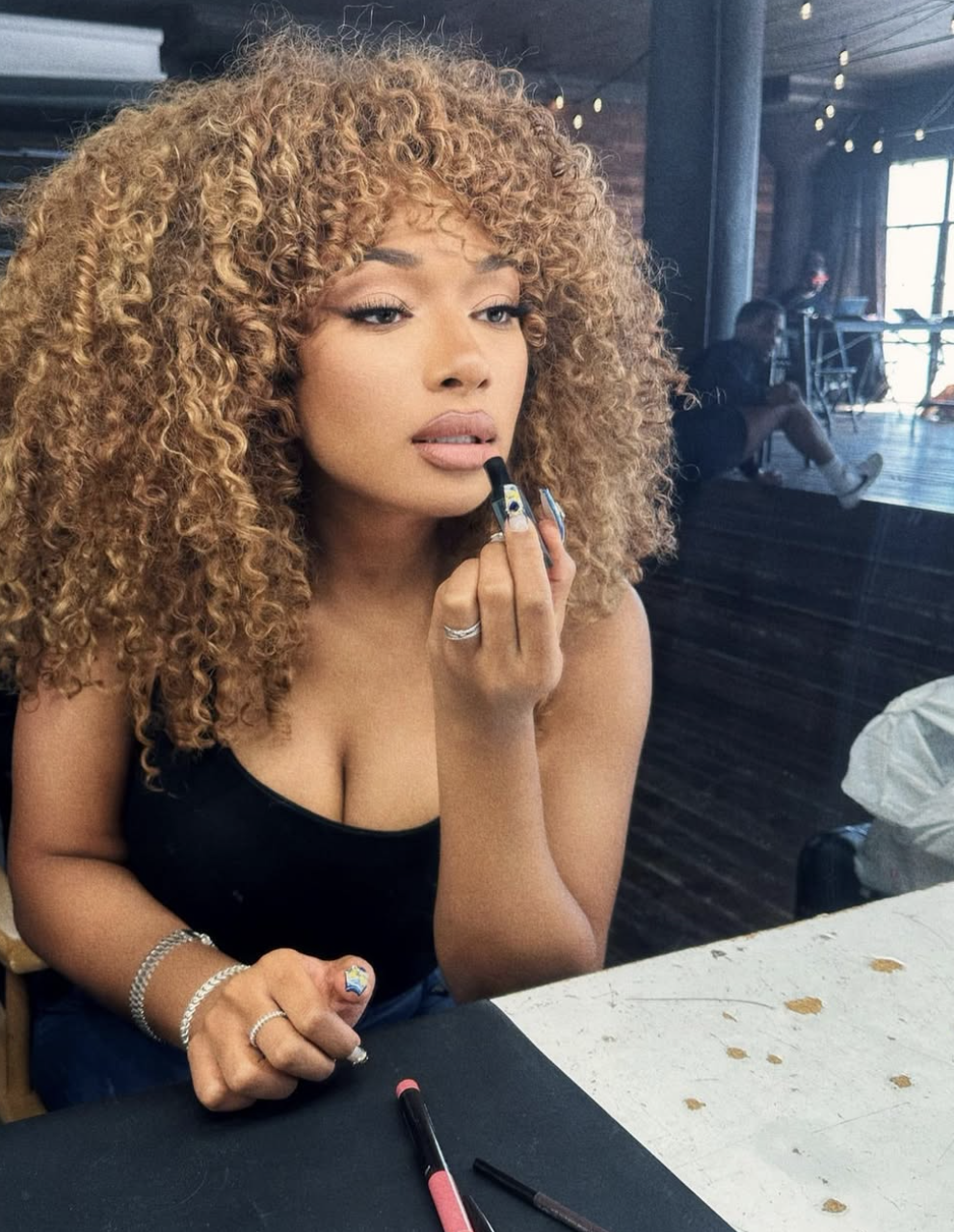
Photo Credit:@theestallion
• Honey gold and golden blonde the ultimate for warm-undertoned caramel complexions.
• Caramel and butterscotch highlights add dimension that looks sun-kissed and natural.
• Rich auburn and copper warm, fiery, and stunning on this complexion range.
• Warm red and strawberry shades flattering and bold, especially in braids or a sew-in.
• Chocolate brown with caramel highlights dimensional and rich without going too light.
• Warm platinum (for the bold) Cardi B energy: unexpected and striking.
Worth Exploring (with the Right Undertone Match):
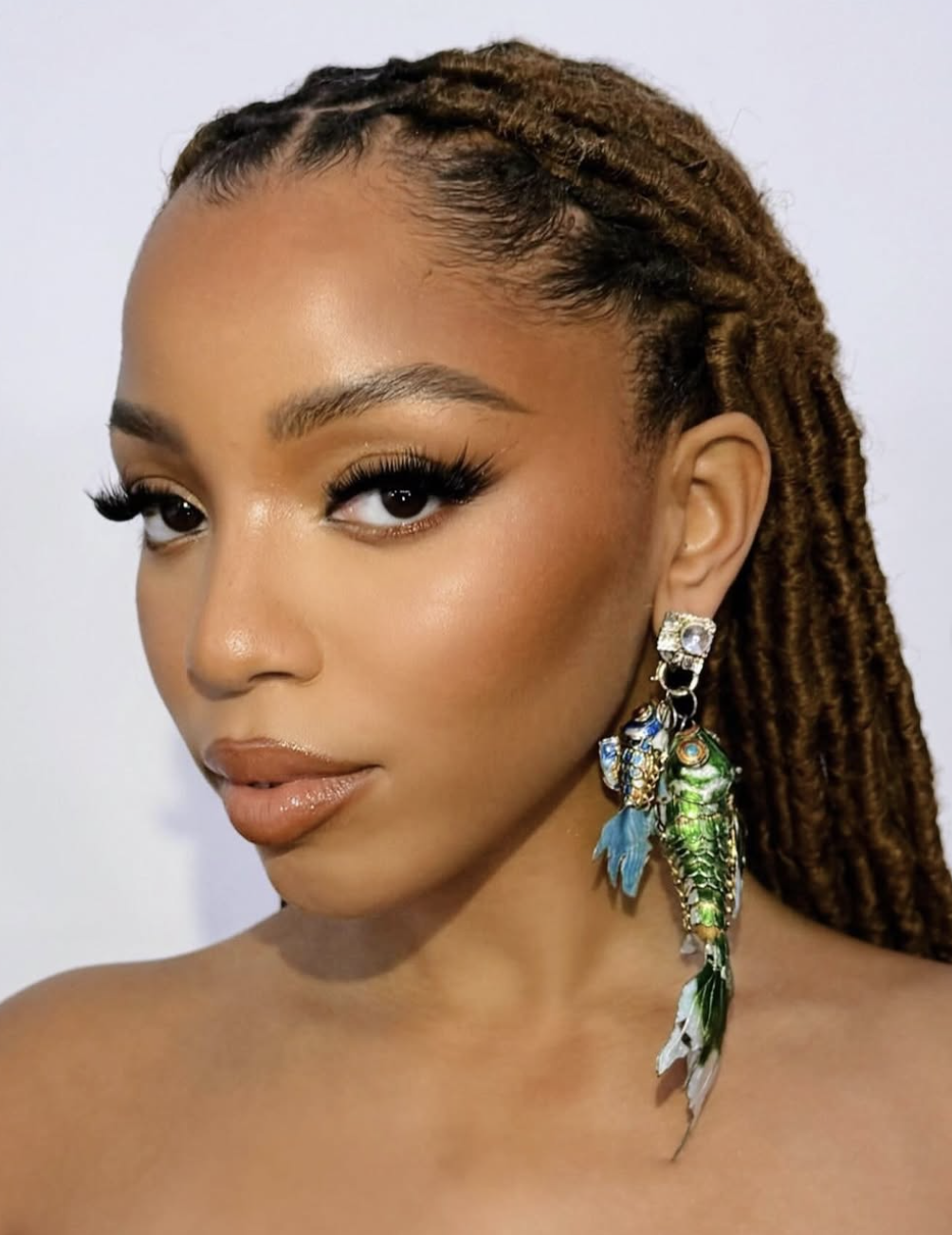
Photo Credit:@chloebailey
• Cool ash tones can work beautifully on cool-undertoned medium complexions. The key is confirming your undertone is actually cool before going this direction.
• Vivid fashion colors (purple, teal, rose gold) medium complexions carry these well, especially as tips or highlights in protective styles.
• Blue-black or natural black always an option when you want something polished and low-maintenance.
Colorist Tip: The biggest mistake I see on medium complexions is going too ash or too cool without checking the undertone first. An ash brown on a golden- undertoned caramel complexion looks flat and a little grey but that same brown in a warm, chocolatey tone looks rich and expensive. Always bring a reference photo to your colorist of the exact shade you want, not just the general color family.
03 LIGHT BROWN & FAIR COMPLEXIONS
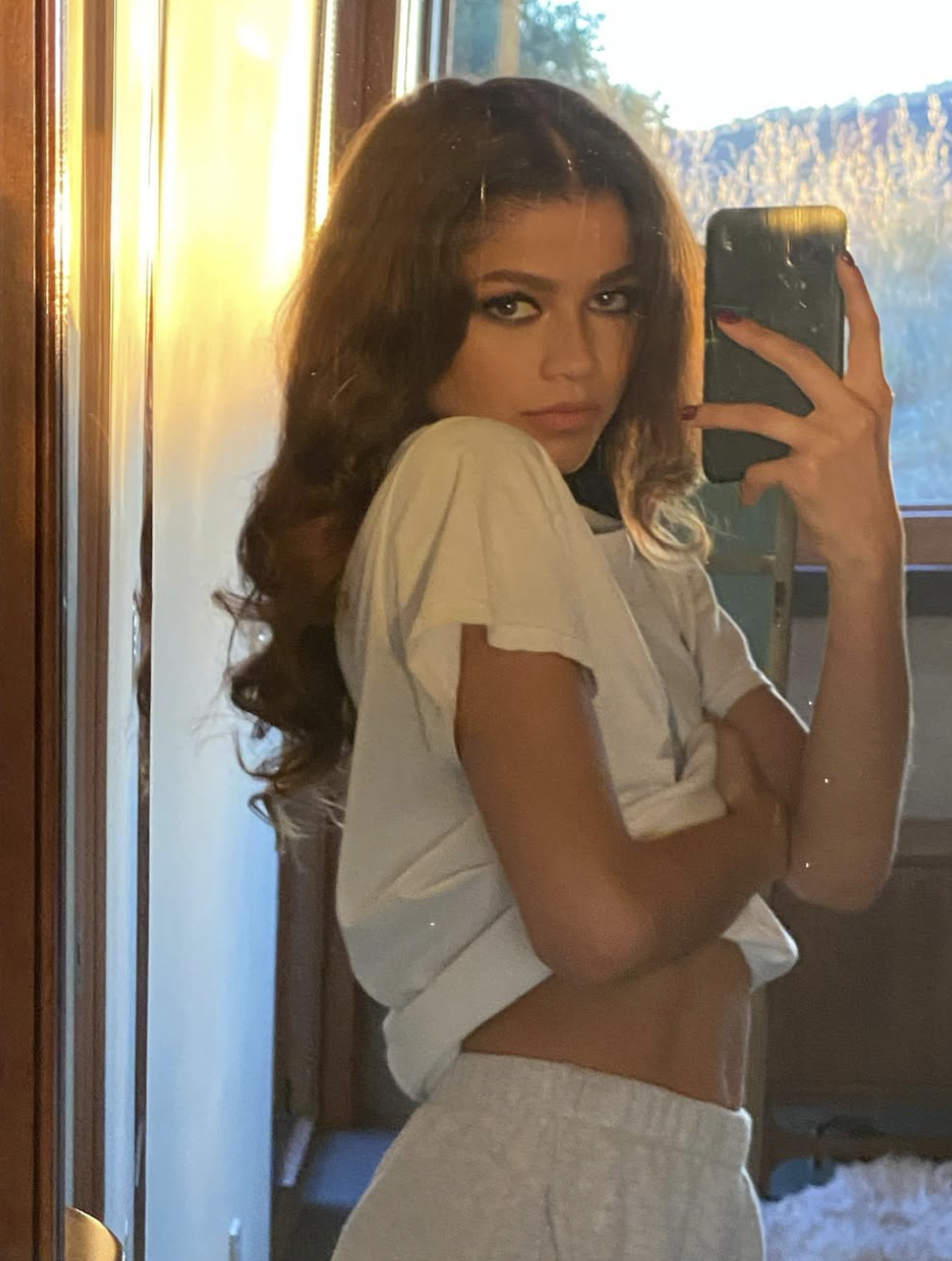
Photo Credit:@Zendaya
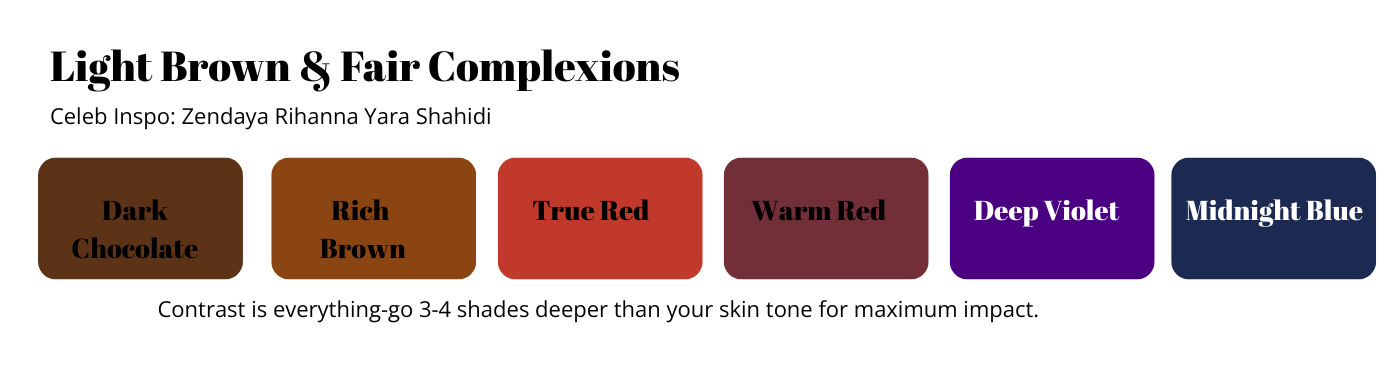
Light brown and fair complexions often have either warm (peachy, golden, olive) or cool (pink, neutral) undertones, and the approach differs significantly based on which you have.
The advantage here is that lighter hair colors show up more easily without as much lifting which means less damage for the same impact. The risk is going too light without enough contrast, which can wash out a fairer complexion rather than making it pop.
Zendaya is the ultimate reference: she’s done everything from deep chocolate locs to copper-red to dark brunette and each one has worked because she always maintains enough contrast with her skin.
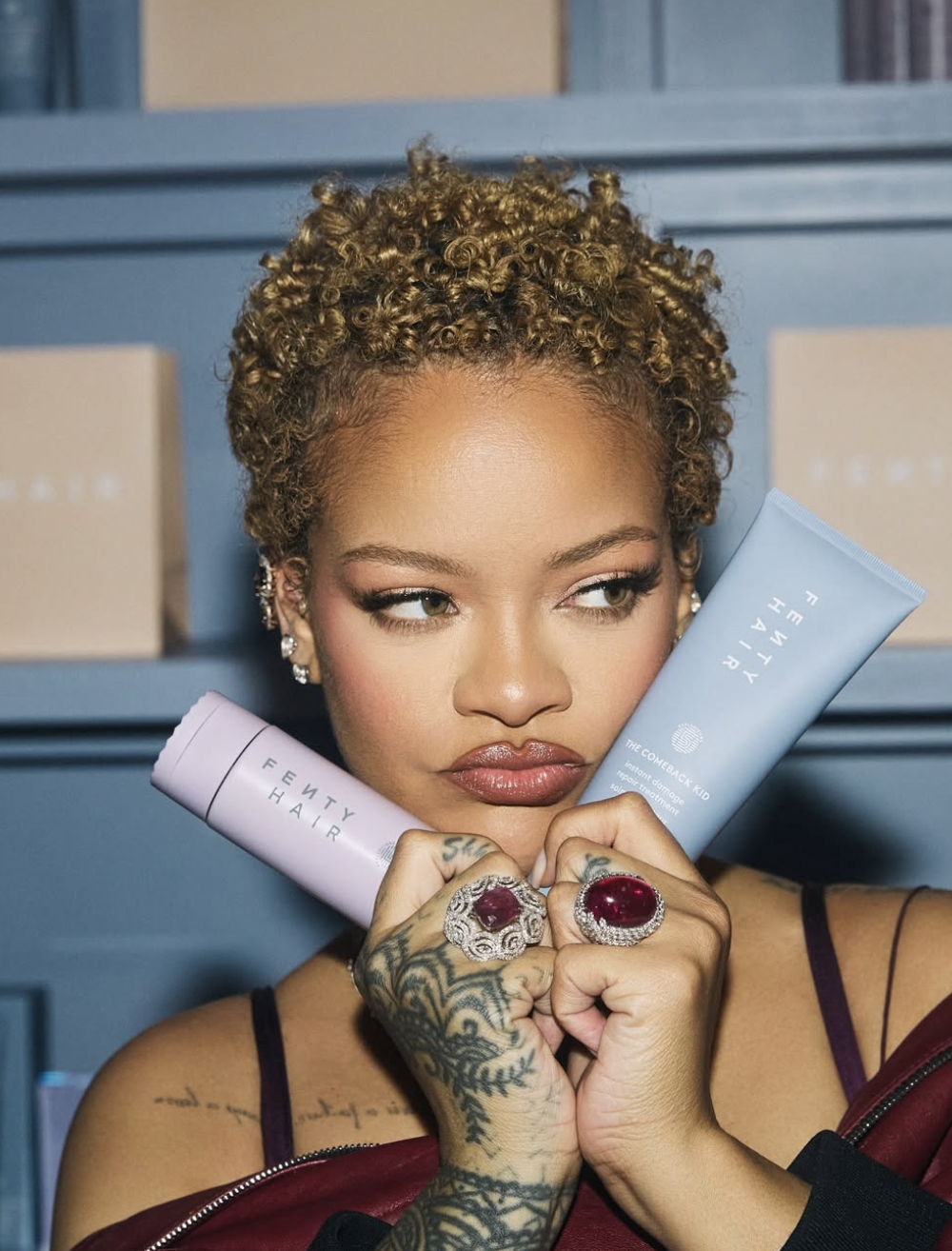
Photo Credit:@badgalriri
Hair Colors That Pop on This Complexion:
• Deep chocolate and espresso brown creates contrast that makes a fair complexion look warmer and more defined.
• Warm auburn and rich reds Rihanna’s red era is the reference. Stunning against lighter skin when the red has warmth in it.
• Copper and warm bronze brings out golden undertones in a lighter complexion beautifully.
• Deep burgundy and wine especially gorgeous in fall and winter, adds richness and depth.
• Dark chocolate with subtle highlights dimensional without losing contrast.
• Vivid fashion colors (violet, teal, sapphire blue) lighter bases mean vivids show up more true-to-shade with less lifting.
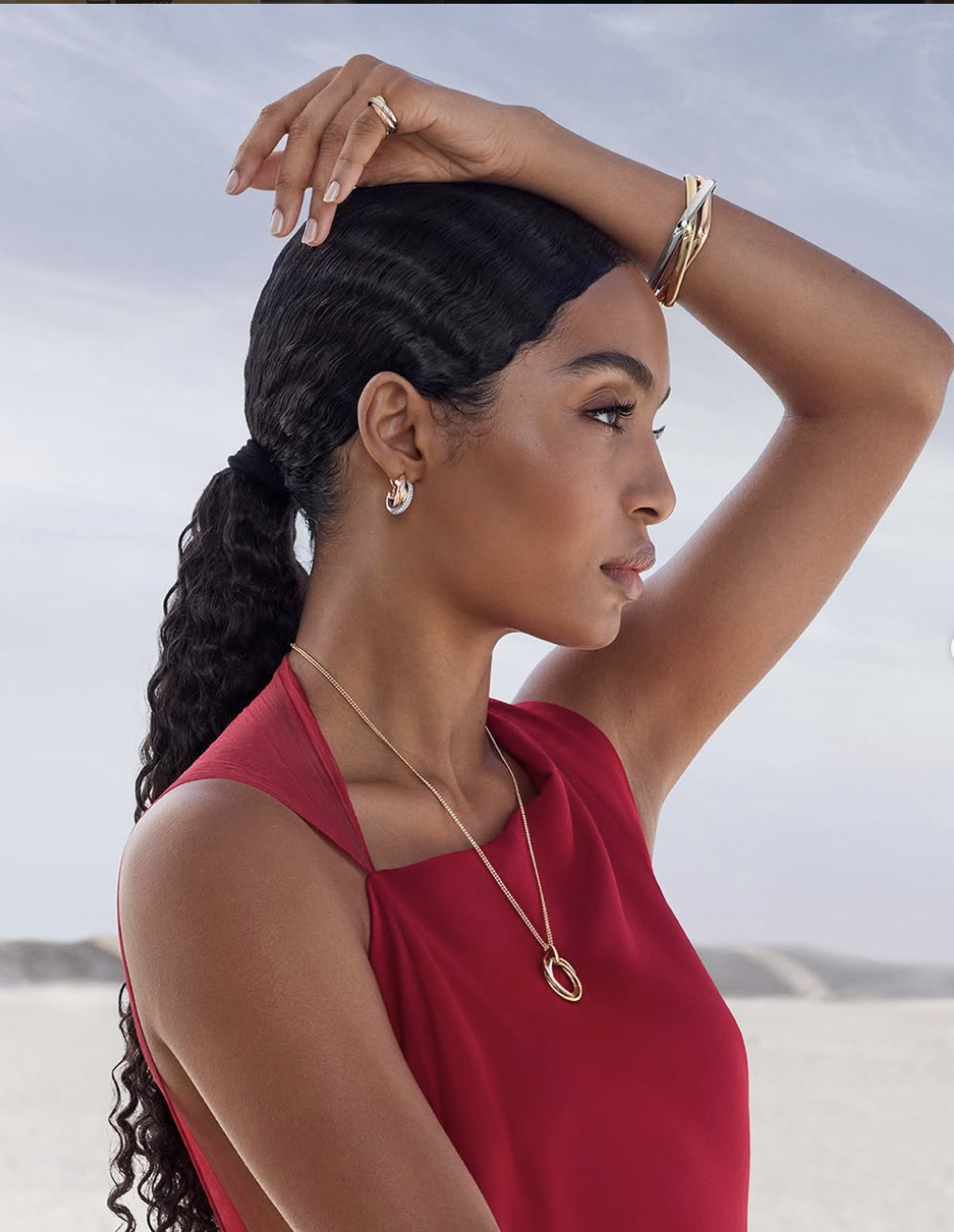
Photo Credit:@cartier and yarashahidi
Worth Exploring (with the Right Undertone Match):
• Very light blonde can work on warm-undertoned light complexions but requires careful execution to maintain contrast. Go warmer, not cooler.
• Pastel shades easier to achieve on lighter hair, but require an undertone match to avoid washing the face out.
• Natural black can be striking with high contrast, especially paired with a bold lip.
Colorist Tip: For lighter complexions, the rule is contrast. The closer your hair color is to your skin tone, the more it will blend in and flatten your look. Go a few shades deeper than feels natural you’ll be surprised how much it makes your complexion pop. Zendaya consistently keeps her hair at least 3–4 shades deeper than her skin tone, and that’s a big part of why her hair always looks intentional.
APPLYING THIS TO WIGS, BRAIDS & PROTECTIVE STYLES
Everything in this guide applies whether you’re coloring your natural hair, choosing a colored wig, picking braiding hair, or selecting a sew-in. Your complexion and undertone don’t change based on what’s on your head the same rules apply across all of it.
• Colored wigs: Use the same shade guidelines. A honey-blonde wig will read the same way as honey-blonde natural hair against your complexion.
• Braiding hair with highlights: Look for braiding hair that includes highlights in shades that match your tone section above. Honey highlights in black braiding hair are a go-to for deep and medium complexions for a reason.
• Faux locs or passion twists: The base color of the hair matters most. Match the base to your skin’s undertone, and let the texture do the rest.
• Colored ends / tips: A great low-commitment way to add color to a protective style. The pop of color at the ends reads as intentional without full commitment.
Pro Tip: When shopping for wigs or braiding hair online, always check the reviews for photos from customers with a similar complexion to yours. Colors photograph very differently depending on the skin tone they’re shown against, and a review photo is worth more than the product listing photo.
ONE LAST THING FROM YOUR COLORIST
Skin tone guidelines are a starting point not a rule. Some of the most iconic hair color moments happened when someone ignored the ‘rules’ entirely: Rihanna in fire red. Latto in platinum blonde. SZA in vivid color. Zendaya in everything. Use this guide to get oriented, then trust your gut and your colorist.
And if you’re not sure? Wigs. Try the color in wig form first. You’ll know within five minutes of wearing it whether it’s the right shade for your complexion, and you haven’t damaged a single strand of your natural hair in the process.
MORE FROM THIS BLOG SERIES
The Best Hairstyles for Your Face Shape (Braids, Locs, Bobs & More)]
The Best Scalp Tools in 2026 (Massagers, Scrubbers, and Brushes for Every Hair Type)
After Reviewing 22 Edge Controls, These Are the 8 That Don’t Flake or Lift
Best Shampoos for Itchy Scalp (10 That Soothe Dryness, Flakes, and Irritation Fast)
We Tested 12 Scalp Oils—These Are the Best for Itchy, Dry, and Sensitive Scalps
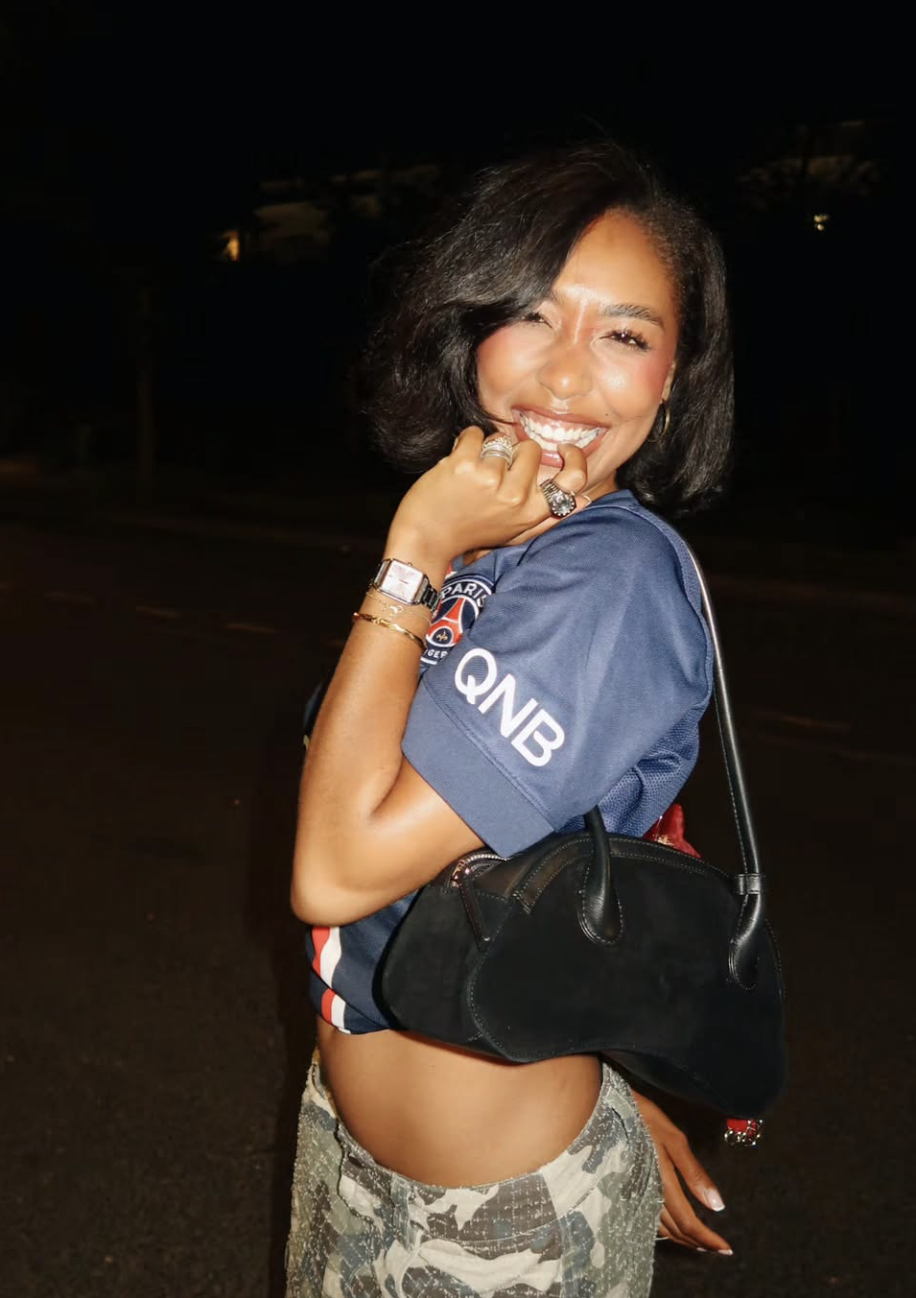
✦ Creator images used for editorial purposes only. All rights belong to their respective creators. We always link and give credit.
✦ Check Out Our Men's Site
Trending on MensOutfitsDaily