How to Dress Classic: A Guide to Building a Timeless Wardrobe in 2026

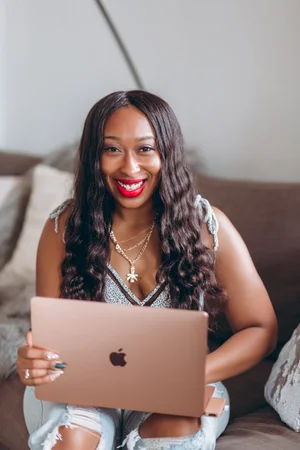
Photo Credit: @Oprah; @traceeellisross; @loriharvey
You know those people who always look like they’ve got it together? Like they casually threw on a crisp white shirt and a blazer, yet somehow look polished and intentional. Meanwhile, you’re standing in front of your closet thinking, Why do I look like I just rolled out of bed? Same.
Here’s the truth about classic style: it’s not about being boring, corporate, or dressed for a gala you’re not attending. Classic style is simply about timeless pieces, clean proportions, and outfits that feel put-together without effort. The kind of clothes that work whether you’re heading to work, brunch, or Target.
If getting dressed feels harder than it should, this guide will help. We’ll break down what classic style actually means, what it’s not, and how to build outfits that feel polished, wearable, and very much you—without chasing trends or overthinking every outfit. Understanding how to dress classic and how to build a classic wardrobe starts with knowing the principles behind timeless style.
Ready to shop? View our full Classic Style Shopping Guide for curated links to all my favorite timeless staples.
What Defines Classic Style (The Non-Negotiables)

Photo Credit:@jastookes
Classic style isn’t about trends, aesthetics, or copying icons—it’s about a set of principles that make outfits look intentional, polished, and timeless no matter the year. These are the non-negotiables that define classic style across decades.
Clean lines
Classic style favors simplicity in shape and silhouette. Think smooth outlines, uncluttered seams, and pieces that don’t rely on excess ruffles, distressing, or heavy embellishment to feel complete. If the eye can move easily across an outfit without stopping at distractions, it’s working.
A neutral foundation
Neutrals are the backbone of classic style—not because color is forbidden, but because restraint creates longevity. Black, white, navy, beige, camel, gray, and soft earth tones allow outfits to feel cohesive, interchangeable, and relevant year after year.
Structure over slouch
Classic style always has an element of structure. That doesn’t mean stiff or uncomfortable—but it does mean garments hold their shape. Tailoring, defined shoulders, clean waistlines, and intentional proportions matter more than looseness or trend-driven oversizing.
Accessories that support, not compete
In classic style, accessories are quiet enhancers, not the headline. Shoes, bags, jewelry, and belts should reinforce the outfit’s balance—not overpower it. If removing an accessory makes the outfit feel calmer and more refined, that’s usually the right choice.
At its core, classic style prioritizes quality over trends, balance over excess, and intention over novelty. When these principles are present, outfits don’t need explanation—they simply look right.
What Classic Style Is Not
Classic style is often misunderstood, especially in a fashion landscape that constantly blurs the lines between timeless and trendy. To truly embrace classic style, it’s just as important to understand what it isn’t.
Classic style is not trend-driven.
If a piece only feels relevant for one season—or relies heavily on what’s “in” right now—it doesn’t belong in a classic wardrobe. Trends can be fun, but classic style prioritizes longevity over novelty. A well-cut blazer or a simple black dress shouldn’t need trend validation to feel current.
Classic style is not boring or outdated.
Timeless doesn’t mean old-fashioned. Classic style evolves subtly with modern tailoring, updated proportions, and thoughtful styling. It’s polished and intentional—not stuck in the past or overly conservative.
Classic style is not overly flashy or logo-heavy.
Bold logos, excessive embellishments, and attention-grabbing details can overpower an outfit. Classic style leans toward restraint—letting fit, fabric, and silhouette do the work instead of loud branding.
Classic style is not about perfection or rigidity.
There’s no strict uniform you have to follow. A classic wardrobe isn’t about dressing “properly” at all times—it’s about having reliable, versatile pieces that adapt to real life. Personal style still matters, and classic pieces should feel wearable, not costume-like.
Understanding these distinctions makes it easier to shop smarter, edit your closet with confidence, and build outfits that feel polished without feeling forced.
Is Classic Style the Same as Quiet Luxury or Quiet Money Style?
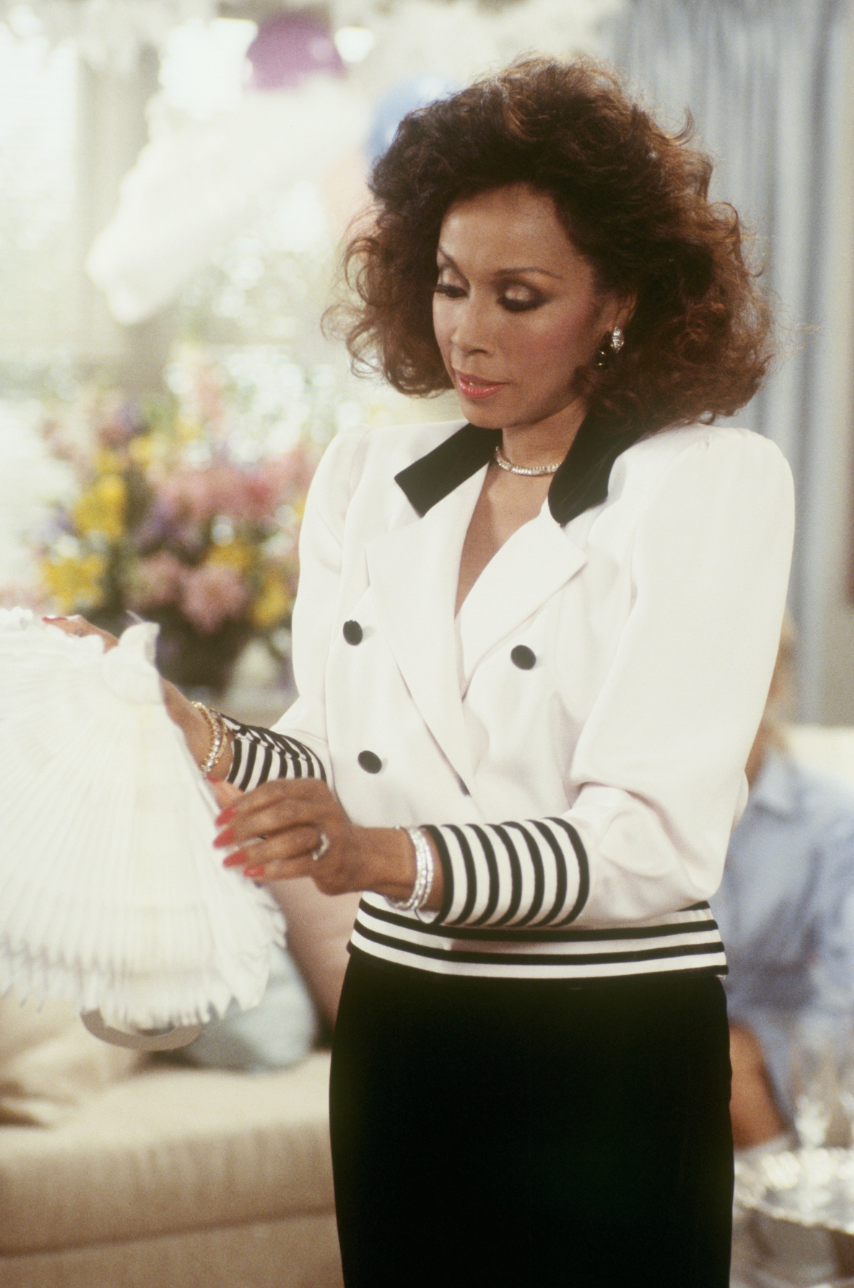
PHOTOS © American Broadcasting Companies
Not exactly—but they’re closely related.
Classic style and quiet luxury (sometimes called “quiet money style”) share a lot of DNA: timeless silhouettes, neutral palettes, and an emphasis on quality over trends. Where they differ is accessibility and intention.
Classic style is about wearing pieces that stand the test of time—clean lines, flattering fits, and versatile staples that work in real life. A tailored blazer, a crisp white button-down, straight-leg jeans, or a simple black dress all fall into this category. These pieces don’t rely on status or price to look polished—they rely on fit, proportion, and restraint.
Quiet luxury, on the other hand, takes that same foundation and layers in exclusivity. The focus is on high-end materials, impeccable craftsmanship, and subtle signals of wealth—often with no visible logos at all. The idea is: if you know, you know. Think perfectly cut trousers, elevated knits, and investment handbags that look understated but come with luxury price tags.
Where They Overlap
Both prioritize timelessness over trends
Both favor neutral colors and clean silhouettes
Both value quality fabrics and thoughtful construction
Where They Differ
Classic style works at any budget—it’s about smart choices, not price points
Quiet luxury leans expensive by default, often emphasizing exclusivity and heritage brands
The easiest way to think about it?
Classic style is the everyday, wearable version of quiet luxury. It’s polished without being precious. Refined without feeling out of reach. You don’t need a trust fund—or a private jet—to pull it off. You just need the right staples, good fit, and a clear sense of what actually works for you.
How To Build A Classic Wardrobe
If you’re ready to move from thinking about style to actually getting dressed with ease, these ten pieces form the backbone of a classic wardrobe. They’re items you’ll reach for repeatedly because they work across real-life situations—work, errands, travel, and social plans. These pieces form the foundation of how to build a classic wardrobe that lasts.
Ready to put these principles into practice? Check out The Ultimate Closet Formula to see the exact 21 pieces we recommend for starting your timeless collection."
A Tailored Blazer

White House Black Market
Petite Belted Ponte Jacket
$220
The ultimate “self-respect” piece. It instantly elevates denim, dresses up a tee, and signals polish without trying too hard.
Editor’s Note: As a personal stylist, I always look for a blazer with a high-quality lining; it ensures the structure holds up after years of wear. This ponte fabric offers the perfect balance of comfort and sharp tailoring, ensuring the silhouette remains intentional rather than restrictive.
Crisp White Button-Up
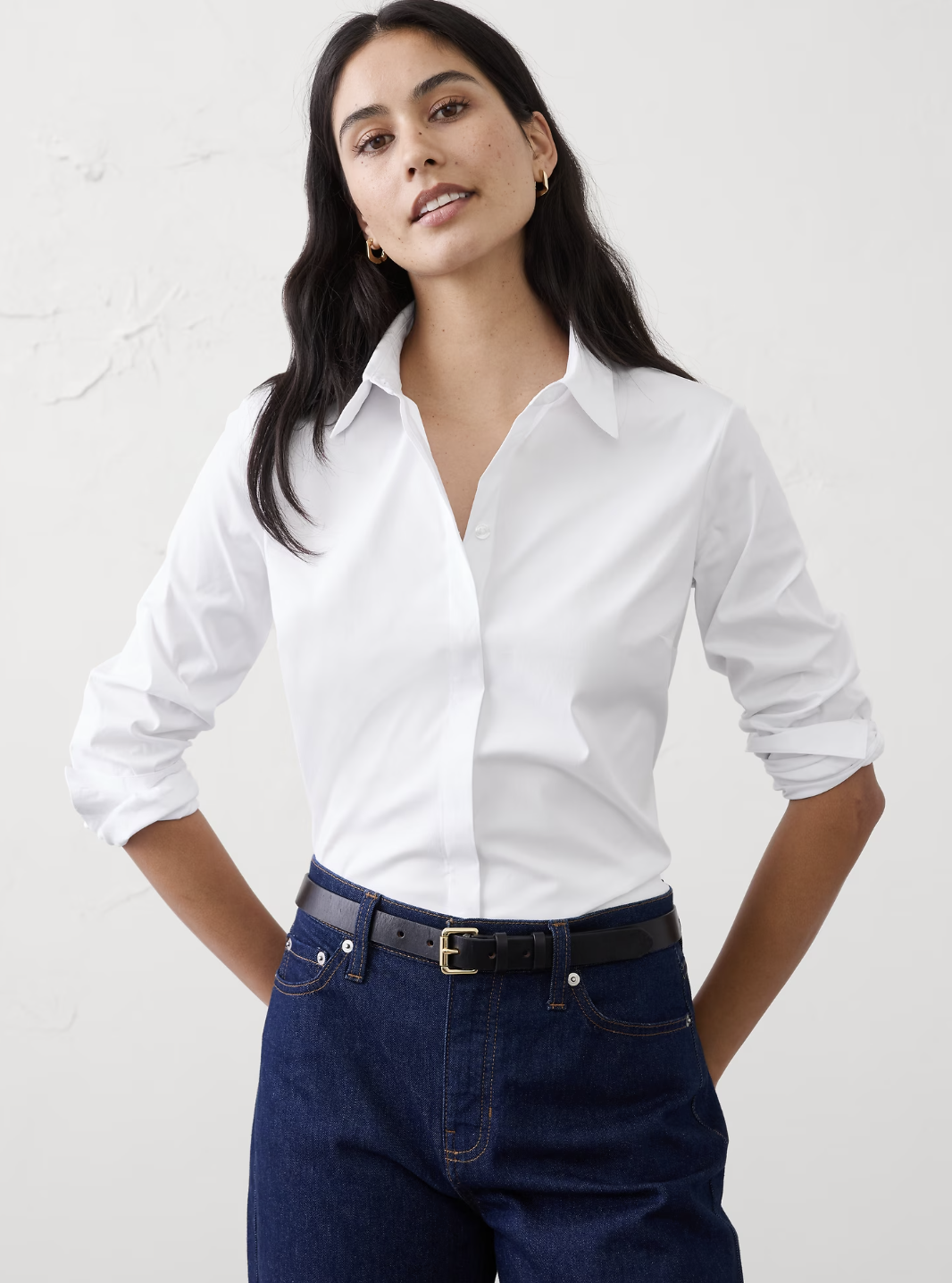
Banana Republic
Easy Care Tailored Shirt
$80
One of the most versatile items you can own. Wear it structured for work or relaxed with sleeves rolled for off-duty days.
Editor’s Note: "In my nine years as a fashion editor, I’ve found that the secret to a 'crisp' white shirt is all in the maintenance. This easy-care fabric is a game-changer for a classic wardrobe, as it maintains those clean, sharp lines without requiring a professional press every single morning.
Straight-Leg Denim

Banana Republic
Straight High-Rise Coated Jean
$91.97
A polished, reliable silhouette with far more longevity than distressed or trend-driven cuts.
Editor’s Note: From a design perspective, straight-leg denim has far more longevity than trend-driven cuts. The coated finish on this pair provides a subtle luster that mimics leather, elevating the classic 'denim and a tee' formula into something far more polished and editorial.
A Neutral Trench Coat

Banana Republic
Timeless Trench Coat
$250
Your all-weather MVP. It adds structure, intention, and ease to nearly any outfit.
Editor’s Note: The trench is the all-weather MVP of any classic capsule. When selecting one for my clients, I prioritize the shoulder structure; it’s what gives the piece its authority and ensures it looks just as good draped over your shoulders as it does belted at the waist.
Black Leather Loafers

Sam Edelman
Loraine Bit Loafer
$150.00
Comfortable yet refined shoes that transition seamlessly from errands to meetings to brunch.
Editor’s Note: Loafers are the ultimate bridge between comfort and sophistication. The gold hardware on this specific pair acts as a 'quiet' accessory that supports the outfit without competing for attention—a core principle I swear by for a refined look.
The Little Black Dress (LBD)

White House Black Market
Button Front Sleeveless Sweater Dress
$170
A true one-piece solution. When you don’t want to think, this always works.
Editor’s Note: A true one-piece solution. Having a BFA in fashion design, I appreciate the vertical line created by the button-front detail; it draws the eye downward, creating a streamlined, elongated proportion that is a hallmark of the classic style archetype.
High-Quality Knitwear

White House Black Market
Convertible Surplice Sweater
$110
Think cashmere or fine wool in neutral tones—warmth without bulk, softness without slouch.
Editor’s Note: I always look for 'softness without slouch' in knitwear. This surplice design is brilliant because the wrapping detail creates a natural waistline, providing the structure that classic style requires while maintaining the ease of a high-quality knit.
Structured Tote Bag

Tory Burch
Perry Tote
$395.00
A functional everyday bag that holds your essentials while keeping your look clean and intentional.
Editor’s Note: A structured tote is essential for keeping a professional look clean and intentional. I recommend a pebbled leather finish for my clients because it’s incredibly durable, allowing the bag to keep its 'box' shape even after daily use.
Tailored Trousers
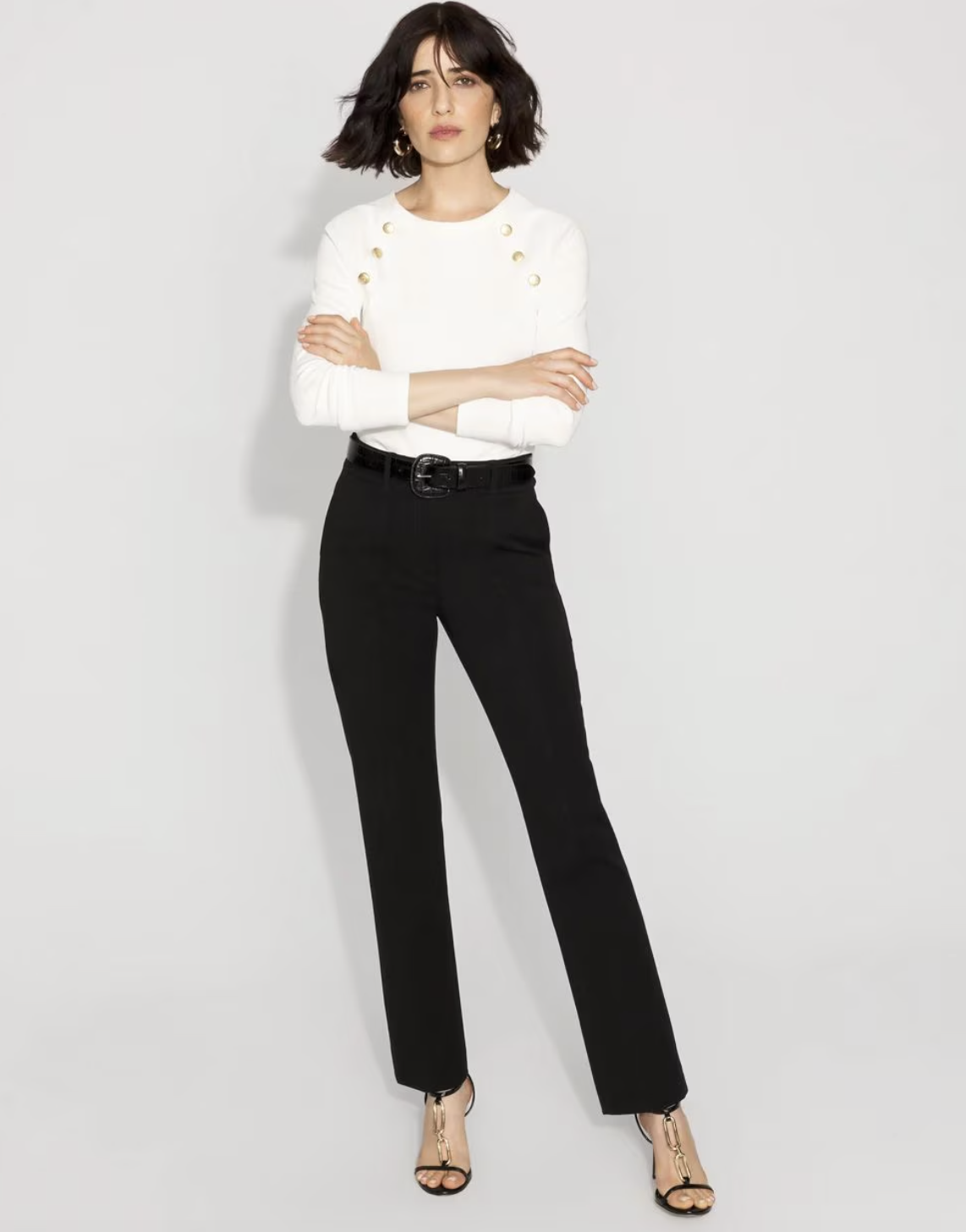
White House Black Market
High-Rise Zoey Straight Pant
$120
Essential for professional settings but just as chic paired with a simple tee or knit.
Editor’s Note: These are a non-negotiable for professional settings. The high-rise fit ensures that when you tuck in your shirt—a key styling move for classic looks—the waistline remains the focal point, creating those intentional proportions we aim for.
Elevated Basics

White House Black Market
Crepe Bustier + Poplin Shirt
$110
Well-cut tanks or bodysuits that form the foundation of layered, pulled-together outfits.
Editor’s Note: Elevated basics are the foundation of a layered look. This combo is an editor favorite because it plays with texture—crisp poplin against smooth crepe—to add depth to a neutral palette without needing to rely on loud patterns or trends.
How To Dress Classic In Real Life
Dressing classic is less about specific items and more about how everything works together. The goal is a wardrobe that feels polished, intentional, and easy to repeat without looking outdated.
Start with fit before anything else. Classic style depends on clean lines, which only work when clothes skim your body instead of clinging or overwhelming it.
Choose Structured Foundations
Classic outfits are built on pieces that hold their shape.
Tailored blazers
Straight-leg trousers
Dark-wash denim
Midi skirts with clean seams
If the structure is strong, the rest of the outfit can stay simple.
Stick to a Refined Color Palette
Classic style relies on colors that mix effortlessly.
Black
Navy
White
Beige
Camel
Gray
Soft pastels in moderation
Limiting your palette makes getting dressed faster and ensures everything pairs well.
Prioritize Quality Over Quantity
A smaller closet with reliable pieces always looks more elevated than one filled with trend-driven items.
Look for:
Natural fabrics
Clean stitching
Minimal hardware
Durable construction
Classic style is built on repetition, so pieces should hold up over time.
Keep Silhouettes Simple
When in doubt, choose shapes that are timeless rather than dramatic.
Straight or slightly tailored fits
Waist definition without tightness
Hemlines that hit just above or below the knee
Necklines that feel balanced, not extreme
The simpler the silhouette, the longer it will stay relevant.
Let Accessories Stay Understated
Classic style uses accessories to complete the outfit, not dominate it.
Leather loafers or pumps
Structured handbags
Minimal jewelry
Neutral belts
Silk scarves
If an accessory feels distracting, it likely does not belong in a classic wardrobe.
Aim for Polished, Not Perfect
Classic style is not about looking rigid. It is about appearing thoughtful and put together.
Steam or press clothes
Keep shoes clean
Choose grooming that feels natural
Avoid over-layering
The result should feel effortless rather than overly styled.
Classic dressing becomes easier with practice. Over time, you will notice that fewer decisions lead to stronger outfits.
Classic Style Icons Who Defined Timeless Elegance
When we talk about classic style, we are really talking about women whose presence made simplicity feel powerful. Their wardrobes were not built around trends. They were built around polish, intention, and confidence.
Diahann Carroll
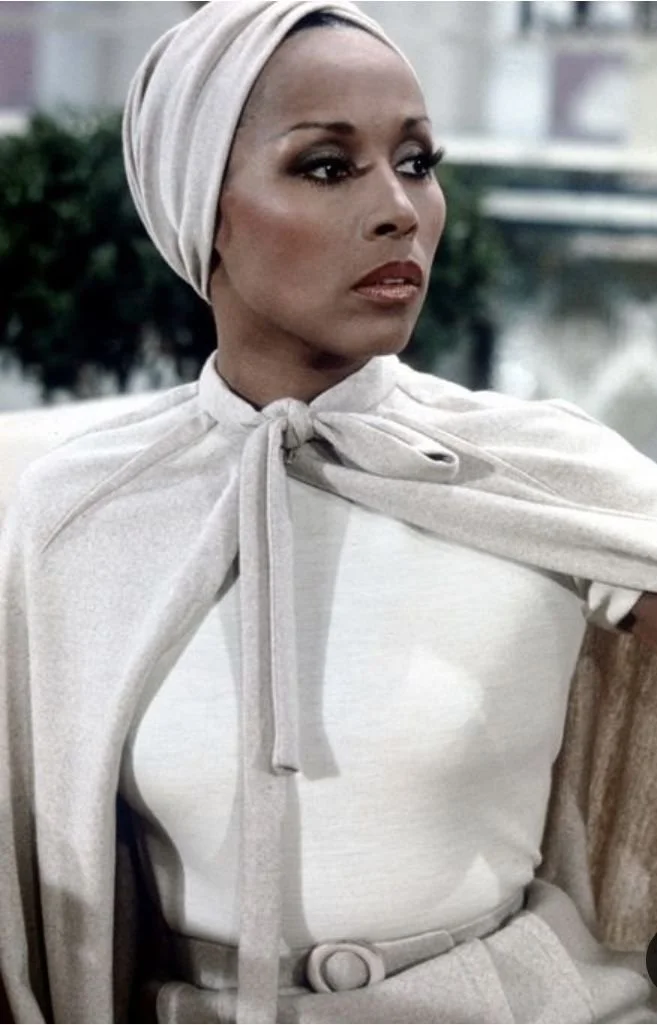
Photo of Diahann Carroll via Pinterest
Diahann Carroll is one of the clearest examples of classic elegance in motion. Her style was defined by tailored silhouettes, refined eveningwear, and a commitment to pieces that highlighted structure over excess. She often chose clean lines, monochromatic palettes, and understated accessories that allowed her poise to take center stage. Nothing felt accidental. Every outfit looked considered, which is one of the core principles of classic style.
The Design Insight: Diahann’s use of monochromatic palettes wasn't just about color; it was a tool to elongate her silhouette.
Stylist’s Tip: When you wear one color from head to toe, the eye moves vertically without interruption. In your own wardrobe, use this to make your structured basics look more expensive and intentional.
What to Look For: Prioritize pieces with defined shoulders and high necklines—these design details command authority and never go out of style.
Dorothy Dandridge
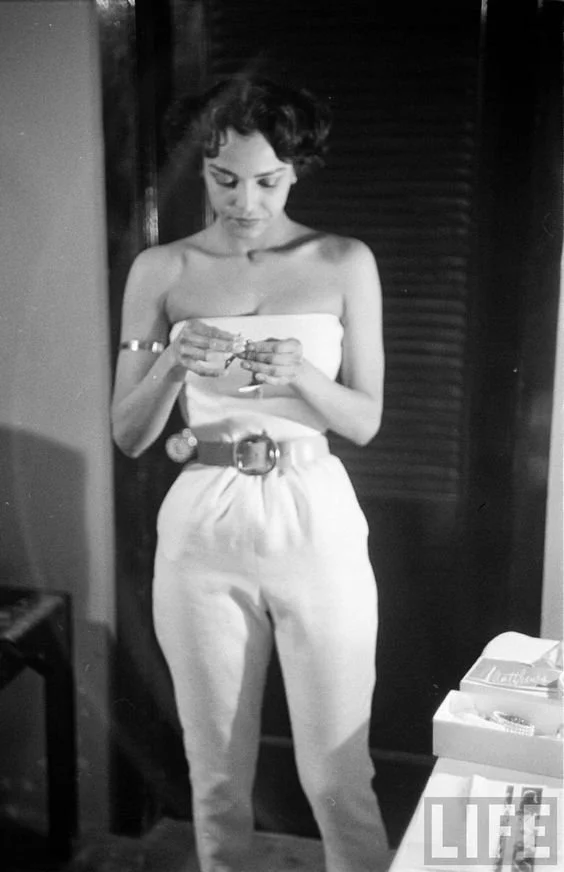
Photo of Dorothy Dandridge via Pinterest
Dorothy Dandridge embodied another dimension of classic dressing. Her wardrobe leaned into soft glamour, with fitted dresses, elegant necklines, and graceful fabrics that moved beautifully. She understood proportion and balance, often choosing looks that emphasized shape without appearing restrictive. The result was femininity that felt strong rather than delicate.
The Design Insight: Dorothy was a master of the 'Fit and Flare' and the 'Structured Column.' She understood that classic style isn't about hiding the body, but about framing it with clean, architectural lines.
Stylist’s Tip: If you are wearing a strapless or more revealing top, balance it with a midi-length hemline. This follows the classic principle of intentional proportions—giving the outfit a focal point without overwhelming the viewer.
What to Look For: Seek out fabrics with substance. A classic look relies on the garment holding its shape; if the fabric is too flimsy, the 'classic' effect is lost.
Classic style icons remind us that elegance is not about quantity. It is about refinement. They chose fewer pieces, styled them well, and wore them with certainty. That is why their images still feel relevant today. Now let’s bring these principles into real-life outfit combinations that are easy to repeat.
Classic Outfit Ideas That Always Work
When you want to dress classic, the goal isn’t to overthink it. It’s to rely on combinations that always look polished, balanced, and intentional. These formulas work because they focus on structure, fit, and timeless pieces rather than trends.
1. Blazer + Simple Top + Tailored Bottoms

This is the foundation of classic style.
Fitted or slightly relaxed blazer
Neutral tee, silk blouse, or knit top
Straight-leg trousers, dark denim, or a pencil skirt
Loafers, ballet flats, or low heels
Why it works: The blazer instantly adds structure and polish, even when the rest of the outfit is simple.
2. Button-Down Shirt + Dark Jeans + Leather Flats

Effortless but always refined.
Crisp white or light blue button-down
Dark wash straight-leg jeans
Leather loafers or ballet flats
Minimal jewelry
Why it works: The contrast between tailored and relaxed pieces keeps the look balanced and timeless.
I’ve Been a Personal Stylist for 10 Years-Here’s What Shoes to Wear With Every Type of Jeans
3. Knit Top + Midi Skirt + Classic Shoes

Perfect for both casual and dressier settings.
Fitted knit or lightweight sweater
A-line or pencil midi skirt
Pumps, loafers, or elegant flats
Structured handbag
Why it works: Clean lines and simple silhouettes create a polished look without feeling stiff.
4. Little Black Dress + Structured Layer
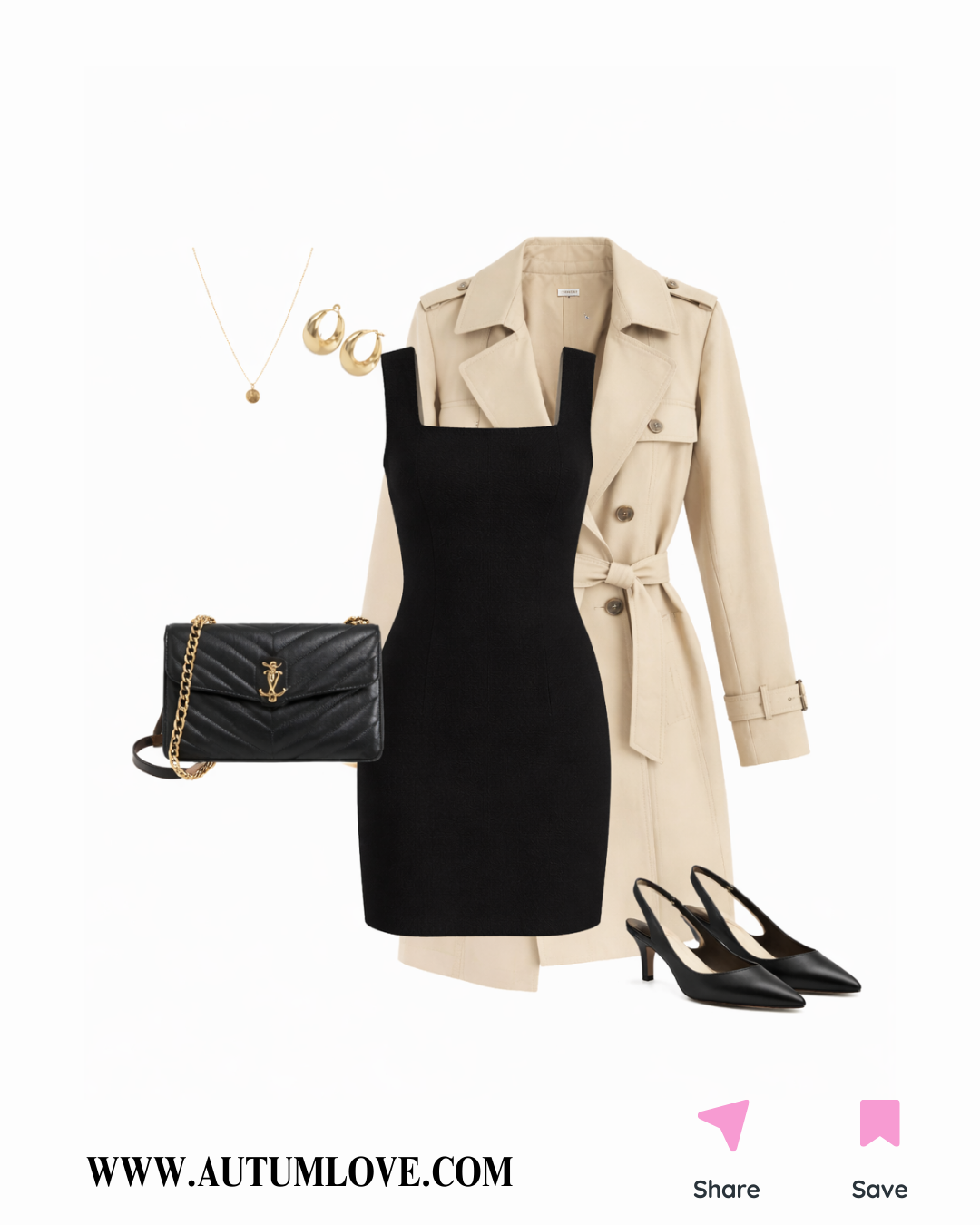
The ultimate classic formula.
Simple black dress
Blazer, trench coat, or tailored cardigan
Neutral heels or flats
Understated jewelry
Why it works: The simplicity of the dress allows the tailoring and accessories to shine.
5. Neutral Monochrome Outfit

One color from head to toe always looks elevated.
Matching or similar shades
Mix of textures for depth
Minimal accessories
Why it works: Monochrome outfits feel intentional, elegant, and never busy.
6. Trench Coat + Everyday Basics
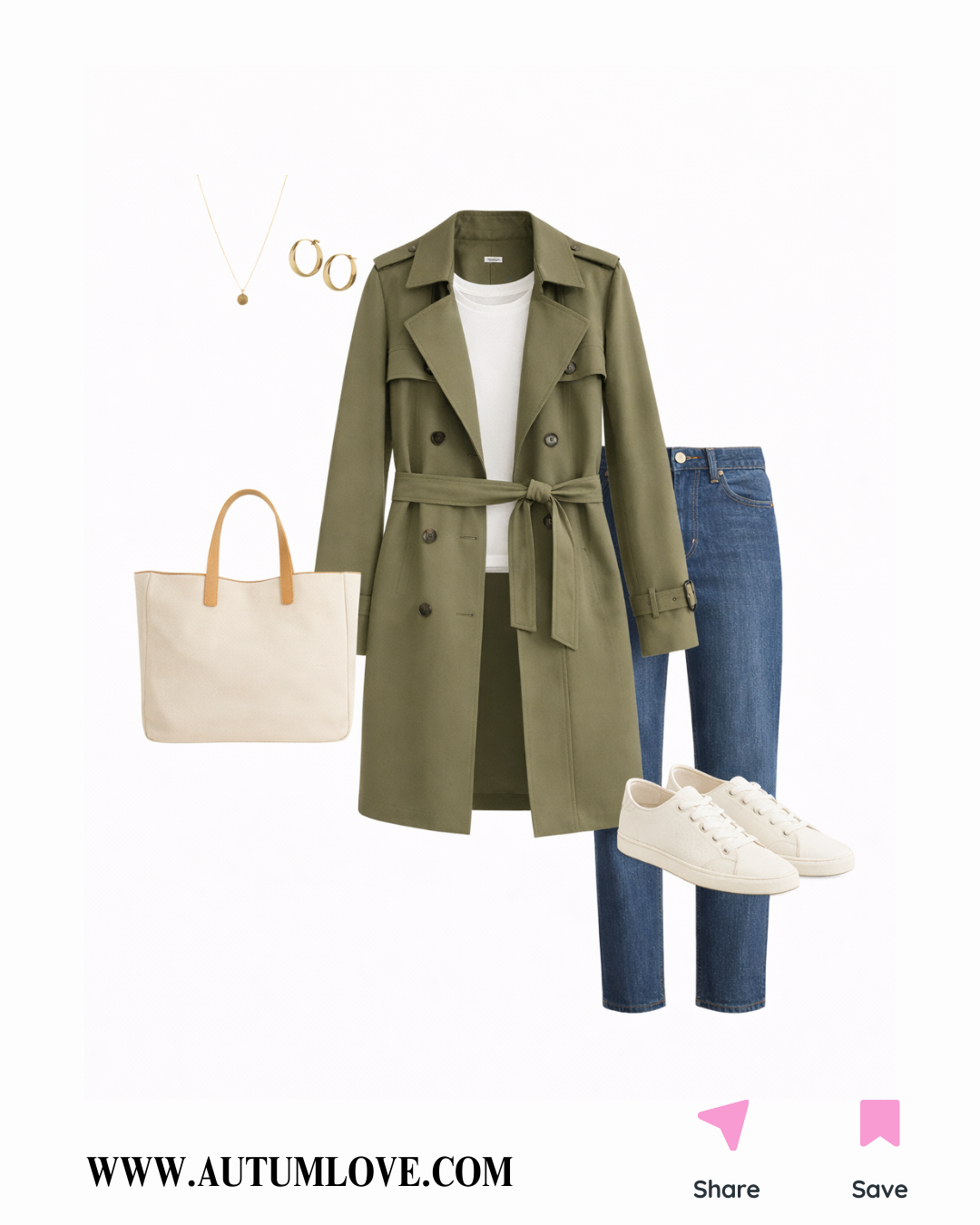
A trench instantly pulls everything together.
Classic trench coat
Tee or knit
Straight-leg jeans or trousers
Flats, loafers, or ankle boots
Why it works: Outerwear sets the tone for the entire outfit, and a trench always reads classic.
Classic style is less about having more clothes and more about knowing which combinations consistently work. Once you have a few reliable formulas, getting dressed becomes simpler and more satisfying.
✦ Creator images used for editorial purposes only. All rights belong to their respective creators. We always link and give credit.
✦ Check Out Our Men's Site
Trending on MensOutfitsDaily