
How to Plan Christmas Gifts on a Budget (Without the Last-Minute Panic)

Photo Credit:@Reet Rachwani
Christmas shopping can go from fun to frantic in about three clicks. You spot something perfect for your sister, add a little extra for your mom, and tell yourself the stocking stuffers don’t really count. By December, you’ve bought plenty but you’re still unsure who’s finished, what’s arriving, and how much you’ve actually spent.
A Christmas gift budget isn’t about making the season less generous. It’s about deciding what you can spend, keeping every name and purchase in one place, and leaving yourself enough breathing room to enjoy it. Here’s how to plan gifts without the last-minute scramble.
Our Holiday Gift Tracker Spreadsheet is your secret weapon to stress-free holiday shopping track gifts, set budgets, and never forget who you already bought socks for.
Start with a Christmas gift budget you can comfortably spend
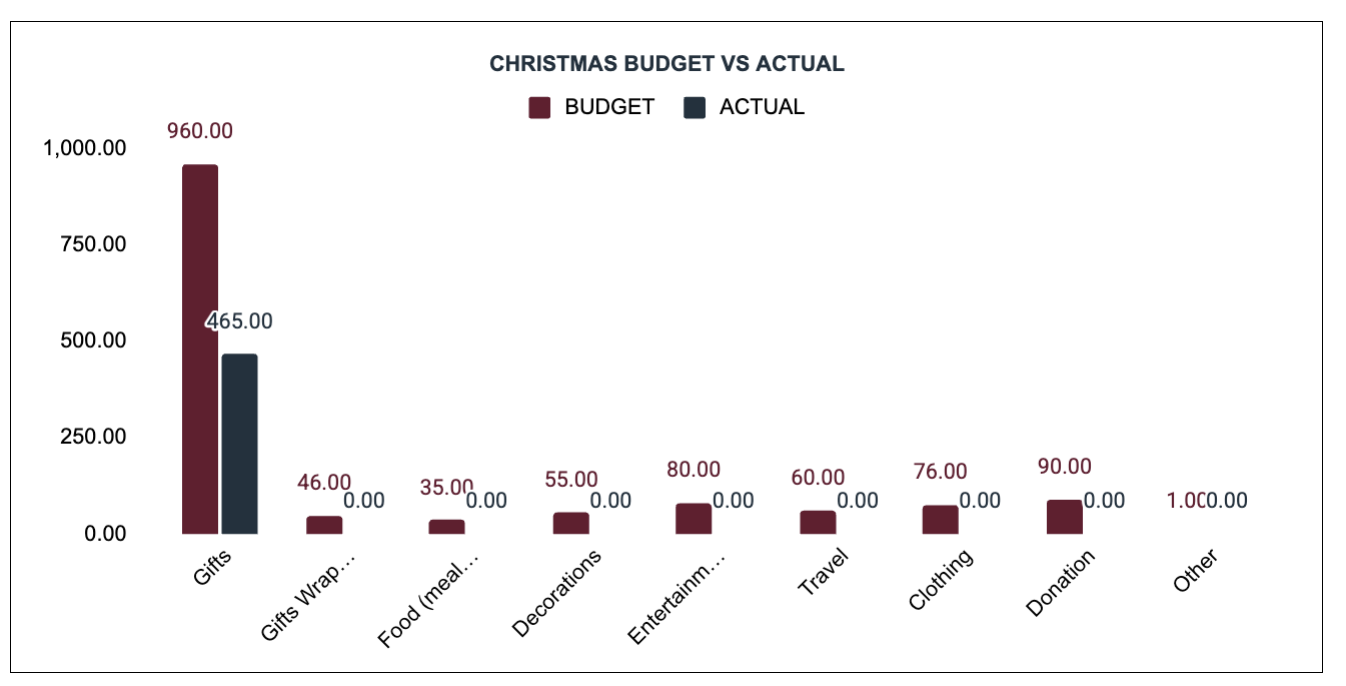
Before making a gift list, choose one total for Christmas gifting that fits your actual life. This is the amount available after your regular expenses and other priorities—not a number based on what everyone else appears to be buying. If that total is smaller this year, that’s useful information, not a failure.
Then take out the costs that tend to hide around the gifts: wrapping, cards, postage, and a small cushion for an unexpected invitation or forgotten exchange. What remains is your Christmas shopping budget. Keep meals, travel, and outfits in their own holiday plan so a festive dinner doesn’t quietly consume the money you set aside for presents.
For example, if your total is $450, you could reserve $35 for wrapping and shipping and $40 for surprises. That leaves $375 for gifts. Those numbers are only an illustration; the right total is the one you can afford.
Our Holiday Gift Tracker Spreadsheet is your secret weapon to stress-free holiday shopping—track gifts, set budgets, and never forget who you already bought socks for.
👉 Grab your free tracker here
Write down everyone before you shop for anyone
Make one list with every person or exchange you expect to buy for: family, friends, teachers, coworkers, a host, and the “we usually exchange something” person. Check last year’s list if you have one. This is where you catch the names that normally appear in a panic two days before Christmas.
Now decide what kind of gift each person actually needs. A thoughtful book for one friend might mean more than a pile of little things. An experience, a shared gift, or a family gift can make more sense than separate presents. If a group has grown too big to shop for comfortably, suggest drawing names or agreeing on a price limit early.
Give every name a ceiling—not an assignment to spend
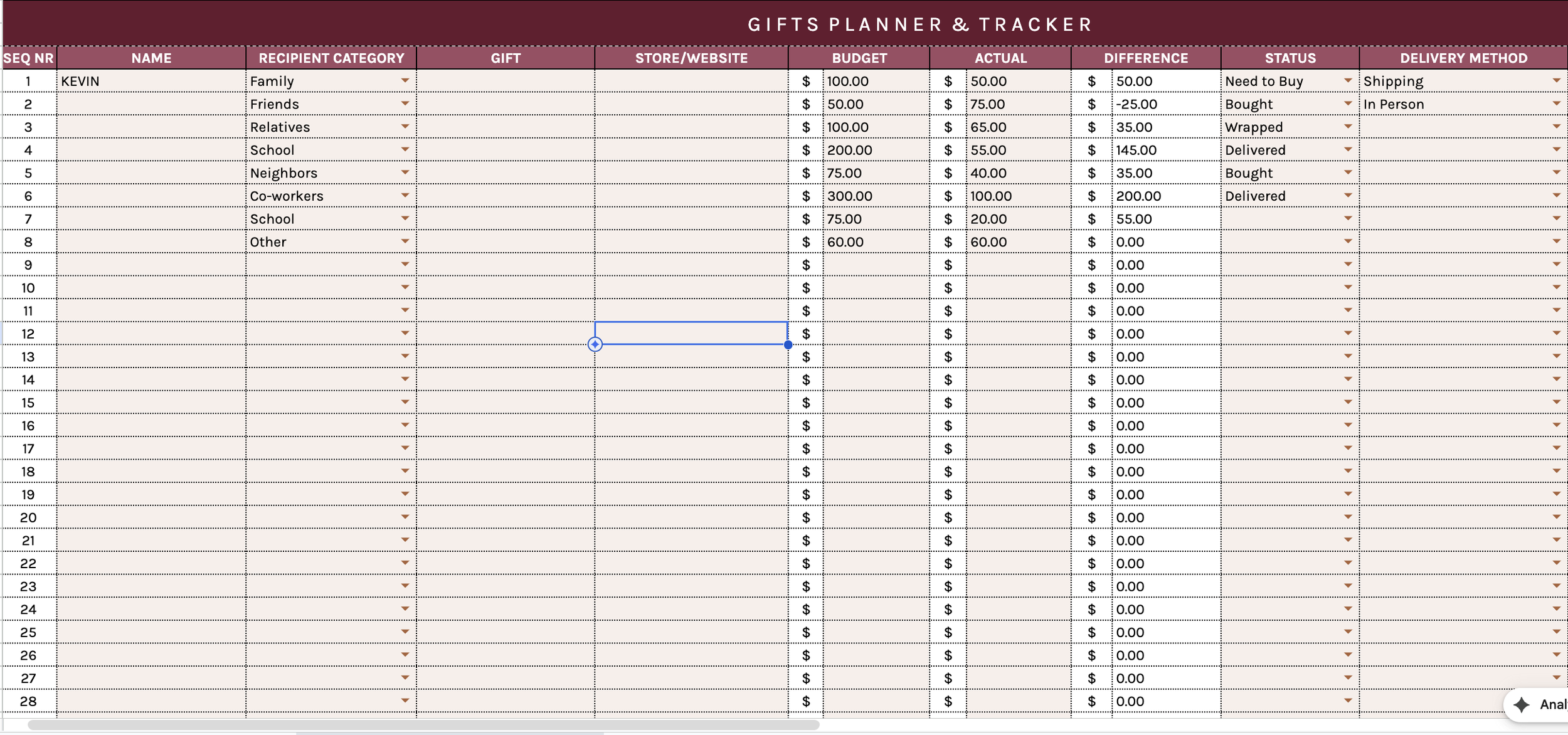
Divide the gift budget across your list according to your relationships and what you want to give. The amount beside a name is the maximum, not a target you must reach.
Here’s how that hypothetical $375 could look: $100 for a partner, $60 each for two parents, $50 for a best friend, $40 each for two children, and $25 for a host. Total: $375. Your list will look different, but the important part is that the numbers add up before you start buying.
If the total is too high, adjust the plan now. Cut a category, combine gifts, set a group limit, or choose a more personal lower-cost idea. It’s much easier to edit a list than to undo a purchase.
Keep gift ideas separate from gifts you’ve committed to
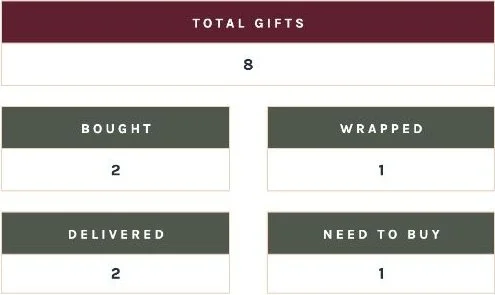
A saved link is an idea. A package on the way is a purchase. Mixing the two is how you end up buying a second gift because the first one disappeared into your email confirmations.
For each person, keep a short note with the gift idea, estimated price, where to buy it, and whether it has been purchased. Once you order, record the actual price—including tax and delivery if those come out of your gift budget. Then mark when it arrives, gets wrapped, and is given or shipped.
This is the point where the free Holiday Gift Tracker earns its keep: it puts your gift list, budget-versus-spent numbers, and delivery status together. Use it if you want one place to see the whole season; a note on your phone works too if you’ll actually keep it updated.
Shop your plan, not the sale banner
A discount only helps if the gift fits the person and the price fits the number beside their name. Before you buy, ask: Would I still choose this for her if it weren’t marked down? Is the final price within my limit? And do I already have something for her?
When you need ideas within a clear ceiling, start with a guide that matches your budget—like these Amazon gifts under $50—instead of scrolling a retailer’s entire holiday section. For a friend who is famously hard to shop for, the gifts for women who have everything guide can help you choose one specific, useful idea rather than five filler gifts.
Still not sure where to start? The Holiday Hub’s three-question gift finder takes you to guides by recipient, so you can choose a thoughtful idea without scrolling twenty unrelated lists. Check the final price against the limit you set before you add it to your cart.
Give every order a final checkpoint
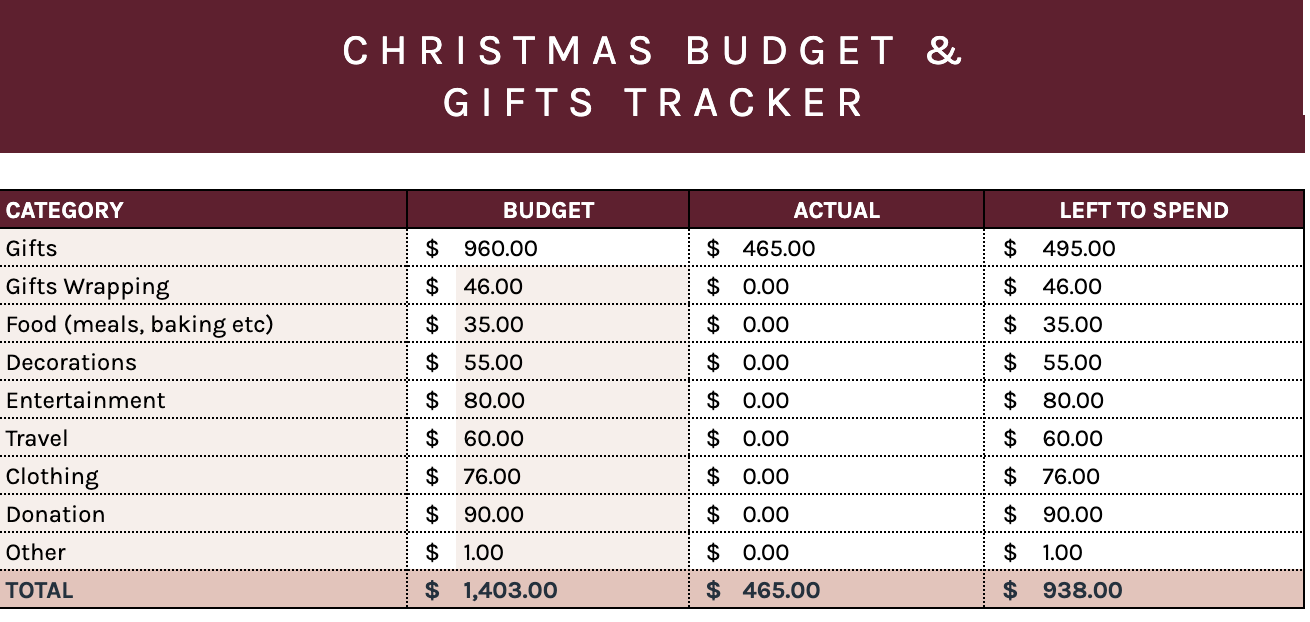
The shopping isn’t done when you click “place order.” Set aside ten minutes once a week to check what has arrived, what still needs wrapping, what must be shipped, and whether a return or exchange needs attention. Keep receipts or order emails in one folder. If a delivery date changes, you’ll notice while there’s still time to make another plan.
Before you buy one last “just in case” present, look at your tracker. If the person already has a gift and your total is at its limit, you’re finished. Being done is allowed.
If your budget starts slipping, make one deliberate change
An over-budget purchase doesn’t have to turn into an over-budget season. Update the actual amount, see what remains, and make one clear adjustment: return something, spend less on an unpurchased gift, skip an add-on, or use the cushion you intentionally set aside. The key is to decide rather than hope the total works out.
Christmas gift planning: a simple timeline
Early season: set the total, make the full list, and collect ideas. No need to purchase everything at once.
When you begin shopping: buy the gifts you’re confident about and enter each actual cost as you go.
A few weeks before Christmas: check delivery windows, finish mailed gifts first, and review what’s still unpurchased.
Final week: wrap what’s already here, check the list one last time, and stop shopping for people who are done.
The goal isn’t a perfect spreadsheet
It’s a Christmas morning that doesn’t come with the nagging question of what you forgot—or a January bill you didn’t mean to create. Start with a number, give every name a place, and keep the list current. The gifts can still feel generous and personal; the plan just makes sure the generosity is yours to choose.
If you want the whole thing in one place, grab the free Holiday Gift Tracker and use it to plan gifts, follow spending, and keep tabs on what’s been ordered, delivered, and wrapped.
You May Also Like:
The Early Gift Guide: Amazon Finds Under $50 That Actually Hit
I'm a Fashion Editor—Here Are the 20 Gifts I'd Actually Give My Friends
Fashion People Are Already Buying These 20 Holiday Finds—So Am I



Our Holiday Gift Tracker Spreadsheet is your secret weapon to stress-free holiday shopping track gifts, set budgets, and never forget who you already bought socks for.
✦ Creator images used for editorial purposes only. All rights belong to their respective creators. We always link and give credit.
✦ Check Out Our Men's Site
Trending on MensOutfitsDaily