
Why Some Outfits Just Work (and It Has Nothing to Do With Trends)
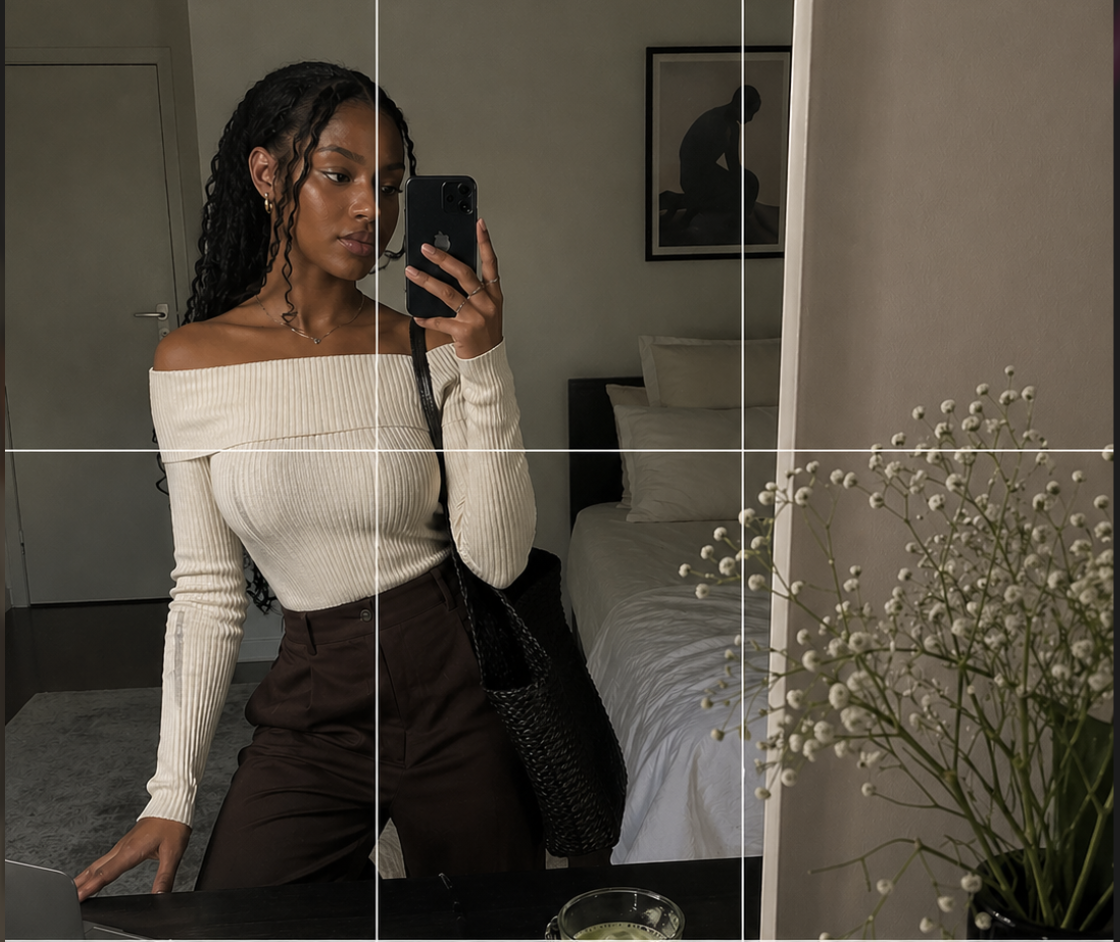
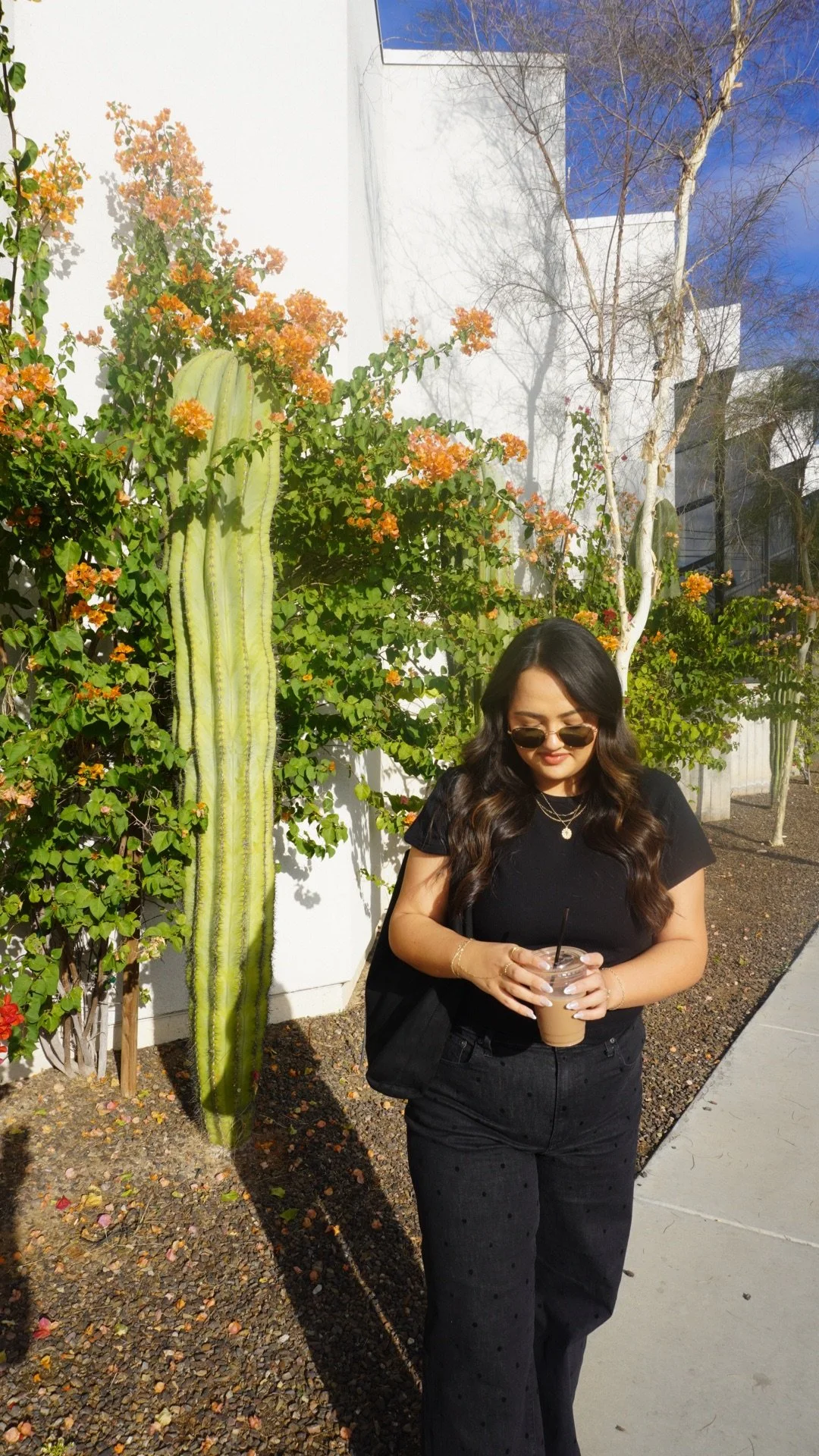
Photo Credit:@autumlovedaily
The rule of thirds is one of the most useful concepts borrowed from visual art and applied to fashion and once you understand it, you'll never look at an outfit the same way again. In visual art, a composition is divided into thirds both horizontally and vertically, and the most interesting subjects are placed at the intersections of those lines rather than dead center. The same logic, adapted, applies to how we see a clothed body, when the outfit is divided into thirds, the silhouette reads as balanced and intentional. When two competing sections fight for dominance, the eye doesn't know where to focus.
Stylists apply this as a simple horizontal principle: divide the body into three roughly equal horizontal sections. The most common division points are the natural waist and the upper hip. When one section of the outfit dominates occupying roughly two-thirds of the visible body and another section provides a distinct contrast at one-third, the proportion feels resolved and elegant. The eye has somewhere to rest and a clear reading of the silhouette.
This is why a tucked shirt looks more polished than an untucked one. Why a cropped jacket changes an entire outfit. Why high-waisted everything dominated fashion for a decade and shows no sign of leaving. None of these are trends born from randomness they're all applications of the same underlying principle. Understanding that principle means you can apply it deliberately rather than hoping a combination works by accident.
If you liked this, you'll love our free daily newsletter. Every morning I drop the best sales, fresh finds, and outfit ideas straight to your inbox no fluff, just the good stuff. It's free:
What Is the Rule of Thirds in Fashion?
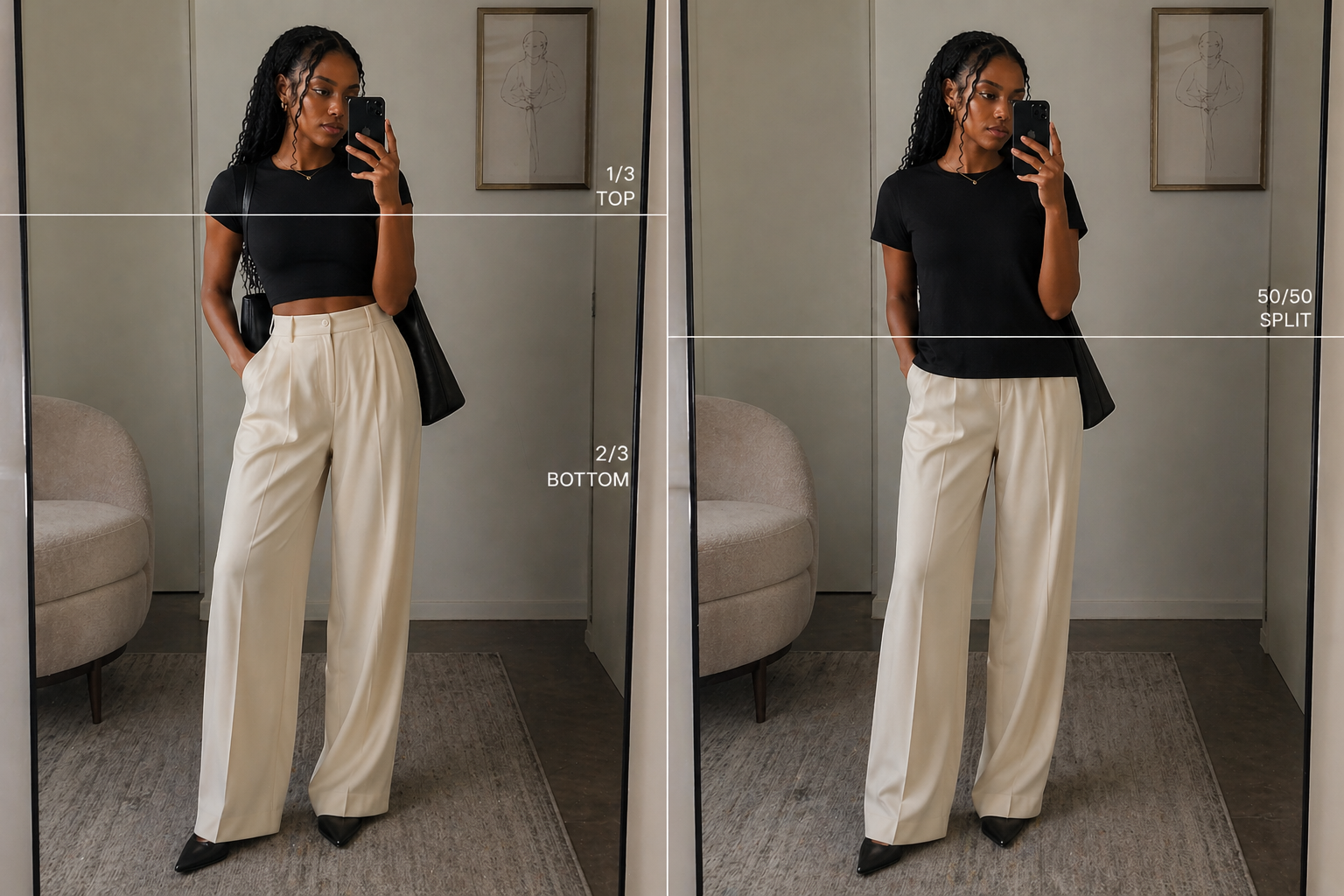
The rule of thirds in fashion is a proportion principle that states, when an outfit divides the body into a roughly 1/3 and 2/3 split, the silhouette reads as balanced and intentional. The body is viewed as a vertical canvas, and the outfit creates visual sections within that canvas through hemlines, waistbands, color breaks, and layering pieces.
The two most common division points on the body are the natural waist the narrowest part of the torso and the upper hip, roughly where a high-waisted waistband sits. When an outfit establishes a clear visual break at one of these points, and one section clearly dominates the other in terms of length, the proportion feels resolved. A cropped top with high-waisted trousers creates a 1/3 top / 2/3 bottom division. A longline blazer over slim trousers creates a 2/3 top / 1/3 bottom division. Both read well because neither section is fighting the other.
The 50/50 split is where most proportion problems happen. A top that ends at mid-hip not clearly cropped, not clearly long cuts the body in half visually. The eye has no clear reading of where one section ends and another begins. Both halves compete equally for attention, and the result is a silhouette that feels unresolved and slightly heavy, regardless of how nice the individual pieces are. This is the proportion mistake behind the feeling that an outfit "doesn't quite work" even when everything is well-fitted and good quality.
The 1/3 Top, 2/3 Bottom Formula
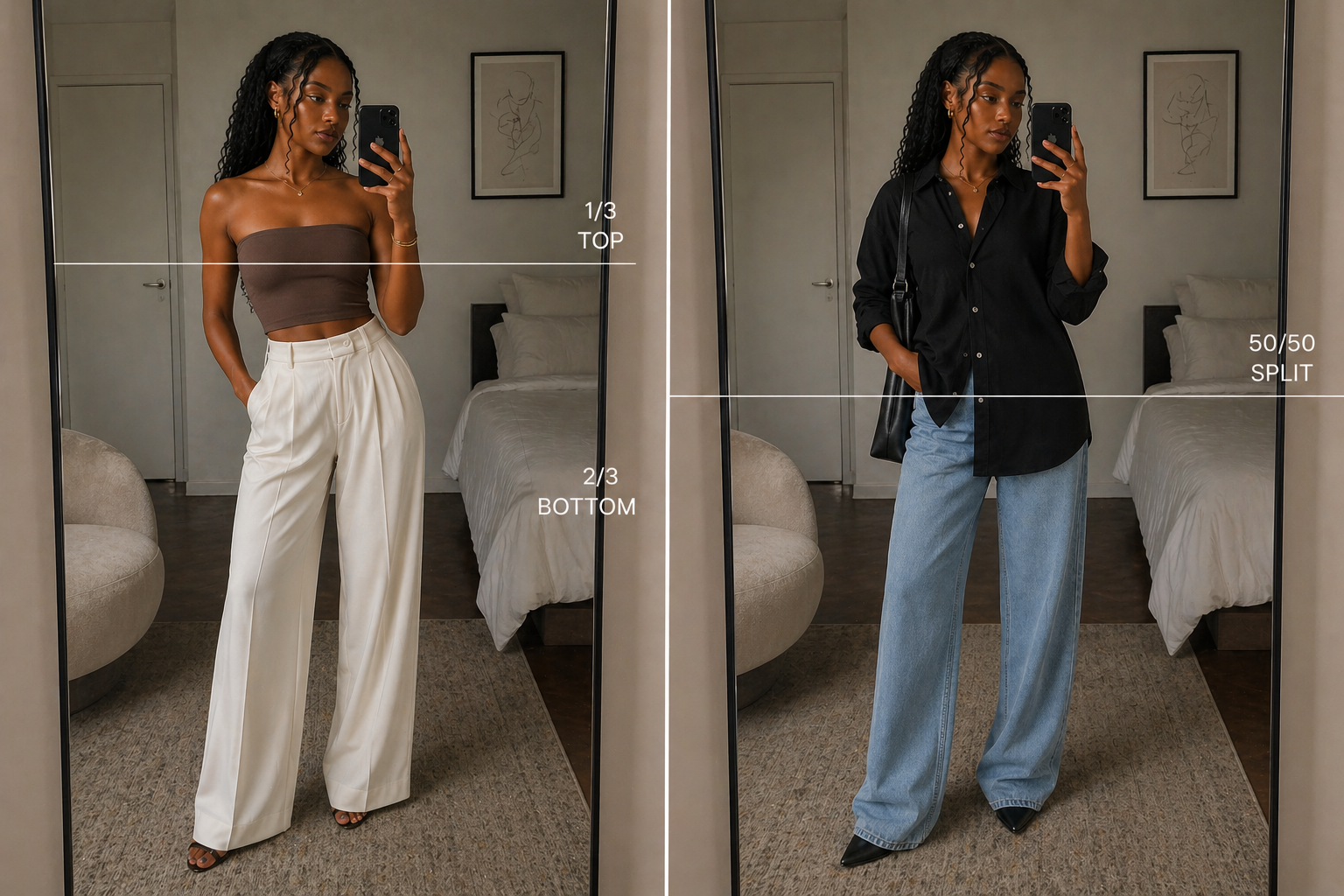
The 1/3 top, 2/3 bottom formula is a cropped or tucked top paired with high-waisted bottoms trousers, skirts, or jeans. The top occupies roughly the upper third of the body; the bottom occupies the lower two-thirds. This is the formula that made high-waisted jeans the dominant silhouette for most of the 2010s and 2020s: they shift the visual waistline upward, elongate the leg line, and create the 1/3 / 2/3 ratio almost automatically.
This formula works best when three conditions are met, the top is noticeably shorter than mid-hip (ending at or above the natural waist), the bottom has a defined high waistband that establishes the visual division, and there is a clear color or tonal contrast between the top and bottom sections. When all three conditions are present, the proportion reads immediately. When any one of them is missing the top is too long, the waistband is low, the colors are too similar to show the break the formula loses some of its impact.
Pro Tip: A half-tuck (tucking in just the front of the shirt) achieves this formula even with a longer shirt. The visual waistline is established at the front, which is all the eye needs to read the proportion correctly. You get the effect without the commitment of a full crop.
The 2/3 Top, 1/3 Bottom Formula
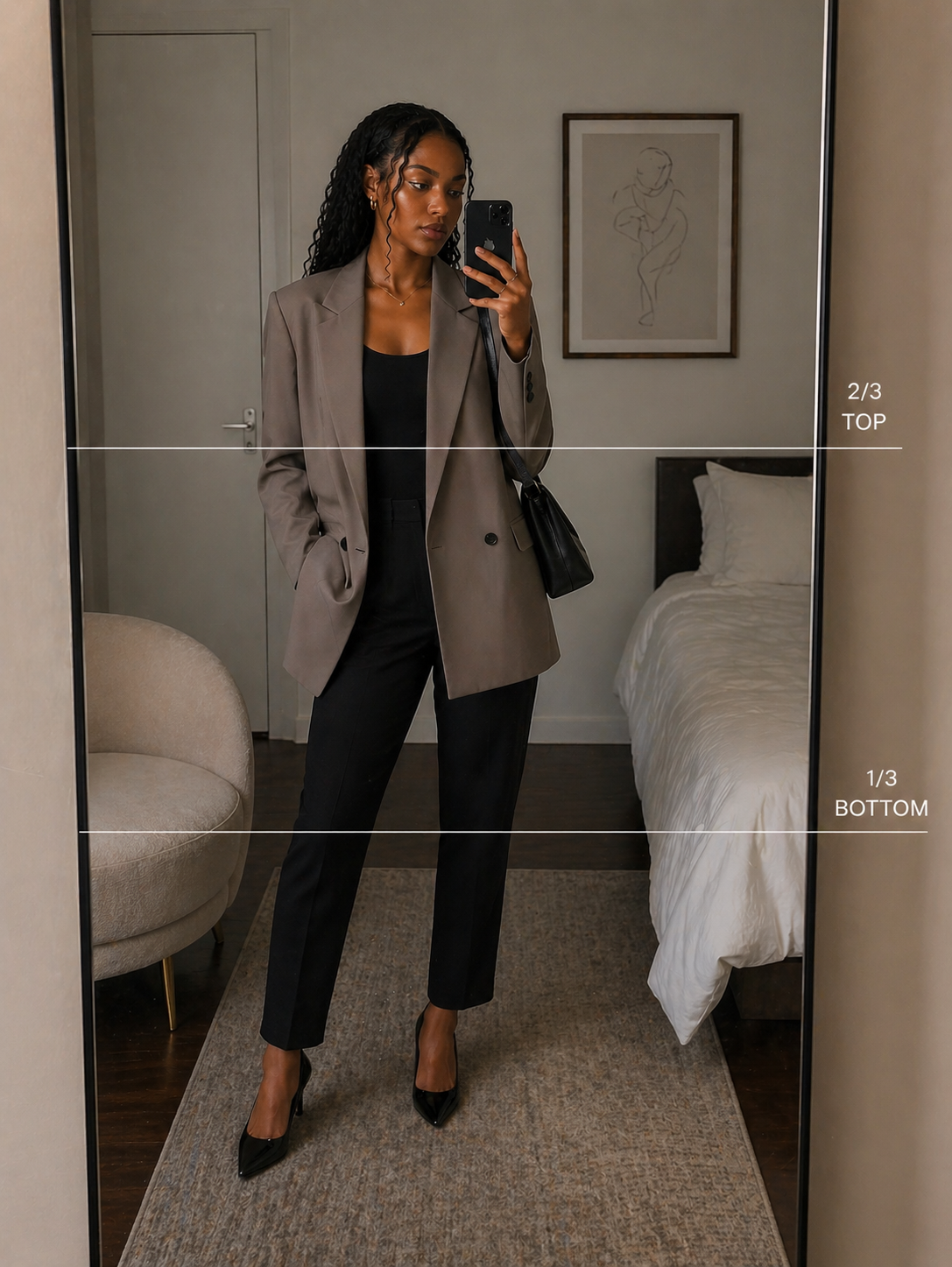
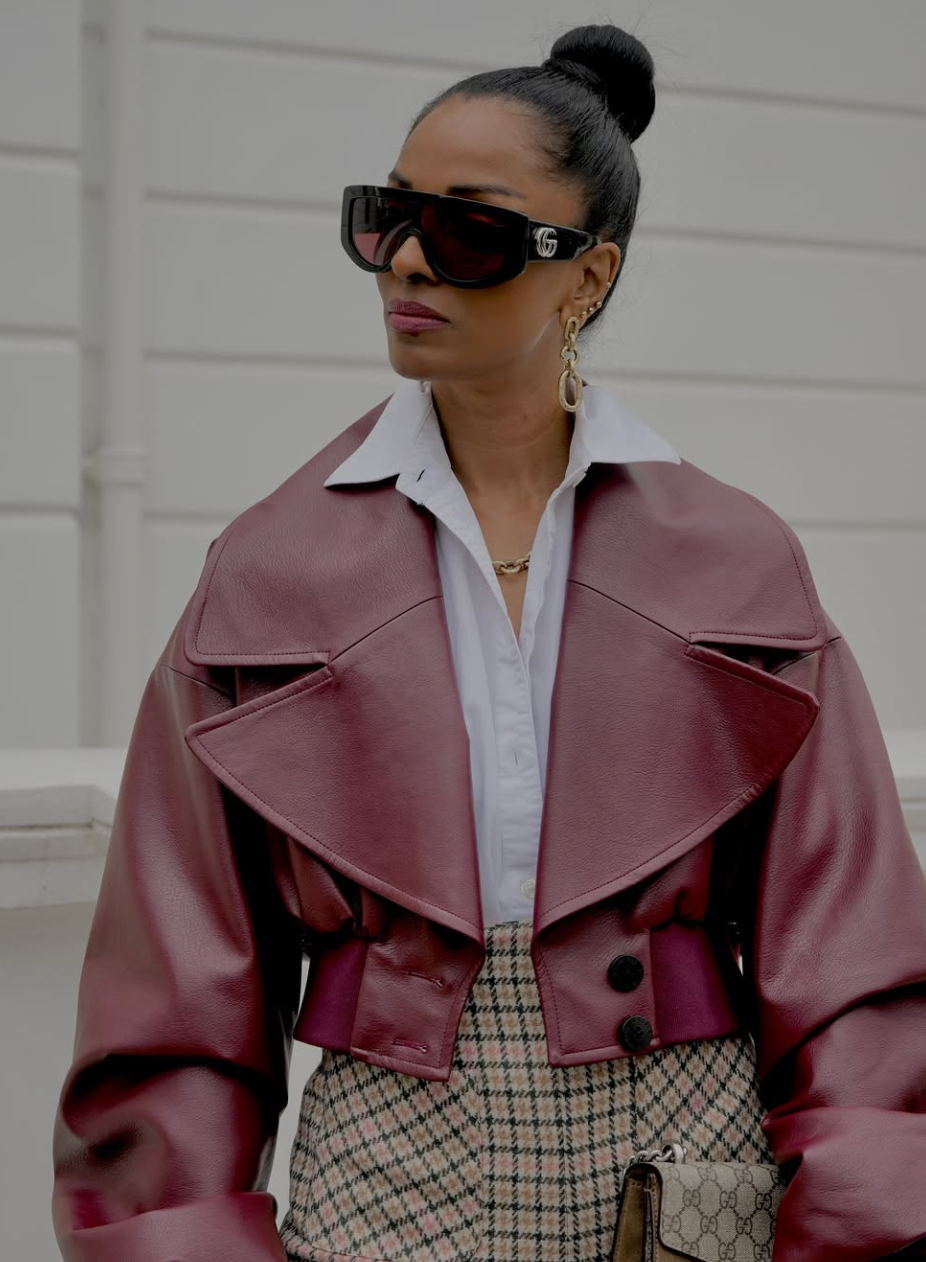
The 2/3 top, 1/3 bottom formula reverses the ratio, a longer top, tunic, or layering piece dominates the upper two-thirds of the body, while a slim, fitted bottom anchors the lower third. The most common examples are a longline blazer over skinny jeans or slim trousers, an oversized knit over fitted leggings, or a trench coat with slim fitted pants. The key in every case is that the bottom remains slim and visible it's the anchor, not competition.
This formula works best when the top has clear length and structure rather than shapelessness. An oversized top that is vague about where it ends creates a soft, undifferentiated mass rather than a clear 2/3 section. The top needs to have a definite hemline whether that's a crisp blazer hem, a knit hem, or a structured trench coat so the bottom third is clearly distinguished. Contrast between the two sections, whether in color, texture, or silhouette, reinforces the proportion reading.
Pro Tip: The 2/3 top formula is often where tall figures and those with longer torsos naturally end up long tops feel proportional on them rather than overwhelming. If you have a shorter torso and find this formula makes you feel swamped, the key is keeping the bottom very slim and the top very structured, never both loose at once.
How to Apply Rule of Thirds to Fashion: The Tuck
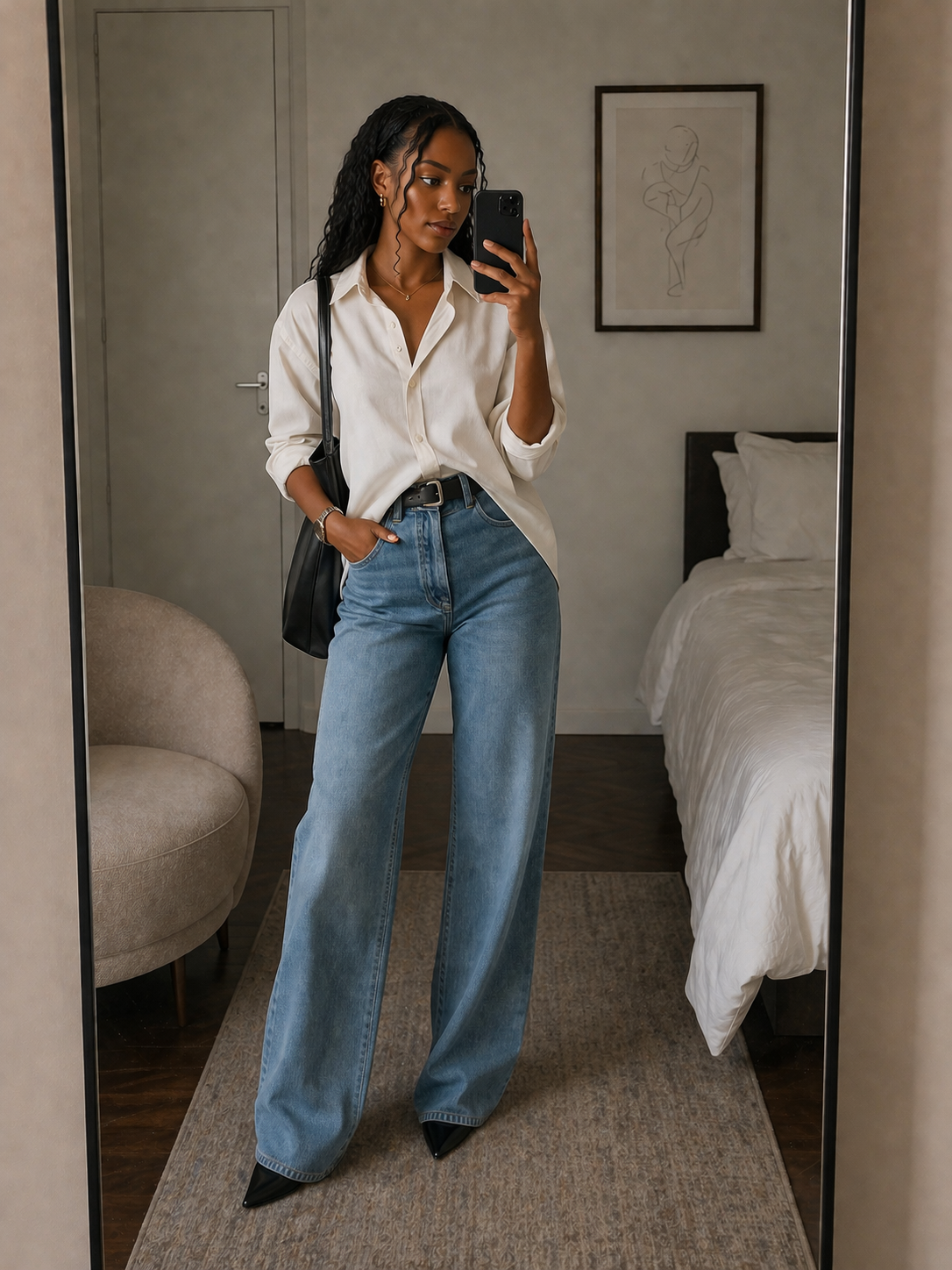
The French tuck tucking just the front portion of a shirt into high-waisted bottoms while leaving the back untucked is the single simplest application of the rule of thirds in fashion. It's a styling move that takes seconds and changes the entire proportion of an outfit. And the reason it works is entirely explainable by the rule of thirds.
A fully untucked shirt that hits at mid-hip creates the 50/50 problem: half of the visible body is covered by shirt, half by trousers, and neither section dominates. The French tuck changes that immediately by establishing a visual waistline at the front of the outfit. The tucked portion shows the waistband, creates the 1/3 / 2/3 division, and reads as intentional — even though the back of the shirt is still hanging loose. The front is all the eye needs to read the proportion.
Pro Tip: The French tuck works on almost every shirt style button-downs, tees, blouses, even slightly stiffer fabrics. The only requirement is that the waistband is visible after tucking. If the waistband disappears under excess fabric, tuck a little more aggressively or choose a higher-waisted bottom to make the division clear.
Rule of Thirds for Petite Figures
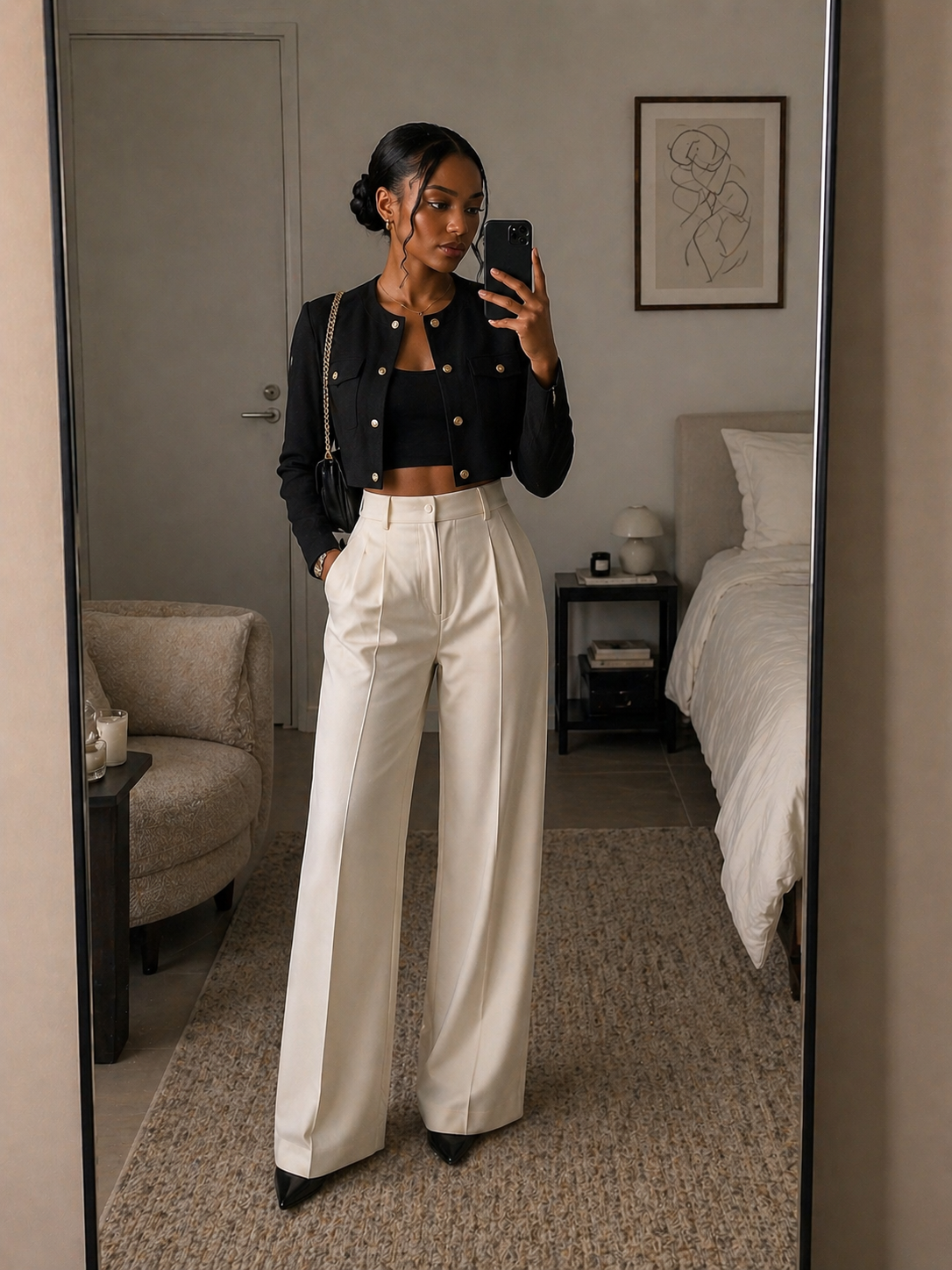
Petite figures benefit most from the 1/3 top / 2/3 bottom formula because it directly addresses the primary styling goal for petite proportions: elongating the leg line and making the overall silhouette read as taller. By keeping the top short and the bottom high-waisted, the uninterrupted lower section of the body from high waist to hem reads as long. The longer that uninterrupted lower section appears, the taller the overall silhouette reads.
The key moves for petite figures applying the rule of thirds: cropped everything at the top (jackets, sweaters, shirts, blazers all shorter than mid-hip), high waists on every bottom, and monochromatic or tonal bottoms rather than high-contrast combinations at the leg. A bright top with dark jeans creates a color break at the waist and draws the eye to the division point which is fine when the bottom is clearly dominant. But a monochromatic bottom in a consistent tone allows the eye to travel down the leg without stopping, which reads as a longer, more continuous lower section.
What to avoid for petite figures: anything that cuts at mid-hip or mid-thigh. This is the 50/50 problem amplified on a petite frame, splitting the body in half at mid-hip makes both sections appear very short rather than one long and one proportional. Similarly, wide-leg trousers with a cropped jacket work beautifully; wide-leg trousers with a mid-hip top do not.
Pro Tip: Monochromatic outfits head to toe in the same or closely related tones are a petite figure's most powerful tool. The absence of a color break means the eye reads the silhouette as one continuous line from shoulder to hem, which reads as maximum height regardless of actual proportions.
Rule of Thirds Fashion for Plus Size Figures
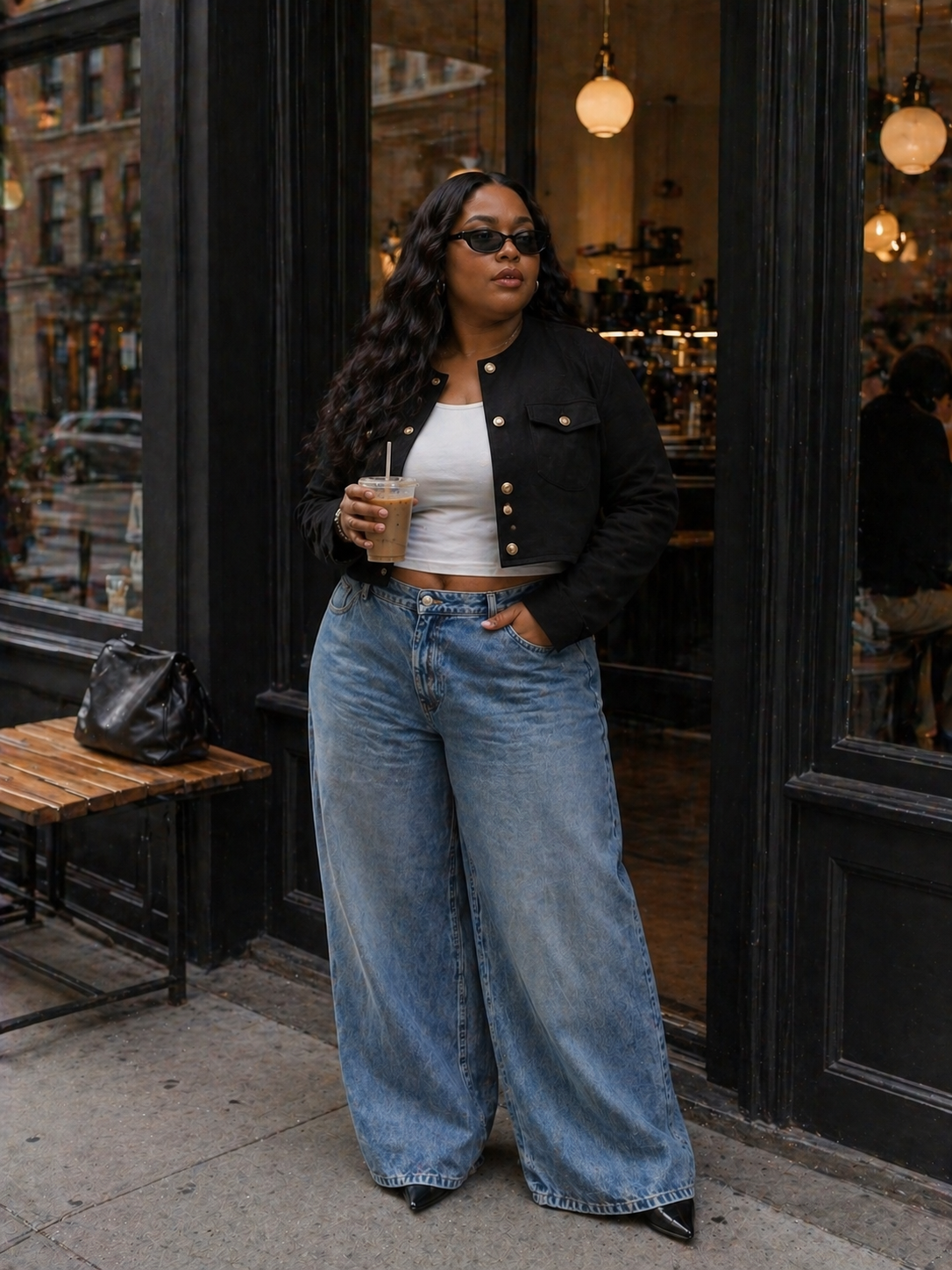
The rule of thirds works especially well for plus size styling because it creates deliberate, visible structure in an outfit rather than relying on shapelessness or hoping a loose piece covers enough. Structure is not about restriction it's about intention. When an outfit has a clear proportion reading, the silhouette looks intentional and styled. When it doesn't, the silhouette reads as unresolved, regardless of the quality or fit of the pieces.
The most common proportion mistake in plus size dressing is the mid-length tunic a top that falls to mid-thigh or below the hip but not clearly past it. This length is problematic for two reasons: it hits exactly at or near the widest part of the lower body, adding visual width right where most people want it least, and it creates the 50/50 split problem because it's not clearly a top or clearly a dress. It occupies a middle length that makes no proportion statement.
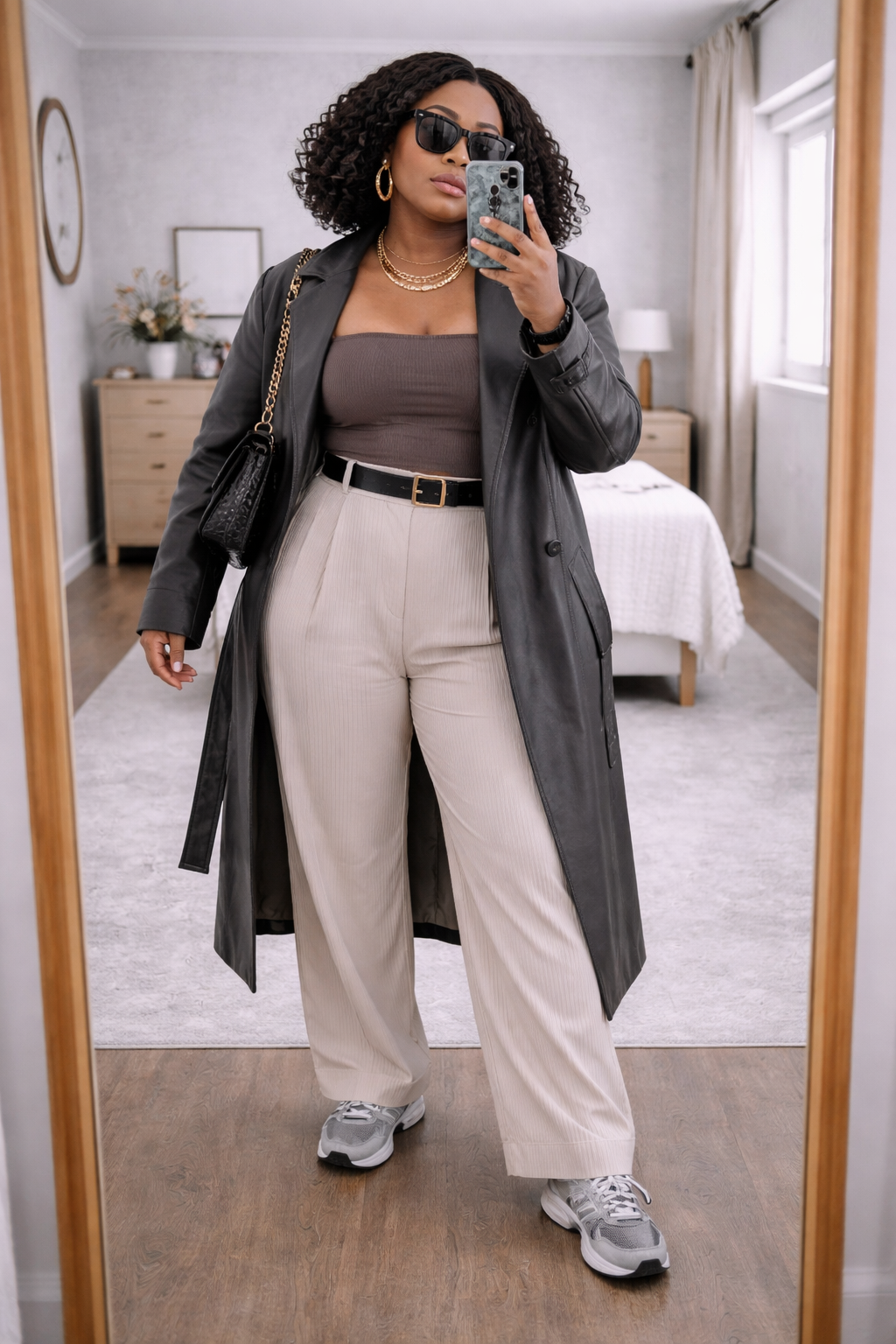
The fix is to go deliberately one direction or the other. A shorter option: a cropped jacket over a defined waistband on a high-waisted skirt or trouser clearly 1/3 top, clearly 2/3 bottom. A longer option: a tunic that extends well past the hip to true mid-thigh or knee length, creating a 2/3 top situation with slim trousers as the anchor. Either version applies the rule of thirds. The mid-length that does neither is what doesn't work. The choice between shorter or longer depends entirely on personal preference both are equally valid applications of the principle.
Pro Tip: A longline blazer or structured cardigan is the plus size wardrobe piece that applies the 2/3 top formula most effectively. It has clear structure, a defined hemline, and works with slim trousers or leggings to create a clean, intentional proportion. It's also one of the most versatile layering pieces in any wardrobe.
Rule of Thirds Fashion for Tall Figures

Tall figures have more flexibility with the rule of thirds than any other body type. Because there is more vertical space in the canvas, the 50/50 split doesn't create the same problem it does on shorter frames a mid-hip top on a tall figure reads as intentional rather than proportion-less. That said, the rule of thirds still applies, and tall figures who apply it tend to look more intentionally styled than those who rely on the natural advantage of height to make things work.
The best looks on tall figures often play with an exaggerated version of the formula: an extra-cropped top with very high-waisted wide-leg trousers (a dramatically short upper third, a dramatically long lower two-thirds), or a midi-length tunic over slim ankle-length pants (a 2/3 top with a clearly visible, slim 1/3 bottom). These exaggerated proportions work precisely because tall frames can accommodate the drama the sections are long enough that even exaggerated divisions don't read as ridiculous.
Pro Tip: The practical challenge for tall figures is usually hem length rather than proportion midi skirts hit at the knee, "maxi" dresses hit at the ankle instead of the floor, and crop tops aren't actually very cropped. Embrace the high crop intentionally. A top that hits just at the waist is a natural 1/3 anchor on a tall frame. Work with the proportions your frame creates rather than fighting for standard sizing.
Common Proportion Mistakes (And How to Fix Them)
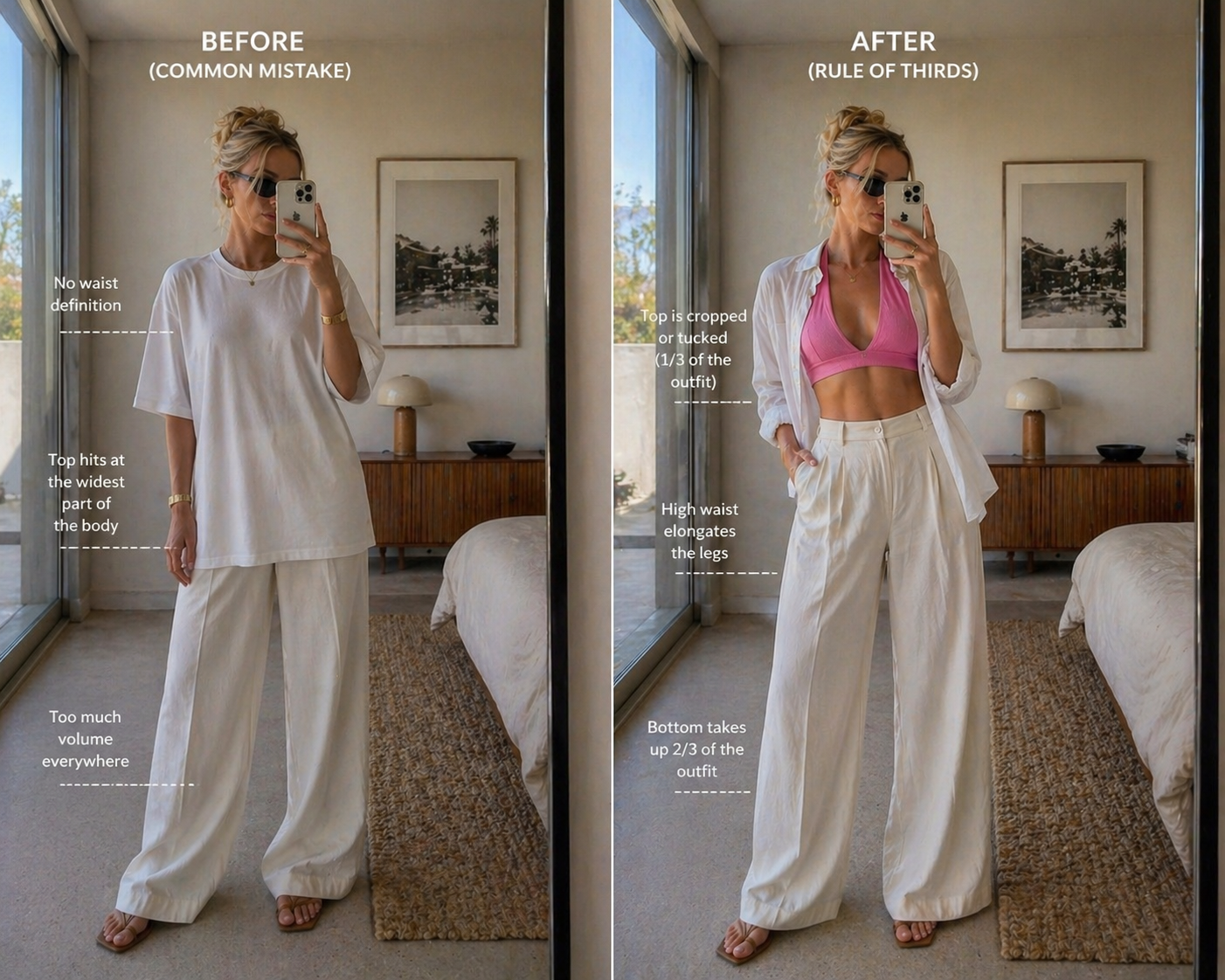
The mid-hip length top is the most common proportion problem in everyday dressing. A top that ends at the hip rather than clearly at the waist or clearly past the hip creates a 50/50 visual split that makes both sections the top and the bottom appear shorter than they are. The fix is straightforward: tuck it in if it's close to waist length, or go deliberately longer if the fabric allows. Hemming is also a legitimate solution for a top you love that hits at exactly the wrong length.
Matching top and bottom in identical color when different tones would have created a useful division is a subtler problem. Monochromatic dressing works when the intent is to let the silhouette read as one long unbroken line but when the outfit already has structural division points (a waistband, a seam, a defined hemline), identical color can obscure those divisions rather than clarify them. A slightly different tone at the bottom a deeper shade of the same color, or a complementary neutral often does more for the proportion than a perfect match.
Belts that are the same color as the outfit and add no visual contrast are a missed opportunity. A belt worn with a monochromatic look should provide a visual division at the waist that's its functional purpose in the context of the rule of thirds. When the belt disappears into the outfit because it matches exactly, the proportion benefit disappears too. A contrasting belt, or at minimum a textured belt in the same family, creates the visual break that establishes the waistline.
Wide-leg trousers paired with a boxy, oversized top creates a proportion conflict where both sections are fighting for dominance simultaneously. Wide-leg trousers are already a high-volume piece they need a clearly defined, relatively slim or cropped upper section to anchor them. A boxy or oversized top adds volume at the top that competes with the trouser volume at the bottom. The fix: tuck in the top, choose a fitted top, or go with a clearly structured cropped piece that establishes the 1/3 anchor.
A maxi skirt paired with an oversized or voluminous top puts two high-volume pieces together with no proportion contrast between them. The silhouette becomes undifferentiated volume from shoulder to floor. The fix: always pair a maxi skirt with something fitted, tucked, or clearly structured at the top. The maxi skirt provides the 2/3 bottom; the top needs to be a clear 1/3 anchor, not another volume piece.
The Short Version
The rule of thirds is not a rule in the restricting sense. It's a visual tool a way of understanding why some outfits read as intentional and others feel slightly off despite using perfectly good pieces. Once you understand why the tuck works, why the cropped jacket changes your whole look, why high-waisted bottoms feel fundamentally different from low-waisted ones you can make any proportion decision with full awareness of what you're doing and why.
That awareness is what separates accidentally stylish from intentionally stylish. You can break the rule on purpose once you know it wear the mid-hip top deliberately, make the 50/50 split work through a strong color contrast or structural detail. But the starting point is understanding the principle. Apply it consistently for a few weeks and you'll start seeing it in everything the outfits that work and the ones that don't, and exactly which proportion decision is responsible for the difference.
Read This Next :
17 Monochromatic Outfit Ideas That Will Make You Want to Wear One Color Forever
After Styling for Years, Here’s What Actually Works When Layering Your Outfits
What Is The Third Piece Rule: How to Style Outfits Using it
17 Style Hacks To Hide Apron Belly
Every morning I send a free email with the best sales, new finds, and outfit ideas of the day. Thousands of readers get it first. Join them


✦ Creator images used for editorial purposes only. All rights belong to their respective creators. We always link and give credit.
✦ Check Out Our Men's Site
Trending on MensOutfitsDaily